Migrating to Shopify is the process of moving your e-commerce infrastructure to a more scalable, manageable, and high-performance platform. This guide provides a step-by-step, technical, and strategic roadmap for SME owners in Turkey considering migrating to Shopify from different e-commerce platforms.
Why Migrate to Shopify?
The main reasons merchants switch to Shopify are the limited customization, heavy technical dependency and lack of global scalability of the platforms they currently use in Turkey. Shopify offers an infrastructure that solves all three of these problems and is active in over 175 countries.
Local platforms in Turkey are generally sufficient for the Turkish market at the beginning. However, as your brand grows, you will run into the following problems: having to rely on an agency for any custom design, insufficient international payment integrations, speed and mobile performance issues, and no App Store ecosystem. Shopify eliminates these constraints.
According to Shopify's 2025 annual results, published on February 11, 2026, millions of businesses in more than 175 countries use Shopify, and 378.4 billion USD in gross merchandise volume (GMV) went through the platform in 2025. The platform has established a strong position not only globally but also in the Turkish e-commerce ecosystem.
Shopify Payments is currently unavailable in Turkey. Stores in Turkey need to use local payment integrations such as iyzico, PayTR, or Craftgate. These integrations can be easily set up through the Shopify App Store.
Which Platform Are You Migrating to Shopify From?
The platform you are migrating from directly determines the complexity and duration of the migration process. Migrating from WooCommerce is the most technically detailed process. Migrations from Ticimax, Ideasoft, and Tsoft are generally completed smoothly with our own API tools, without much manual intervention. If you are moving from marketplaces such as Trendyol or Hepsiburada to Shopify, the process differs on the product catalog and customer data side.
The most common migration scenarios we encounter at Nodus Works are as follows:
Migrating from Ticimax to Shopify
Stores using Ticimax often face difficulties due to differences in product data structure. Ticimax's category hierarchy and variant structure must be matched with Shopify's metafield system. The average migration time is 2-4 weeks.
Read our guide on migrating from Ticimax to Shopify
Migrating from Tsoft to Shopify
The most critical aspect of migrating from the Tsoft infrastructure is preserving the existing URL structure and properly setting up 301 redirects. Otherwise, you may lose a significant share of your organic traffic.
Read our guide on migrating from Tsoft to Shopify
Migrating from ikas to Shopify
For stores using ikas, transferring the product catalog and customer data is relatively straightforward. However, you will need to set up Shopify equivalents for certain marketing automation tools specific to ikas.
Read our guide on migrating from ikas to Shopify
Migrating from WooCommerce to Shopify
Migrating from WooCommerce means completely exiting the WordPress infrastructure. Due to plugin dependencies, custom post types, and database structure, this is the most technical migration scenario.
Technical Guide for Migrating from WooCommerce to Shopify
Migrating from Ideasoft to Shopify
The most critical aspect of migrating from the Ideasoft infrastructure is preserving the existing URL structure and correctly implementing 301 redirects; otherwise, you will lose a significant share of your organic traffic.
Technical Guide for Migrating from Ideasoft to Shopify
Migrating from Akinon to Shopify
The most critical point when migrating from Akinon to Shopify is the change in URL structure. If you migrate without 301 redirects, the old pages Google has already indexed return 404 errors and organic traffic drops sharply after the migration.
Read our guide on migrating from Akinon to Shopify
Migrating from BigCommerce to Shopify
When migrating from BigCommerce, the focus is on preserving SEO value. To keep your rankings from dropping, you need to map the old URL structure to its Shopify equivalents with 301 redirects and transfer product data without any data loss.
Read our guide on migrating from BigCommerce to Shopify
Migrating from Amazon to Shopify
At its core, moving from Amazon to Shopify is about owning your customers: when you sell on Amazon, the customer belongs to Amazon. On Shopify you get access to email addresses and behavioral data and can build your own CRM automation with tools such as Klaviyo.
Read our guide on migrating from Amazon to Shopify
Migrating from Etsy to Shopify
Moving from Etsy is about more than transferring products. It calls for a change across five areas: brand ownership, traffic sources, customer relationships, design experience and data management.
Read our guide on migrating from Etsy to Shopify
Migrating from WordPress to Shopify
Moving from the WordPress /urun/ structure to the Shopify /products/ format changes your URL architecture completely. Without a complete 301 redirect map, the search authority you have built up over the years can be lost for good.
Read our guide on migrating from WordPress to Shopify
If you want a smooth transfer using the API developed by Nodus Works, create your migration plan now.
Pre-Migration Preparation: What Do You Need to Do?
Before starting the migration to Shopify, you need to analyze your current store under four main headings: data inventory, SEO status, technical infrastructure, and business continuity plan. Projects that skip this preparation phase face a markedly higher risk of unexpected problems after migration.
1. Create a Data Inventory
Before migration, compile a complete list of the following data:
- Products: SKU count, variant structure, product descriptions, images
- Categories: Top/sub-category hierarchy, category URLs
- Customers: Email, phone, address information (check for KVKK compliance)
- Orders: Historical order data, return records
- Content: Blog posts, static pages (About Us, FAQs, etc.)
- SEO Data: All URLs, meta title/description, backlink profile
2. Record Your SEO Baseline
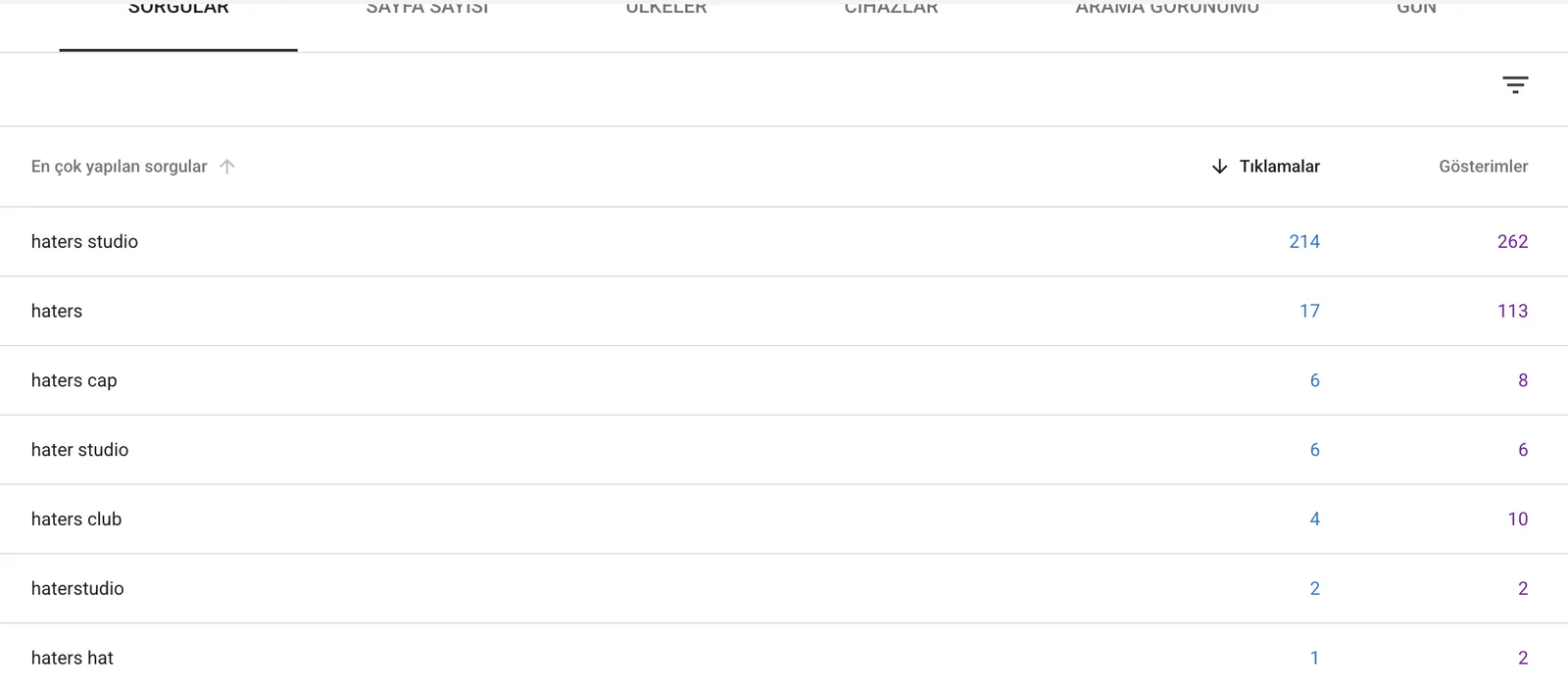
Export all your URLs from Google Search Console. Identify which pages receive the most organic traffic. URL protection for these pages should be your top priority. Also, record your backlink profile using Ahrefs or Semrush.
Shopify Plan Selection
Shopify offers four main plans. For most SMEs in Turkey, the Grow plan ($72/month) is an ideal starting point, and you can start at $1/month for the first 3 months. The Advanced plan is preferable for stores with high monthly turnover and advanced reporting needs. Shopify Plus comes into play for large-scale operations and global brands.
If you're having trouble choosing a plan, you can try our Shopify plan selection tool: https://nodusworks.com/en/tools/shopify-plan-calculator
Shopify Plus: $2,300+/month
As your brand grows, eliminate all limitations with Shopify Plus:
• Unlimited staff accounts and advanced user roles
• Advanced automation and custom workflows with Shopify Flow
• Campaign automation and flash sale management with Launchpad
• Custom checkout design and checkout extensibility
• Personalized support with a Dedicated Merchant Success Manager
• 99.99% SLA uptime guarantee and enterprise-level infrastructure assurance
Get a custom quote for Shopify Plus through Nodus Works: nodusworks.com/en/services/shopify-plus-solutions
💡 Tip: Don't Close Your Old Platform During the Transition Period
Keep your old store active until the migration is complete and your new store is tested. While both platforms are running, manage order synchronization manually or use a temporary 'We are not accepting orders' banner. Shutting it down abruptly can cost you customers.
Data Transfer: Step-by-Step Shopify Migration Process
You can transfer data to Shopify in three different ways: Shopify's official Store Migration app (or product CSV import), third-party migration tools (LitExtension, Cart2Cart), or manual CSV transfer. The right method depends on your number of products and how complex your data is.
Method 1: Basic Transfer with Shopify Store Migration or CSV
Shopify's Store Migration app (which replaced the old Store Importer) only imports from supported platforms (Square, WooCommerce, Etsy, Wix, Amazon, eBay, Clover, Lightspeed); when migrating from platforms such as Ticimax, Tsoft or ikas, you use product CSV import instead. This method is the fastest solution for stores with fewer than 500 products. Product data exported in CSV format can be uploaded directly.

- Export products from the old platform as CSV
- Compare with the Shopify CSV template and map fields
- Upload images separately to a CDN or import them via URL
- Perform a test import (start with 10-20 products)
- Fix errors, then start the full transfer
Method 2: Automated Migration with LitExtension
LitExtension is the preferred tool for stores with 1,000+ products or complex variant structures. It can migrate from over 140 source platforms, including Ticimax, Tsoft, and WooCommerce. Migrating around 5,000 products takes 4-8 hours on average.
Critical: You Cannot Transfer Customer Passwords
For security reasons, no migration tool can transfer user passwords. After the migration, your customers sign in for the first time with a one-time code sent to their email; announce this in an email before the migration. Prepare this email carefully; it is critical both for brand communication and customer experience.

SEO Protection Strategy: Don't Lose Your Organic Traffic
The biggest risk when migrating to Shopify is losing organic traffic due to an incorrectly managed URL structure. With a properly implemented SEO protection strategy, any traffic loss during the migration stays temporary and limited.
1. Create a URL Mapping Table
Map each URL from the old platform to its corresponding URL on Shopify. This table is the most critical document of the migration process. Start with the 50-100 URLs that get the most traffic.
Shopify's default URL structure is as follows: /products/product-name, /collections/category-name, /pages/page-name. If your old platform has a different structure, you must set up 301 redirects.
2. Set Up 301 Redirects
You can add redirects in the Shopify Admin panel under Content > Menus > URL redirects. For more than 500 redirects, bulk upload via CSV is recommended. Test the redirects at least one week before going live.

3. Update Google Search Console
Add a new property in Google Search Console for the new domain or URL structure. If you are changing domains, use the 'Change of Address' tool. Submit the new XML sitemap to Search Console and monitor the indexing process.
4. Hreflang and Canonical Tags
If you operate a store for multiple languages or countries, correctly configure Shopify's language settings and hreflang tags. For multi-region sales, Shopify Markets largely automates this process.
Shopify Theme Selection and Customization
Choosing a theme on Shopify is not just an aesthetic decision; it's a strategic decision that directly impacts your conversion rate. Selecting a high-performance theme with Turkish language support and fast loading times is critical for the Turkish market.
Free Theme Recommendations
The Dawn (official Shopify theme), Sense, and Ride themes offer solid starting points for stores in Turkey in terms of both performance and customizability. Since 2025, new stores have come with the Horizon theme installed by default; Dawn is still supported, but for a new build it's worth comparing it with the Horizon family as well.
Considerations When Choosing a Paid Theme
- Choose themes that score 90+ on Google PageSpeed Insights
- Read Theme Store reviews and research support quality
- Always test the mobile view in the demo store
- Check for Turkish character support (ş, ı, ğ, ü, ö, ç)
- Review the frequency of theme updates (active development is important)
A tool to help you choose a theme: https://nodusworks.com/en/tools/shopify-theme-finder
Payment Integrations: Which Solutions Are Used in Turkey?
Choosing a payment integration for Shopify stores in Turkey is critical because Shopify Payments is not yet active in Turkey. iyzico, PayTR, and Craftgate are the most commonly used solutions.

iyzico has the easiest setup process with its official app in the Shopify App Store. iyzico's list rate is 4.29% + 0.25 TL per successful transaction (October 2026), and you can get a custom quote based on monthly volume. PayTR offers more competitive commission rates, but the technical setup is more complex.
Go-Live and Post-Migration Checklist
Going live is the most critical step of the migration and is hard to reverse, so do it early in the morning or midweek. Complete the following checks before going live.
Critical Note: Nameserver (NS) changes for .tr domains are not processed instantly. BTK-TRABİS processes them at set times: every hour on the hour between 9:00 and 21:00 every day, plus at 1:00 and 6:00. When planning your go-live day, schedule the NS change just before one of these slots to avoid unnecessary waiting.
Before Go-Live
- All products, prices, and inventory information have been verified
- Payment integration has been tested (with a real card and a small amount)
- SSL certificate is active, domain connection is established
- All 301 redirects have been tested
- Email notification templates (order confirmation, shipping, etc.) are ready
- Google Analytics 4 and Meta Pixel setups are complete
- Mobile and desktop views tested
- Page load speed is under 3 seconds
First 72 Hours After Going Live
The first 72 hours after going live are a critical observation period for identifying potential issues. Monitor crawl errors in Google Search Console, traffic drops in Analytics, and payment error rates on an hourly basis.

- Check Google Search Console errors
- Manually verify the first 10 orders
- Keep customer service channels active
- Monitor 404 page errors and add redirects
- Point your social media ads to the new URLs
If you would like to see every step of the migration in one document, you can download our detailed Shopify migration process guide as a PDF (in Turkish).
Frequently Asked Questions
How long does the transition to Shopify take?
Depending on the size of your store and the source platform, it takes between 1 and 8 weeks. Simple stores with fewer than 500 products can be migrated in 1-2 weeks, while stores with 5,000+ products and complex category structures may need 6-8 weeks. Custom theme development can extend this time.
Will I lose my SEO value when migrating to Shopify?
If proper 301 redirects and URL mapping are implemented, you will retain most of your SEO value, and any traffic loss stays temporary and limited. Google typically recognizes 301 redirects within 2-4 weeks. Minor traffic fluctuations in the first 1-2 months after migration are considered normal and are temporary.
Does Shopify offer Turkish language support?
Yes, Shopify offers full Turkish language support. The admin panel, customer interface, and email templates can be set to Turkish. Turkish characters (ş, ı, ğ, ü, ö, ç) display correctly in Shopify's official themes; with third-party themes, check font support before you buy. According to Shopify's pricing page for Turkey, 24/7 support is also available in Turkish, while Shopify Partner agencies provide Turkish-language support for setup and development.
Can I transfer orders from my old store to Shopify?
Past order data can be transferred using migration tools such as LitExtension. However, transferred orders will appear as 'Archived'; they will not be automatically linked to customer accounts. Transferring them is still recommended so that you have the order history for reporting and customer service.
Is professional assistance required for Shopify migration?
You can do it yourself for stores with fewer than 500 products and a simple structure; however, for larger stores, expert support significantly reduces risk and cost. Incorrectly set up 301 redirects or incomplete data transfer can lead to problems that are much more costly to fix later.
Are You Ready to Migrate to Shopify?
When managed with proper planning and expertise, migrating to Shopify is a transformative step that takes your e-commerce operations to the next level. By following the steps in this guide, you can complete the migration, from data inventory and SEO protection to theme selection and go-live, in a controlled way.
At Nodus Works, the agency with the most Shopify Partner reviews in Turkey, we have managed this process with dozens of brands. Alongside Ticimax, Tsoft, ikas and WooCommerce, we also migrate stores from Ideasoft to Shopify: at Volta Motor, which we moved from Ideasoft, organic search traffic in the last 20 days was up 33% compared with the first 20 days after launch, and 99.9% of orders are transferred to SAP automatically.
Get Free Migration Consulting
Contact the Nodus Works team to assess your store's migration readiness, determine the right strategy, and have us by your side throughout the process. You can reach us at nodusworks.com/en/services/migration-to-shopify.
Related resources:
Migrating from Ticimax to Shopify
Guide to Migrating from Tsoft to Shopify
Migrating from ikas to Shopify
WooCommerce to Shopify Migration Guide (2026)
Technical Guide for Migrating from Ideasoft to Shopify