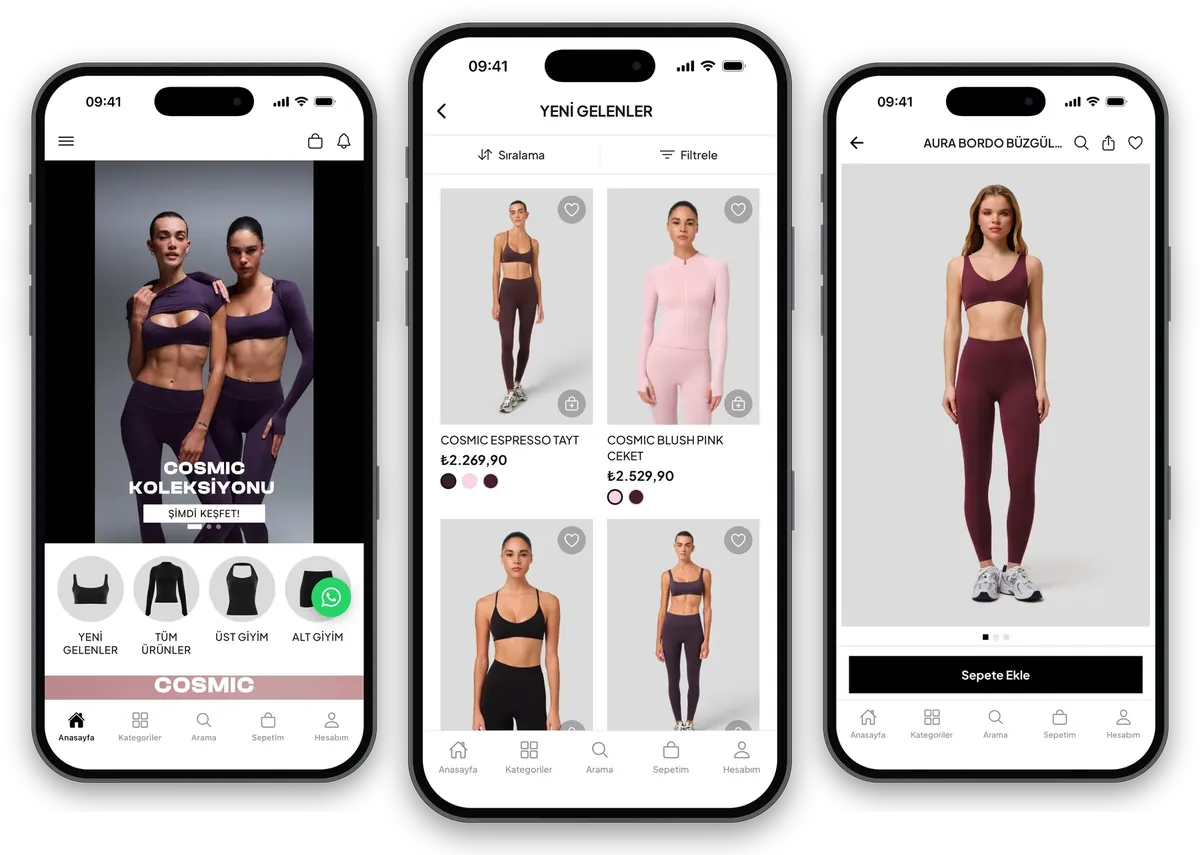


Mobile-ready/pixel-perfect design system

Shopify Plus Transformation with API-First and Omnichannel Approach
The project carried out for Dossha was treated not only as a platform transition, but as building an API-based and omnichannel trading infrastructure that would support the long-term growth of the brand. The main goal in the project was to establish a scalable system that could seamlessly manage high traffic and heavy order flow, unify different sales channels in a single data backbone, and support operational processes with automation. On the web side, the Shopify Plus infrastructure was centralized and a customized ecommerce architecture focused on performance, security, and stability was developed. Checkout processes, campaign configurations and custom business rules have been restructured to support the brand's high-volume operations. A powerful system architecture has been established that can meet the traffic increase that occurs especially during busy campaign periods. On the mobile side, a headless approach was preferred. Shopify is positioned as a powerful commerce backend, while the mobile app was developed with a fully customized front-end architecture. Thanks to the API-first approach, product, inventory, campaign and customer data were synchronized with the mobile application in real time. This structure provided both a performance-driven mobile experience and enabled faster development and scaling for the brand. Another important component of the project was the omnichannel strategy. The website, mobile application, shipping and distribution systems are combined in a central API layer. Thus, orders, stock movements and customer data from different channels were managed in a single data backbone, ensuring a consistent and seamless user experience across all channels.
.webp)


Scalable Commerce Ecosystem for High-Volume Operations
As a result of the project, Dossha has a strong omnichannel commerce ecosystem running on Shopify Plus and powered by a headless mobile architecture. Advanced inventory rules and dynamic inventory management scenarios have been developed to support high-volume operations. Variation-based product management, collection prioritization and stock flows specific to campaign periods have been systematized. Accurate inventory visibility on both web and mobile channels has been achieved thanks to real-time stock updates, and operational efficiency has been significantly improved. With Shopify Flow and custom automation builds, post-order processes, segment-based customer scenarios, risk control mechanisms, and customer experience flows have been automated. Thus, processes have become more controlled and measurable, while the need for manual intervention has decreased. On the marketing side, CRM systems, email and SMS marketing tools, performance marketing platforms, and retargeting systems were integrated with Shopify to create a centralized data architecture. Behavior-based segmentation, campaign automations and customer lifecycle management are built on a powerful data infrastructure. The resulting structure was a scalable commerce ecosystem powered by Shopify Plus, powered by a headless architecture in a mobile app, designed with API-first principles and unifying all sales channels in a single data backbone. For Dossha, this transformation means a strong digital infrastructure investment that sustainably supports high-volume activewear operations and aligns with the brand's growth objectives. It's also an important example of how to build a powerful and scalable system on Shopify with the right integrations and the right architecture for Turkey-based brands.