Shopify Plus Solutions

With secure and scalable Shopify solutions designed specifically for high-volume brands, we take your business's digital infrastructure to a new level. Thanks to the advanced performance, flexible architecture and customizable integration capabilities of Shopify Plus, we deliver maximum efficiency even under rising traffic, high order volumes and multi-market operations.

To support your global sales goals, we don't just strengthen your infrastructure — we also reshape it to fit your brand identity and business model. With multi-store management that adapts to the different currency, language and tax structure of each country, we help you deliver a seamless shopping experience on an international scale.

200+
200+ active brands
growing together with the Shopify infrastructure
0.2%
enterprise cost advantage with transaction fees this low
Unlimited
product & variant capacity
10
stores in a single organization panel
99.9%
uninterrupted uptime & stable performance under high traffic
Custom checkout development
Brands growing with the Shopify Plus infrastructure
SHOPIFY PLUS

Why Should You Choose the Shopify Plus E-Commerce Infrastructure?

Shopify Plus is more than an e-commerce solution; it's a scalable, integrated and global commerce ecosystem built for enterprise brands. It offers a cost advantage with commission rates up to 10 times lower than other plans. At Nodus Works, we make your brand ready for high volume, multi-market operations and custom integrations on the Shopify Plus infrastructure.

Checkout Customization

Only on the Plus plan can the checkout page be customized at the code level. It's not possible on other plans. It covers developments important in Türkiye, such as province/district/neighborhood fields, KVKK consent and the distance sales agreement.

Organization Structure

The ability to manage multiple stores from a single panel (for global brands, for example) is offered only on the Plus plan. Under Organizations Admin you can bring up to 10 stores under one roof and centrally manage user permissions, roles and the data of all your stores.

Advanced API Limits & Access

The Plus plan significantly increases API rate limits and offers exclusive API endpoints available only for enterprise use (for example Multipass Login, GiftCard API, User impersonation). This way, even under heavy traffic, your integrations run smoothly at high request volumes without interruption.

B2B (Wholesale)

The B2B on Shopify module, built into Shopify Plus, makes it possible to manage enterprise sales processes on a single infrastructure. With this system you can define customer-specific pricing, product catalogs customized per company or dealer, separate payment terms and clear net-term invoicing options.

Don't Hit the Limits

Shopify's standard plans are generally limited in terms of performance at high product counts; beyond a certain point, only a daily batch of variants can be uploaded. On the Plus plan, however, there is no such limit. Brands with large product catalogs (fashion, automotive spare parts, electronics, for example) choose Plus for this reason.

Custom Payment Infrastructure Development

Shopify Plus customers can integrate custom payment providers directly into their systems. In addition, special agreements outside Shopify Payments or "vaulted payment" solutions are possible under enterprise contracts. This way, needs such as local payment institutions, installments and split payment are set up specifically for your brand.

PLAN COMPARISON

The real difference between Shopify and Shopify Plus

Some Shopify features are available only on Plus, while others are now included in every plan. The Plus decision should be based on this distinction before the transaction fee difference. The table compares Shopify's official features on the standard plans (Basic, Grow, Advanced) and on Shopify Plus.

FeatureOn standard plansOn Shopify Plus
Checkout ExtensibilityInformation, shipping and payment steps
The checkout editor sets the logo, colors and typography; app blocks cannot be added inside the steps.Checkout UI extensions add invoice fields, contract consent, address selection and add-on product blocks inside the steps.
Thank you and order status page
App blocks can be added.The same extensions, developed in one flow together with the checkout extensions.
Shopify FunctionsDiscounts, shipping, payment, validation
Functions from public App Store apps run; Functions written for a single store do not.A custom app adds store-specific discount, shipping and payment customizations, plus cart and checkout validation rules.
Launchpad
Not available. Discounts are scheduled one by one, theme changes are published manually.Theme, discount and product releases are scheduled as a single campaign; changes are rolled back when the campaign ends.
B2B on Shopify
Through an app or limited built-in features depending on the plan; for example, our Toptan app.Company profiles, locations, company-specific catalogs, payment terms and B2B checkout in the same store.
Expansion stores
Each store is managed with a separate account and a separate subscription.Country or brand expansion stores under one organization, with shared user and permission management.
Staff accounts
A limited number depending on the plan.Unlimited staff accounts and role management at the organization level.
Multipass
Not available.A customer who signs in on another website moves to the Shopify store without signing in again.
Shopify Flow
Available. Workflows such as order tagging, stock alerts and team notifications can be built.The same. Flow is no longer exclusive to Plus and is not a reason for Plus on its own.
Shopify Markets
Available. Language, currency and pricing are defined per country.The same Markets; used together with an expansion store when a separate country store is needed.

Shopify updates plan coverage from time to time, so we check the current status with you before the decision. If you need none of the first eight rows, the Advanced plan is usually enough; Plus pays off when at least one of these rows has a real counterpart in your business model.

NODUS WORKS APPS

Which of our apps run in Shopify Plus projects?

We use three of our apps in Plus projects: Toptan handles dealer sales and dealer-specific wholesale pricing, Syncly keeps stock and prices aligned across multiple Shopify stores, and Station runs marketplace, ERP and shipping operations from a single panel. The B2B and expansion store rows in the table show where these apps meet Plus's built-in features.

Bundle Works app iconWishalert app iconSortmax app iconBulkly app iconLoyalis app iconWizard app iconNodmob app iconPeakmerce app iconSeodus app iconGoldus app iconCompliTR app iconScheduly app iconSupport app iconV
Toptan app icon1Syncly app icon2S3Nodus Works
  1. 1Toptan
  2. 2Syncly
  3. 3Station
15+ apps built by Nodus WorksUsed in this service
Toptan app icon

Toptan

Dealer system and wholesale pricing
01

It sets up dealer accounts and assigns each dealer its own wholesale price. If dealer sales are the only reason for considering Plus, this setup may be enough on a standard plan until you need company profiles, payment terms and a separate B2B checkout.

Where it runs
Dealer accounts, wholesale prices
Its role on Plus
A simpler dealer setup before or instead of built-in B2B
View Toptan
Syncly app icon

Syncly

Stock and pricing across stores
02

Each expansion store keeps its own product, stock and price records. Syncly keeps stock automatically aligned across two or more Shopify stores and writes prices to each store separately, calculated with the margin rule you define.

Where it runs
Two or more Shopify stores
Its role on Plus
Sync between country and brand stores
View Syncly
S

Station

Marketplaces, ERP and shipping
03

For most brands, the Plus store is not the only sales channel. Station distributes products, stock and prices to marketplaces and brings ERP and shipping connections into the same panel; the Plus store and the marketplaces sell from the same stock.

Where it runs
Marketplaces, ERP, shipping carriers
Its role on Plus
Operations for channels outside the store
View Station

Whether an app does the same job as a built-in Plus feature is checked together with you during the layer decision; the same data is never managed by two separate tools.

Real Projects

Projects we've brought to life with Shopify Plus

A selection of the Shopify Plus infrastructures, custom module developments and platform migrations we've built for high-volume brands.

Dossha Shopify Plus case study
Shopify Plus · Omnichannel
Dossha

We built the Shopify Plus infrastructure from scratch for Dossha's high-volume activewear operations. While developing a customized architecture focused on performance, security and stability on the web side, we built a fully custom front end with a headless approach on mobile. By unifying the web, mobile app and shipping systems on a single API backbone, we delivered a seamless omnichannel experience.

Explore the case study
Mai Studios Shopify Plus case study
Shopify Plus · ERP Integration
Mai Studios

We migrated Mai Studios, along with its extensive fashion collection, to Shopify Plus; we transferred product, variant, collection and customer data in full while preserving the SEO structure. With a Nebim ERP integration we synced product, stock and price data in real time, while an İYS integration brought consent management into regulatory compliance. With smart search and dynamic size charts, we built an end-to-end fashion e-commerce infrastructure.

Explore the case study
Wear The Peace
Custom Module Development
Wear The Peace

For Wear The Peace, we developed a donation module on Shopify tailored to the brand's social responsibility model. We built a structure that lets customers donate at the cart or product level and can be managed flexibly across campaign periods. The module was integrated into the brand's operations so that it works without disrupting the checkout flow and remains reportable.

Explore the case study
Antiochmen
Platform Migration
Antiochmen

We migrated the Antiochmen brand from the Ticimax infrastructure to Shopify; we transferred products, categories, customer records and order history while preserving data integrity. During the migration, URL structures and redirects were carefully planned to preserve the existing SEO value. With the new Shopify infrastructure, the brand gained a faster, more manageable and scalable e-commerce operation.

Explore the case study
DTF Town
Custom Order Flow
DTF Town

We built the Shopify infrastructure to support DTF Town's high-volume DTF transfer sales. With a panel that simplifies branch management, we took the management load off Shopify and made the technical muscle far stronger. By supporting product and order management with automation to meet intense production demands, we accelerated operations.

Explore the case study
Vamos
Platform Migration
Vamos

We migrated the Vamos brand from the Ticimax infrastructure to Shopify; we transferred all product, category and customer data without loss. During the migration, we planned URL redirects to preserve the SEO structure and prevented any loss of organic traffic. We built a more flexible and scalable Shopify infrastructure to support the brand's growing operations.

Explore the case study
ARCHITECTURE

Which layer should a business rule run in?

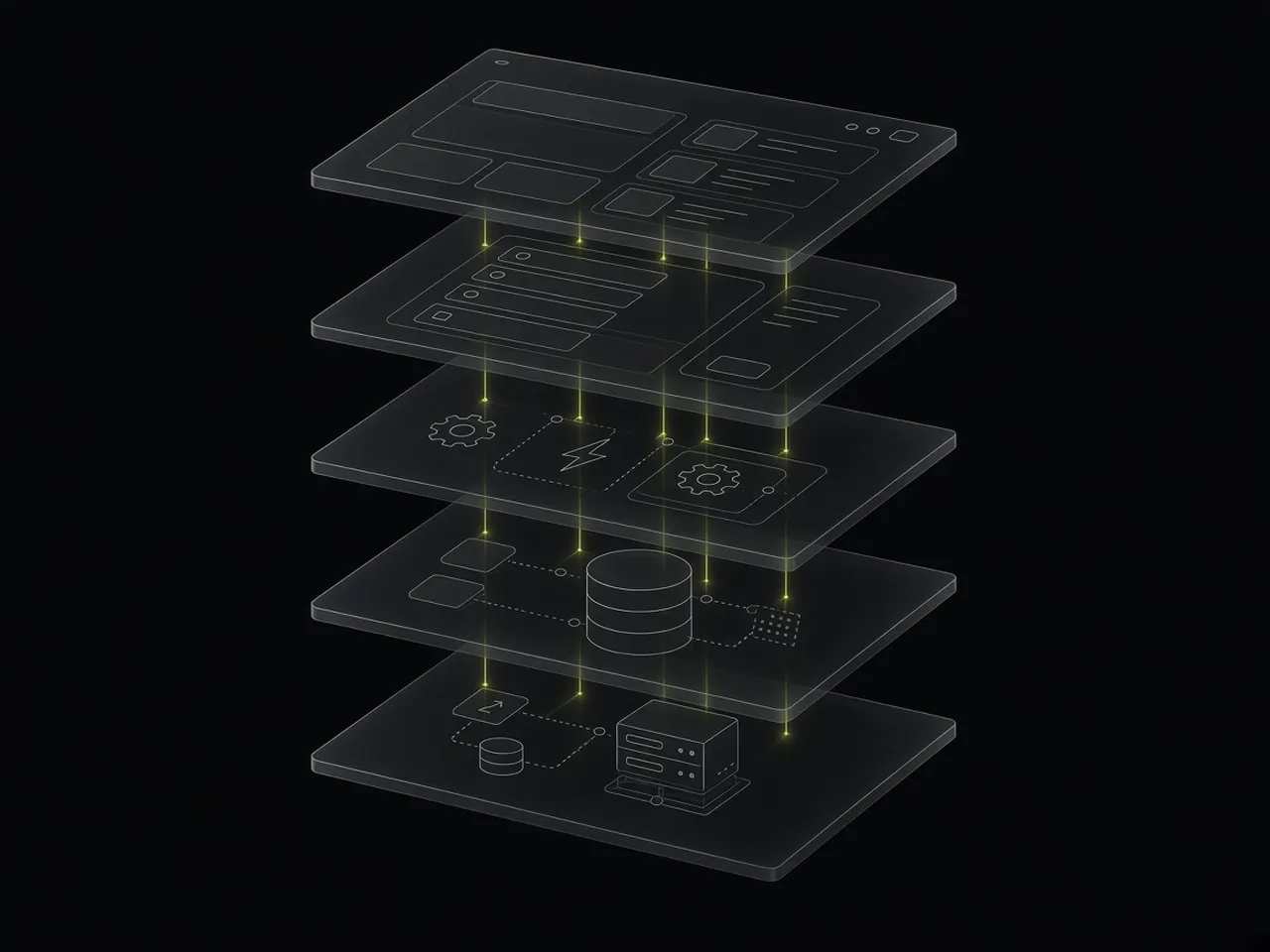
In a Plus project, the first decision is not what the code does but where it runs. Discount logic written into theme code shows up in the cart but is not applied at checkout; the same rule written as Shopify Functions runs on Shopify's servers during checkout. Before development starts, we document where each rule belongs across these five layers.

  • Theme: presentation and product page logic; Online Store 2.0 sections, size charts and filters fed by metafields.
  • Checkout UI extensions: fields added to the checkout steps; invoice details, contract consent, delivery notes, add-on product offers.
  • Shopify Functions: pricing, shipping and payment rules; hiding cash on delivery above a certain amount, restricting shipping options by region, minimum quantities in a dealer cart.
  • Shopify Flow: recurring tasks; tagging and holding high-risk orders, hiding sold-out products, email or Slack notifications to the team.
  • ERP and middleware: stock, price and order flows with webhooks, queues and retry logic; a request that hits a rate limit is not lost. For Karaca, we wrote the middleware between Shopify and the brand's own systems in PHP.
Five glass panels connected by thin light lines, representing the theme, checkout, automation, data and ERP layers
Checkout

Shopify Plus Checkout Enhancements

Explore the checkout, customer and payment page enhancements we can make available to you on the Shopify Plus package.

01

Province – District – Neighborhood Selection Fields

By adding a hierarchical address selection (Province → District → Neighborhood) to the customer address form, address accuracy is ensured throughout shipping and delivery. It prevents address errors—especially in Türkiye operations—and lowers shipping costs. Tax number and tax office can also be requested.

02

Distance Sales Agreement

This is a Distance Sales Agreement add-on that is displayed automatically before the order is completed or accepted via a checkbox. Customer consent is recorded in compliance with legal requirements. The agreement is also sent to the user by email.

03

KVKK Policy

An information field about the processing and storage of personal data is added to the checkout page. The customer can read the KVKK text and give consent before payment. This brings your platform into compliance with KVKK Law No. 6698 and GDPR.

04

Checkout App Blocks

Many custom components can be designed—for example campaign info boxes, delivery time selection, membership login, add-on product recommendations, visual banners or discount countdown modules. This system works securely and stays updatable thanks to Shopify's next-generation app extensions (App Extensions) architecture.

05

Advanced Discount Setups

On Shopify Plus, advanced discount setups can be implemented with next-generation Discount APIs and the App Extension infrastructure. The classic Scripts system has now been removed; in its place, app-managed Discount Extensions based on Shopify Functions are used. This makes scenarios such as "buy 3, pay 2", "category-specific discounts", "location-based shipping discounts" or "dynamic campaigns" configurable and integrable into the entire checkout process.

06

Customer Coupons

With Shopify Plus, a customer-specific coupon or loyalty code entry field can be added to the checkout area. This field lets users easily apply the discounts or campaign codes assigned to them at the payment stage. The system can work integrated with the brand's CRM or loyalty infrastructure; this way, dynamic discounts can be defined based on the customer's segment, purchase history or membership status.

BEFORE THE DECISION

What we clarify before moving to Plus

Most delays and unnecessary costs in Plus projects come from an inventory that was not taken before the decision. We write down these nine items with you before the application.

The need Plus will solve

A checkout extension, store-specific Functions, B2B or an expansion store. Without a defined need, Plus is just a more expensive subscription.

List of existing customizations

Discount, shipping and payment logic embedded in theme code and rules written in Shopify Scripts are listed; each one is rebuilt as Functions or an app extension.

App inventory

Apps that do the same job are eliminated. For apps that charge Plus stores differently, the new cost is calculated before upgrading.

Primary data source

Which system stock, prices and orders originate in is written down in one sentence: Nebim, Logo, SAP or Shopify.

Limits of the other system

Plus raises the API limits on the Shopify side, not those of the ERP or the marketplace. The bottleneck usually appears on the other system and is measured in a load test.

Permission matrix

What each staff member can see and change in which store is defined by role at the organization level; nobody gets full access by default.

Test store and backup theme

Development is never done on the live theme; changes are tested first in a test store, then on a backup theme.

Backup theme guide

Peak season calendar

The launch date is set a few weeks before a major campaign, so the post-launch monitoring period does not overlap with campaign traffic.

Success metrics

The share of orders transferred to the ERP automatically, the stock gap between channels and the checkout error rate are defined before launch.

Project duration

A Shopify Plus project built from scratch typically takes 10 to 16 weeks; theme and integration work run in parallel, so the longest workstream sets the timeline. When the build comes with a migration from another platform, data transfer and 301 redirect steps are added to the plan.

Contract and account

The Plus contract is signed between Shopify and the brand; the store, account and billing belong to the brand. Nodus Works manages the application process, the organization setup and the development.

Contact
Book a Free Meeting

Can't find the answer you're looking for? Please get in touch with our team.

Book a Meeting
PLUS STORES

Four Plus stores: which system sits where?

Antioch, Vamos, Bonne Nuit and Dossha all run on Shopify Plus, and in all four the ERP is the single source of stock and prices. They differ in the number of channels, the delivery model and the mobile app.

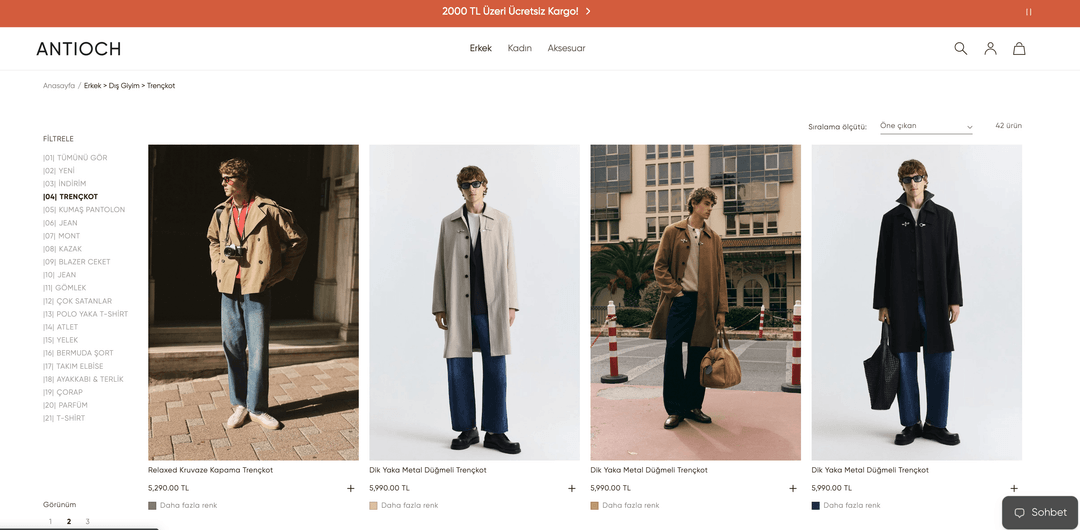
Antioch trench coat collection: numbered category filter on the left, four product cards
Antioch collection page: the category list sits on the left as a numbered filter.
6,000+

Antioch: three sales channels connected to Nebim

We built the custom sync app that connects the Shopify Plus store to Nebim. More than 6,000 products are sold on the website, the mobile app and Noon with the same stock and prices; orders go out to 9 shipping carriers from a single flow.

30+

Vamos: the Antioch setup, ready from day one

We adapted the same Nebim sync and theme decisions for Vamos; instead of designing from scratch, the team focused on brand-specific details. Wholesale, retail and online sales draw on the same stock across more than 3,000 products, and the brand reaches more than 30 countries.

Vamos product page: oversized sweatshirt, color and size selection, add to cart button
Vamos product page: each color is a separate variant, fit and fabric details are in the description.
Bonne Nuit product page: dessert box, same-day delivery time and province, district and neighborhood selection
Bonne Nuit product page: the delivery address is asked as province, district and neighborhood, with the same-day delivery time at the top.
Same day

Bonne Nuit: same-day delivery with Logo ERP

We connected the Shopify Plus store to Logo; online orders flow into Logo, and stock changes are reflected in the store. The order peaks on Valentine's Day, Mother's Day and New Year's are handled by a system that runs on its own, not by manual transfers.

One stock

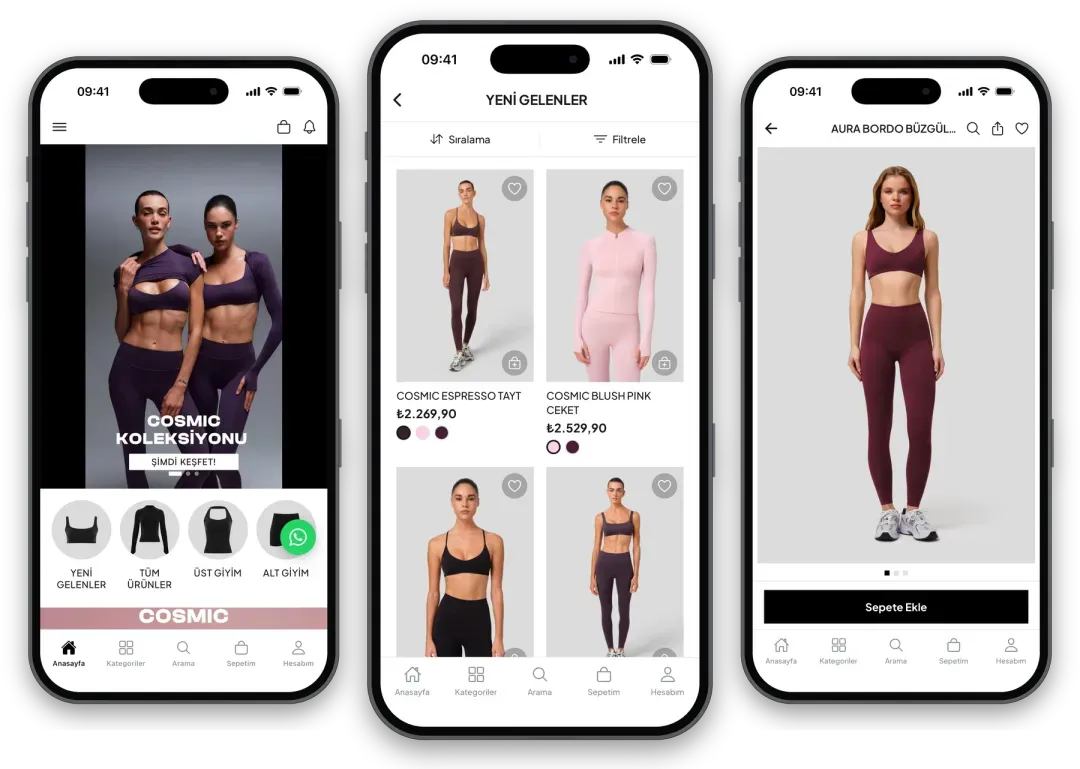
Dossha: web and mobile app with the same campaign

At Dossha, which moved from T-Soft to Shopify Plus, the website and the mobile app use the same product, stock and campaign data; stock and orders sync with Nebim ERP. Campaign and checkout flows were built for high-traffic moments.

Dossha mobile app screens: collection entry, new arrivals list and product page
Dossha mobile app: the same catalog, stock and campaigns as the website.
FAQ

Frequently Asked Questions

What is the main difference between Shopify Plus and the standard Shopify plans?
Shopify Plus is an enterprise-level plan designed for brands that sell at high volume or manage multiple stores. It's the package with the lowest commission you'll pay compared to the other packages (0.2%). The biggest differences are:
  • checkout customization with Checkout Extensibility
  • managing multiple stores from a single panel via Organizations Admin
  • increased API limits and access to exclusive endpoints
  • the built-in B2B (wholesale) module
  • enterprise support and a dedicated account manager
How many products can I add with Shopify Plus?
There is no limit on the number of products or variants on the Shopify Plus plan. Standard Shopify plans have a limit of 50,000 variants per store, and once this limit is exceeded the system allows you to add at most 1,000 new variants per day. On Shopify Plus, however, this restriction is removed. Brands with high-volume catalogs (100,000+ products/variants) can operate without any loss of performance. This provides full scalability for large-scale e-commerce sites or multi-product marketplace structures.
How much does Shopify Plus cost?

Currently, the Shopify Plus license fee varies depending on the contract term. On three-year contracts the monthly fee averages USD 2,300, while on one-year contracts it is around USD 2,500. These fees are set within the framework of the enterprise agreements Shopify makes directly with the brand and can be customized according to the business's sales volume, operational requirements, region and additional service needs.

In addition to the set license fee, extra costs may arise, such as custom development, third-party app subscriptions, ERP or CRM integrations, performance optimization, and maintenance and security services. Rather than a fixed SaaS fee, Shopify Plus is an enterprise commerce solution priced flexibly according to the brand's digital infrastructure and scale. That said, thanks to its low transaction fees, advanced API access, high traffic capacity and enterprise-grade automation tools, it is a scalable investment that can pay for itself in a short time for growing brands.

Variable Pricing

An important feature of Shopify Plus is that pricing isn't limited to a fixed monthly fee. The platform has a variable pricing model that works as follows:

  • Revenue-share model: The monthly platform fee is calculated as the higher of the fixed monthly license fee and 0.25% of the brand's monthly revenue. While revenue is below a certain threshold, the fixed fee applies; as revenue grows, the 0.25% variable fee kicks in. This variable amount is usually capped at USD 40,000 per month; that is, no matter how high the revenue, the platform fee doesn't exceed this ceiling.
  • Transaction fees: When Shopify Payments is used as the payment infrastructure, no additional transaction fee is charged; only card processing rates apply. However, if a third-party payment provider (Stripe, PayPal, a local gateway, etc.) is used, Shopify Plus applies an additional fee of 0.20% per transaction (considerably lower than the 0.5–2% on standard Shopify plans).
  • Payment processing rates: Credit card transactions through Shopify Payments are subject to a processing rate that varies by region and card type (e.g. typically ~1.5–2.9% + a fixed fee for domestic cards). These rates may be discounted in enterprise agreements based on transaction volume.

In short, Shopify Plus pricing is two-tiered: a fixed base license fee and a revenue-based variable component. In low- and mid-revenue periods the fixed fee is decisive, while for high-revenue brands the 0.25% variable fee (up to the USD 40,000 cap) comes into play. This structure makes the payment directly proportional to the size and growth of the business.


Can I integrate my own payment provider with Shopify Plus?
Yes. Shopify Plus allows custom payment gateway integration. That means you can connect your own payment solution (a bank abroad, a payment provider in Türkiye) directly and specifically to your store, beyond Shopify's default options. This feature is available only on the Plus plan and is specific to your store. It's ideal for enterprise payment processes (e.g. split payment, B2B invoicing).
When / at what revenue does it make sense to move to Shopify Plus?

Although there's no strict threshold, Shopify Plus generally becomes worthwhile for brands that reach monthly revenue of ~USD 250,000 and above or are trending toward it. The main reason is the revenue-based pricing model: once revenue reaches a certain level, the fixed license fee and 0.25% of revenue reach a break-even point, and the advantages Plus offers begin to justify its cost.

Revenue isn't the only criterion. When one of the following needs arises, migrating makes sense even at lower revenue:

  • the need for checkout customization (in Türkiye: province/district/neighborhood, distance sales agreement, KVKK, invoice fields)
  • multi-store / multi-country (different language, currency, tax) operations
  • hitting the API and variant limits of standard plans
  • needing built-in B2B / wholesale infrastructure
Will I lose my data when moving my existing Shopify store to Plus, and how long does the migration take?

No. Moving from an existing Shopify store to Plus is an upgrade; products, customers, orders, your theme, your apps and your domain are preserved as they are. The site doesn't go down and your sales aren't interrupted.

The upgrade itself takes very little time; the actual duration relates to enabling Plus-specific capabilities (checkout extensions, organization structure, B2B, custom integrations). Because it's not a migration from scratch but the addition of enterprise features on top of your existing infrastructure, the risk is low and it's usually completed within a few days to a few weeks.

How many stores (expansion stores) does Shopify Plus grant, and is there multi-country/language support?

Shopify Plus grants the right to open up to 9 expansion stores alongside your main store at no additional cost — 10 stores in total under a single organization. All stores are managed from a single panel via Organizations Admin.

For international sales, Shopify Markets lets you define country-specific currency, language, pricing, tax/customs settings and domains. This way you can sell to multiple markets from a single infrastructure with a localized shopping experience.

What does Shopify Plus provide in terms of security, uptime and enterprise support?

Shopify Plus runs on an infrastructure that is fully PCI DSS Level 1 compliant, with automatic SSL and DDoS protection. With a target of 99.9%+ uptime, the platform scales even during high-traffic periods such as Black Friday / Cyber Monday to handle high transaction volumes seamlessly.

On the enterprise side, Plus brands are offered priority 24/7 support, advanced role/permission management (user-based permissions), audit logs and automation tools (Shopify Flow). This secures both security and operational continuity at an enterprise level.

What is Checkout Extensibility, and what happened to checkout.liquid?

Shopify has retired the old customization method based on checkout.liquid and replaced it with a next-generation architecture called Checkout Extensibility, built on app extensions (checkout UI extensions) and Shopify Functions. This approach can only be used to its full extent on the Shopify Plus plan.

The advantage of the new architecture is that the custom fields added to checkout (address selection, agreement approvals, add-on product recommendations, discount setups) run securely and performantly without being affected by updates. The risk of breakage with every Shopify update, as with the old method, is eliminated, and checkout can continue to be maintained without interruption.

JOIN THOSE
WHO CHOOSE US...

We create Shopify solutions for everyone.

Do you want to set up a new Shopify store, improve your existing one, create custom integrations, or solve speed issues? We are expert Shopify partners who handle the technical work for you.

Dossha

#shopify

Les Benjamins

#shopify

Nocturne

#shopify

Fellas

#shopify

Mai

#shopify

Karaca

#shopify

Milagron

#shopify

Kiğılı

#shopifySeo

Şölen

#shopify

Adell

#shopifyB2B

Ohora

#shopify

Rendrea

#shopifyBooking

Babeskin

#shopify

The New Lab

#shopify

DTF Town

#shopify

Eczaclick

#shopifySeo

Thermos World

#shopify

Halı.net

#shopify

Blend-r

#shopify

Oioi

#shopifySeo

Nowshopfun

#shopify

Marie Claire

#shopify

Gaziburma

#shopify

Book in the World

#shopify

WHY WITH US
YOU NEED TO WORK
WE WOULD LIKE TO TELL YOU

We understand Shopify very well; we stand out against every segment in Turkey:)

Gülümseyen, siyah saçlı ve siyah kazak giymiş genç adam portresi.Koyu saçlı, koyu renk kazak giymiş düşünceli genç kadın, koyu renk arka planda.Gri kazak ve koyu gömlek giymiş, kısa saçlı gülümseyen erkek portresi.Kısa kıvırcık saçlı, sakallı genç adam siyah kazakla, koyu geometrik desenli arka planda.
Koyu gri arka plan önünde yeşil kazak giymiş, hafif dalgalı saçlı, gülen genç kadın.Düz siyah saçlı, gri kazak giymiş genç kadın, koyu arka planda kameraya bakıyor.Gözlüklü ve koyu kazak giymiş, karanlık desenli arka plan önünde ciddi ifadeli erkek portresi.

A team of only Shopify speakers

WE COMMUNICATE VERY QUICKLY - THANKS TO OUR TICKETED SYSTEM
Düz siyah saçlı, açık tenli ve nötr ifadeye sahip genç kadın portresi.

Yo!

My banners seem to be broken :(

Can you help me, I'm on the campaign trail.

Hi Elif!

We dissolve in 2 minutes.

Kısa kıvırcık saçlı, sakallı genç adam siyah kazakla, koyu geometrik desenli arka planda.

Transparent
contract model

Get Quote
Get Quote

Start your next project with Nodus Works

Scroll —
Scroll —
Scroll —