Migrating from IKAS to Shopify: The Right Steps for Your E-Commerce Business
Migrating from IKAS to Shopify is a critical step for your e-commerce business to reach a wider audience and gain scalability and flexibility. In this guide, we outline the key stages you need to consider during the migration process, the points to pay attention to, and the path you can follow for a successful migration, step by step.
What Are the Key Differences Between IKAS and Shopify?
Choosing an e-commerce platform is one of the critical decisions that directly impacts the success of your business. IKAS, a Turkey-based solution, stands out with its infrastructure tailored to local market dynamics, while Shopify is a powerful and flexible platform serving thousands of businesses globally. So, what are the differences between these two systems, and which one might be the right choice for your business?
Target Market and Scalability
As a Turkey-based platform, IKAS offers practical solutions that simplify daily operations, especially for SMEs. Its tools, tailored to the local market, are highly functional for businesses in their early stages. However, as the scale grows, so do the needs. IKAS may be more suitable for entry-level and mid-level businesses in terms of integration flexibility, global infrastructure, application ecosystem, and cross-border sales. This can create natural limitations at a certain point for brands aiming for aggressive growth or planning to expand into international markets. At this stage, Shopify offers a more robust and long-term solution with its extensive app market and global scalability.
In contrast, Shopify is an e-commerce platform used by millions of businesses worldwide, offering global-level services. Shopify caters to a wide range of users, from small businesses to large brands, while also offering an infrastructure suitable for high traffic and large product inventory management. Shopify's multi-language and multi-currency support is a significant advantage, especially for businesses looking to expand into foreign markets. In this regard, switching from IKAS to Shopify is a strategic step for businesses with global ambitions.
Technical Features and Integrations
İKAS offers a practical solution that meets basic e-commerce needs, particularly in the Turkish market. Its advantages, such as ease of use and quick setup, are important pluses for businesses at the beginning stage. However, as businesses grow and require a broader integration ecosystem, scalable infrastructure, and tools that provide competitive strength in global markets, Shopify offers a much wider scope of freedom. Thanks to Shopify's powerful app market, flexible API structure, and international commerce infrastructure, businesses gain the opportunity to grow faster in areas such as marketing, automation, multi-channel management, and custom development.
On the other hand, Shopify offers thousands of apps and integrations through the App Store. Many services, from accounting software to inventory management solutions, shipping integrations to CRM tools, can be easily integrated with Shopify. Moreover, Shopify's powerful API infrastructure makes custom development easy. This makes Shopify a more attractive platform in terms of technical flexibility and scalability. Switching from IKAS to Shopify offers businesses the opportunity to work with more technology partners.
Usability, Support, and Global Access
İKAS offers a highly intuitive panel experience, especially for users in Turkey. The simple interface speeds up the learning process, and Turkish support allows users to easily navigate daily operations. However, this structure is more focused on local needs. Businesses aiming for global operations may experience limitations in areas such as uninterrupted support across different time zones, multilingual communication, and advanced technical guidance. In this regard, Shopify's 24/7 global support network and internationally scalable structure provide businesses with greater assurance.
Shopify is a platform that has received worldwide praise for its ease of use. With drag-and-drop themed editing tools, a simple interface, and a comprehensive help center, the user experience is highly developed. Offering 24/7 live support, Shopify also provides accessibility for global users by offering services in many languages. Furthermore, the Shopify community and documentation are also quite extensive. Transitioning from IKAS to Shopify elevates not only the platform's capacity but also its support infrastructure and user experience to a higher level.
Preparation and Planning Before Deciding to Migrate
In this section, we address the key elements to consider before deciding to migrate. What needs make migration necessary? What is the status of your current data? How clearly have you defined your goals? Your answers to these questions will bring not only technical but also operational success. The first step in laying a solid foundation for the migration process is proper preparation.
Needs Analysis and Goal Setting
Before starting the migration process from IKAS to Shopify, the most important step is to thoroughly analyze your business's current and future needs. This analysis will help you understand whether the migration decision is strategic. For example, you should clearly identify the markets where your target audience is located, your growth expectations, your marketing budget, and your technical infrastructure needs. This will allow you to determine whether Shopify's global solutions are right for you.
When setting goals, you should focus not only on short-term but also on long-term business plans. Shopify offers your business opportunities for expansion with features such as dropshipping, multilingual support, mobile apps, and an SEO-friendly structure. However, to maximize the benefits of these features, you need to set clear goals. For example, do you want to increase overseas sales? Do you want to improve the mobile user experience? Your answers to these types of questions will shape the roadmap for the transition process.
Evaluating Existing Data (Product, Customer, Order, Inventory)
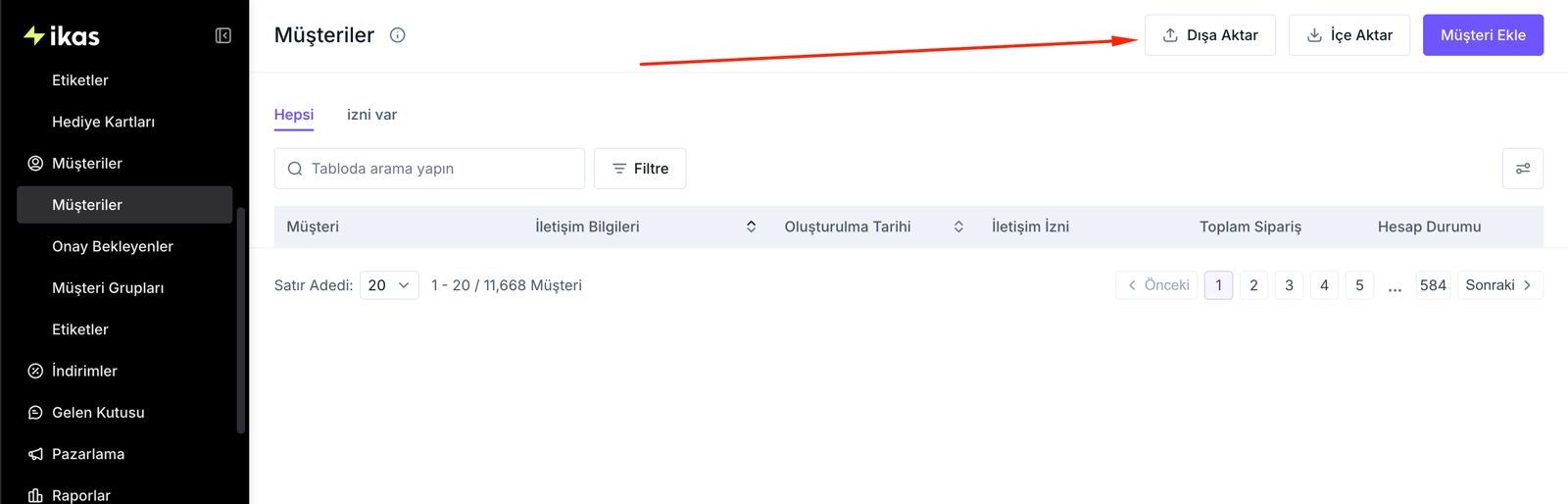
Another important step to take before deciding to migrate is to thoroughly review your existing e-commerce data. Migrating from IKAS to Shopify is not just a platform change; it also means transferring all your e-commerce operations. During this process, it is crucial that your product information, customer records, order history, and inventory data are transferred completely and accurately. Incomplete or incorrect data transfer can negatively impact customer satisfaction.
Therefore, it is recommended that you perform data cleansing before the migration. Unused products should be deleted, customer information should be updated, and inventory accuracy should be checked. In addition, it should be analyzed whether meta data (titles, descriptions, tags), which is important for categorization and SEO, can be transferred. When you work with an expert partner such as Nodus Works, this process is managed in a much more systematic and seamless manner. The success of the migration process from IKAS to Shopify largely depends on how meticulously these preparatory steps are carried out.
Steps for Migrating from IKAS to Shopify
The migration process from IKAS to Shopify requires a planned transformation involving many different components. It is not just about transferring data; it also involves restructuring your store's infrastructure, optimizing the user experience, and maintaining your SEO performance. Therefore, it is crucial that the migration steps are implemented sequentially and carefully.
Creating a Shopify Account and Basic Setup
The first step in the migration process from IKAS to Shopify is to create a new store account on Shopify. Shopify offers a 3-day free trial; during this time, you can experience the platform's interface and test the store setup. The account creation process is quite simple: you can start by entering your email address, choose a store name, and define your basic business information. Settings such as the currency, country, and language you select during this process can directly affect your store's performance later on, so they must be configured carefully.
After setup, you must first log in to the Shopify admin panel and complete basic configurations such as general settings, payment methods, shipping options, and tax definitions. Since Shopify offers a user-friendly panel, these steps can be easily completed without requiring technical knowledge. Guided setup steps are particularly useful for those new to e-commerce. However, if you are planning a large-scale transition, it would be safer to proceed with professional support.
Product and Data Transfer: Manual and Automatic Methods
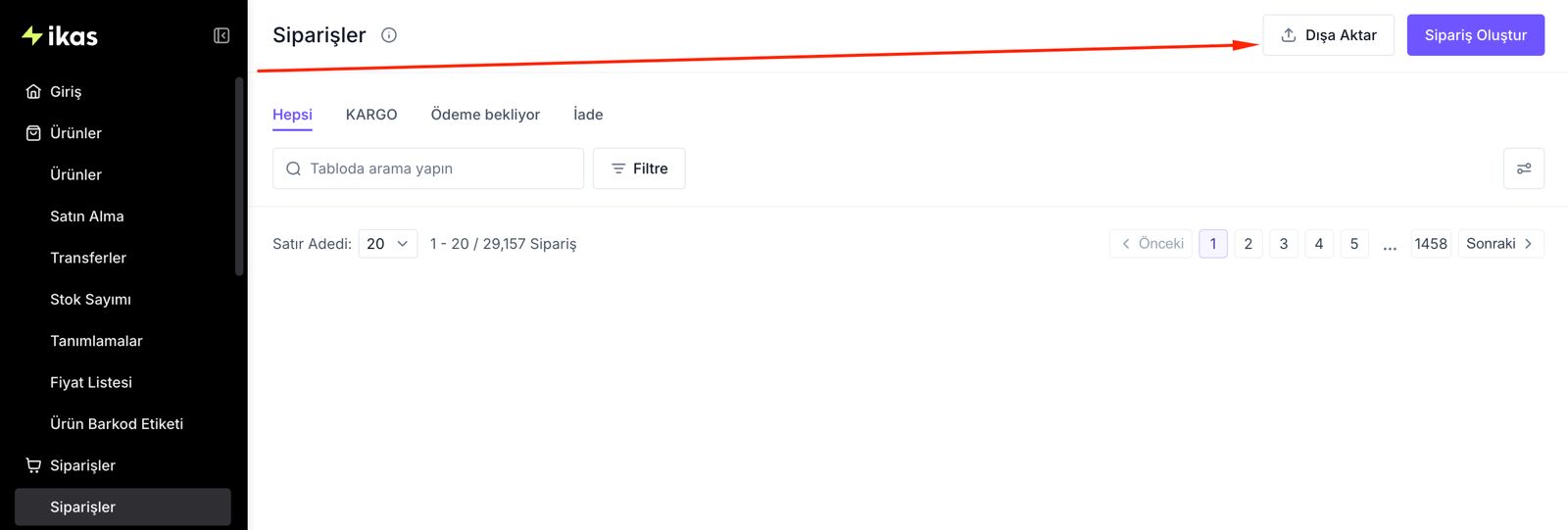
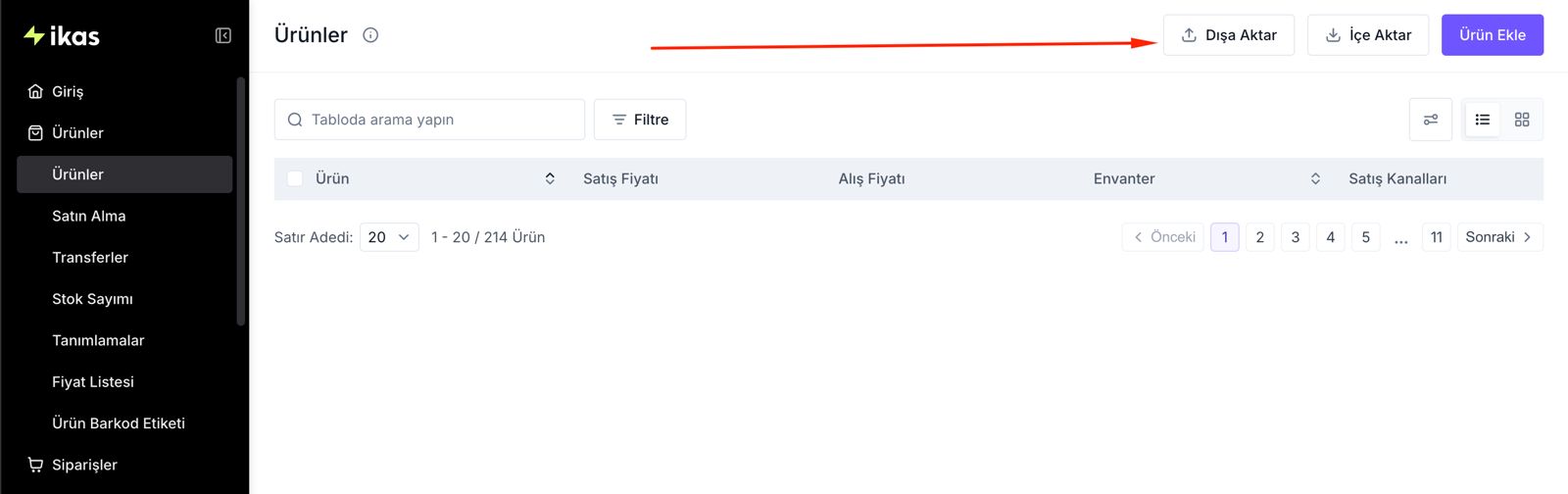
Transferring products from IKAS to Shopify is one of the most critical steps in the migration process. This transfer can be done in two ways: you can add products manually one by one or use a CSV file for bulk data transfer. Product names, descriptions, pricing, stock information, images, and category structures must be transferred completely. Shopify's CSV template simplifies this process, but formatting errors can prolong it.
For a faster and risk-free transition, working with applications that provide automatic transfer or professional service providers such as Nodus Works offers advantages. Automation ensures that details such as order history, customer data, and SEO tags are transferred correctly, along with product information. Additionally, during this process, you can review your category structure and make your catalog more scalable thanks to Shopify's advanced collection logic, multi-dimensional filtering options, and automation-focused product management. The transition from IKAS to Shopify is not just about transferring data; it is a comprehensive transformation step that offers the opportunity to restructure your sales processes, category architecture, and growth strategy.
Design and Store Customization Theme Selection & Customization
Shopify offers a wide range of professional themes that allow you to customize your store's design as you wish. When choosing between free and paid themes, it is important to select a design that suits your brand identity. Criteria such as mobile compatibility, fast loading, and user-friendly menu structure should be taken into account. After selecting a theme, elements such as content placements, banner images, and homepage layouts can be easily edited using Shopify's drag-and-drop interface.
When transitioning from IKAS to Shopify, you can either build a design from scratch or use your existing design as a reference, or even create a completely new user experience. Shopify's proprietary template language, Liquid, provides flexibility for more advanced design needs. To achieve a professional look and improve the user experience, it is recommended to leave theme customization to an expert team such as Nodus Works. This way, the transition process can be completed with a visually cohesive, sales-ready store.
Adding Functionality with Apps and Extensions
The Shopify App Store offers a vast repository of apps, allowing you to add any additional features your store may require. There are thousands of solutions for dozens of different categories, such as email marketing, loyalty programs, shipping tracking, inventory and product management, multilingual structure, and currency conversion. After migrating from IKAS to Shopify, you can quickly and seamlessly integrate many integrations that were previously inaccessible into your store, making your workflow much more flexible.
The main criteria to consider when choosing an app are ease of use, customer reviews, support service, and pricing. While many apps have a free version, a subscription may be required for professional features. Additionally, integrating marketing support tools such as Shop Pay, Google Shopping, and Facebook & Instagram store integrations can be highly beneficial for growing your business. In this regard, Shopify is a highly flexible platform in terms of functionality.
What Should You Consider to Ensure a Smooth Transition?
SEO & URL Structure Protection / Redirects
One of the most common mistakes made when migrating from IKAS to Shopify is not preserving old page URLs. This can lead to a drop in your search engine rankings and a loss of organic traffic. Therefore, during the migration process, it is vital to ensure that old URLs match the new pages on Shopify exactly or to set up 301 redirects correctly. These redirects should be professionally configured, especially for product, category, and blog content.
Shopify offers its own interface for managing URL redirects, but if you are moving hundreds of products or pages, manual processing can be quite time-consuming. At this point, working with automated redirect tools or expert support such as Nodus Works provides a significant advantage. You should also ensure that SEO elements such as meta titles, descriptions, and image alt tags are transferred completely during the transition process. With a properly executed SEO migration plan, you can maintain—and even improve—your rankings.
Customer Experience and Order Continuity
When migrating from one e-commerce platform to another, it is crucial that the customer experience remains uninterrupted. Changes made during peak hours while migrating from IKAS to Shopify can lead to user issues, order cancellations, or an increase in cart abandonment rates. Therefore, the timing of the migration plan must be carefully considered; it should preferably be carried out during low-traffic hours.
Furthermore, the post-migration testing process should not be neglected. Payment pages, membership registrations, product filters, mobile display, and order processes should be thoroughly tested. During this process, transferring your existing customers' accounts, preserving their purchase history, and, if applicable, redefining their loyalty points is important for customer satisfaction. Although Shopify's user-friendly structure makes most of these transitions seamless, professional support is recommended for an error-free migration.
Site Speed, Security, and Performance Checks
Once the migration process is complete, the performance of your new store becomes critical. Shopify generally operates at high speeds thanks to its global CDN infrastructure and optimized servers. However, the theme you choose, the images you upload, and the apps you use can affect this performance. Therefore, one of the first things to do after the transition is to test your site speed. You should analyze page load times using tools such as PageSpeed Insights or GTmetrix and make improvements.
Security checks are also important. Shopify is a PCI-DSS compliant platform and automatically provides an SSL certificate. However, you should still review details such as data security, spam protection, payment integrations, and form field security. Global regulations, especially customer data protection and GDPR compliance, can be successfully implemented on Shopify.
Shopify Migration Service with Nodus Works What Do We Do for You?
Services we offer at Nodus Works:
- Seamless Data Migration: Data migration from IKAS to Shopify.
- Customized Web Design: Designs tailored to your brand and impactful.
- Functional E-Commerce Sites: Sites that optimize the user experience.
- Digital Marketing Strategies: Successful digital marketing plans and implementations.
Contact us to grow your e-commerce business and take your brand forward, and start your transition from IKAS to Shopify.
The migration process from IKAS to Shopify involves many components, such as technical details, data transfer, SEO protection, and design adjustments. Rather than managing this complex process on your own, working with an experienced team gives you a significant advantage in terms of both time and cost. At Nodus Works, we plan every stage of your migration process and take the operational burden off your shoulders. This allows you to focus solely on growing your business.
Our services cover everything from pre-migration analysis to setup, data transfer, design customization, testing, and going live. First, we review your existing IKAS store, analyze your data, and create a plan for a seamless transfer. Next, we select a theme for your Shopify store that aligns with your brand identity and customize it according to your needs. We securely migrate all your data, including products, customers, and order history, while also setting up the SEO structure and redirects to preserve your organic traffic.
We also meet your needs for payment infrastructure setup, shipping integrations, multilingual store support, and marketing tool integrations. A dedicated project manager is assigned to you throughout the entire process to ensure seamless communication. We conduct comprehensive testing before going live to ensure your store launches seamlessly. In short, migrating from IKAS to Shopify with Nodus Works is not just a technical transition; it's a strategic transformation that will grow your business digitally.
If you're looking for a professional Shopify migration service, our expert team will provide you with a customized migration plan.
Shopify migration and setup services
Frequently Asked Questions (FAQs)
Is migrating from IKAS to Shopify difficult?
No, at Nodus Works, we make this process easy for you. We seamlessly transfer your data and reconfigure your store on Shopify.
How long does the migration process take?
The migration time varies depending on the size of your store and the amount of data. However, at Nodus Works, we manage this process as quickly and efficiently as possible.
Can I customize my store on Shopify?
Yes, Shopify offers numerous customization options. You can tailor your store's design and functionality to meet your specific needs.
What data can be transferred?
Various types of data, such as products, customer information, order history, and category information, can be transferred from IKAS to Shopify.
Will my store be closed during the migration?
We take precautions to ensure your store remains open during the migration process. This allows your sales to continue uninterrupted.
Contact Nodus Works for more information and to start your migration process!
Are You Ready to Migrate to Shopify?
Migrating from IKAS to Shopify is not just a platform change; it is a strategic move to increase your business's potential in the digital world. Shopify has the power to take your e-commerce to the next level with its advantages such as global scalability, extensive application support, and advanced user experience. However, successful migration requires proper planning, technical knowledge, and experience.
At Nodus Works, we don't view the transition as merely a technical process, because it's not about changing platforms, it's about scaling your business model. We analyze the bottlenecks in your current system and build a Shopify architecture tailored to your operational, marketing, and growth goals. We manage every step on your behalf, eliminate risks, and position your brand for sustainable growth on a global scale. If the limitations of your old platforms can no longer support your business, we are here to help you gain flexibility, speed, and international competitiveness by migrating to Shopify.
Contact us today, and let's plan your transition from IKAS to Shopify together.