Content Management & Keyword Optimization

Ranking at the top of Google isn't possible with technical infrastructure alone; it takes matching the right content with the right keywords. For your Shopify store, we conduct comprehensive keyword analyses and identify the keyword clusters best suited to your brand and target audience. Taking Türkiye's search trends and the competition within the Shopify ecosystem into account, we ensure your content is fully aligned with both user intent and algorithmic requirements. As a result, your pages become not just visible, but genuinely conversion-driving assets.

At Nodus Works, we approach every detail — from content creation to meta optimizations, from category descriptions to blog strategies — from an SEO perspective. We make every page of your Shopify store goal-oriented, consistent and true to your brand's voice. Thanks to keyword maps, content hierarchy and internal linking structure, search engines understand your store more easily, while users take action faster. The result: a Shopify site with rising organic traffic, stronger brand authority and maximized sales potential.

200+
200+ active brands
grow on Shopify with Nodus Works
Keywords
a keyword map based on search intent
Content calendar
planned and sustainable production
On-page SEO
title, meta and content optimization
Category & Blog
conversion- and traffic-focused content
Content-based SEO
Brands growing with Nodus Works
Why Content?

Why Should You Get a Content Management Service?

Shopify pages are product-focused, but Google is content-focused. It's not enough to simply list your products; you need to make them stand out with content that matches search intent. We craft your content strategy in a way that turns it into sales.

Keyword Mapping

Page-level keyword mapping is set up.

Competitor Analysis

Opportunities are identified based on competitors' organic keywords.

Category Descriptions

SEO-focused description areas are added, and existing ones are optimized.

Blog & Topic Cluster

Traffic-driving content clusters are created.

Meta & Heading Structure

Title, meta and H1–H2-H3 arrangements are made.

Internal Linking & CTA Optimization

A content architecture that strengthens the user flow is built and reinforced.

THE PATH OF ONE PIECE OF CONTENT

How does a keyword make it to publication?

The process section describes the phases of the project; this flow shows the path a single piece of content takes. The example search is “men's linen shirt”: from data to brief, and from brief to the right field in Shopify.

1 · DATASearch data
  • Queries containing “linen shirt” in Search Console
  • Monthly search volume and the competing pages on page one
  • Intent: commercial investigation, the user is comparing models
2 · MAPPINGPage assignment
  • Cluster: linen shirt, men's linen shirt, white linen shirt
  • Target page: the linen shirt collection
  • A blog post targeting the same intent becomes a guide
3 · BRIEFBrief
  • Intro copy: fabric, fit and use
  • FAQ: “does a linen shirt shrink?”
  • Internal links: linen care guide and subcollections
4 · WRITINGWriting and approval
  • Written to the brand voice guide
  • Checked for conflicts with product data
  • Ready to publish after brand approval
5 · PUBLISHINGThe right field in Shopify
  • Collection description and metafields
  • SEO title, meta description and handle
  • The publish date is logged for measurement

The search in the flow is an example; keywords are chosen for each brand with data from Search Console and keyword tools. Tracking clicks, positions and organic revenue after publication is the subject of our SEO reporting service.

CONTENT & SEO

Our Content & Keyword Strategy

By analyzing search intent, we optimize your content for both users and Google. With the right keywords, strong category texts and planned blog production, we deliver lasting organic growth.

Keyword Research

We identify the keywords that fit your industry and search intent, then prioritize them by volume and competition.

Content Strategy & Calendar

We build a sustainable blog and content calendar with measurable goals.

Category & Product Copy Optimization

We optimize category and product descriptions for both users and search engines.

On-Page SEO Adjustments

We improve title, meta description, URL, heading hierarchy and internal linking structure.

Blog & Guide Content Production

We produce blog and guide content that meets search intent and builds authority.

Content Performance Tracking

We monitor ranking, traffic and conversion metrics and update content regularly.

Our Process

Our Content & Keyword Process

From intent analysis to performance reporting, we craft your content strategy end to end.

01

Keyword & Intent Analysis

We analyze users' search intent (informational, comparison, purchase). Using Google Search Console, Ahrefs and Semrush data, we identify high-volume keywords that also have high conversion potential. The goal is not just traffic, but attracting visitors with a strong intent to buy.

02

Competitor Visibility Comparison

We analyze competing brands' organic rankings, the keywords they use and their content strategies. This analysis reveals untapped opportunity areas within the industry. This way, we position your brand not merely as “similar,” but in a differentiated content position.

03

Page-Level Keyword Plan

We create a separate keyword map for every category, product and blog page. Which keywords a page will rank for and which pages will support each other is clearly defined. This structure prevents SEO conflicts (keyword cannibalization) and strengthens page authority.

04

Content Production & Revision

We make your existing content SEO-friendly and produce new content for missing pages. Titles, meta descriptions, H1–H3 structure, image alt texts and internal linking strategy are reorganized. Every page sends search engines the message: “I'm the expert on this topic.”

05

Blog & Cluster Publishing

We prepare blog and knowledge-hub content in line with Google's E-E-A-T criteria. By organizing it into a main topic (pillar page) and subtopics (cluster content), we strengthen your site structure. This method helps your site earn “topical authority.”

06

Tracking & Performance Report

We track content performance, organic traffic changes and ranking gains on a monthly basis. Every report contains not just data, but insights into which pages have improved and which ones present opportunities. This way, your content strategy becomes a living, evolving system.

PAGE TYPES

Which search belongs on which page?

In Shopify, every search intent is answered by a different page type. We put side by side which page answers which search, what content it answers with and which field of the store the content lives in.

Page typeSearch it answersContent formatField in Shopify
CollectionCommercial investigation
“men's linen shirt”Short intro, subcollection links, buying guide, FAQCollection description, metafields and theme sections
ProductTransactional
Model name, “buy” searchesBenefit-led description, specification table, care and size informationProduct description, metafields, variant images
Guide articleInformational
“how to wash a linen shirt”Answer in the first paragraph, step list, links to related productsBlog post (/blogs/) and Article schema
Comparison articleResearch
“linen vs cotton”Comparison table, which one suits whom, a clear recommendationBlog post or page
Buying guidePre-decision
“how to choose running shoes”Criteria list, size chart, links into collectionsPage or blog post
Company and policyTrust
Delivery time, return terms, brand informationClear terms, contact details, company informationPages and Shopify policy pages
FAQ blockLong-tail question
“how many days does delivery take”Question heading and a direct answer of 2-4 sentencesFAQ section in the collection or product template

When two page types compete for the same intent, for example a guide article and a collection, Google usually picks one of them. The page map resolves this conflict before publication.

APPS THAT CARRY THE CONTENT

Which of our apps are used in content work?

Two of our apps take written content live with the right page and link structure: Seodus adds internal links between guides and collection pages, breadcrumbs and schema without code, and Wizard creates the target collections for the clusters in the keyword map from the store menu. That way the copy goes live once the page that will carry it is ready.

Bundle Works app iconWishalert app iconSortmax app iconBulkly app iconLoyalis app iconToptan app iconNodmob app iconPeakmerce app iconGoldus app iconSyncly app iconCompliTR app iconScheduly app iconSupport app iconSV
Seodus app icon1Wizard app icon2Nodus Works
  1. 1Seodus
  2. 2Wizard
15+ apps built by Nodus WorksUsed in this service
Seodus app icon

Seodus

Internal links from guide to collection
01

Once the keyword map defines which pages support each other, internal links are set up in Seodus without code: links from a guide to its target collection, and from the collection back to the guide, are defined according to the matches in the map. The breadcrumb shows readers and crawlers alike which topic the article and the collection sit under.

Where it runs
Blog posts, collections, pages
What we check
No orphan page left without internal links
View Seodus
Wizard app icon

Wizard

A target collection for each cluster
02

When the keyword map calls for a new collection, Wizard creates it as a smart collection from the store menu. Because the menu and the collection come from the same tree, the content hierarchy stays identical to the navigation. The collection list is exported and compared with the keyword map; missing or redundant collections show up this way.

Where it runs
Store menu, collections
What we check
Each keyword cluster assigned to a single collection
View Wizard

Apps do not replace content; writing the copy, getting it approved and placing it in the right field is the work itself. All our apps are listed on the apps page.

BEFORE WE START

What needs to be ready for the first month

The first month of content work is spent on the inventory and the keyword map. If these six items are ready on the brand's side, writing can start in the second week.

Search Console and GA4 access

New content is not planned without knowing which page brings traffic today. Both accounts remain owned by the brand.

Shopify staff account

With permissions for products, collections, blog and translations. Theme editing rights are requested only if a metafield block needs to be added.

Source of product information

The ERP field or spreadsheet where material, size, origin and care information is kept. Content must not contradict this data.

Brand voice examples

Copy you like and copy you do not, formal or informal address, phrases that are off limits.

Campaign and season calendar

Guides and collection copy need to be live before demand rises; the calendar is planned at least one quarter ahead.

Approval flow and subject expert

Who approves within how many days, and a person on the product team who can be consulted. Experience and expertise signals come from these inputs.

Content with AI

AI can help with research and drafts; every text that goes live passes through an editor. Google looks at whether content is helpful, not at how it was produced, but mass-producing pages without original value is listed in its spam policies as “scaled content abuse”.

Blog tag pages

Shopify opens a separate listing page for every blog tag in the /blogs/blog-name/tagged/tag format. We keep tags few and meaningful, and set tag pages to noindex when needed.

AI SEO & GEO

Make Your Content a Source in AI Searches

Modern content SEO is no longer just about keywords. Answer engines such as Google AI Overview, ChatGPT, Perplexity and Gemini read what your content is about, which topic it relates to, and your in-store linking structure through structured data. We make your content compatible with GEO (Generative Engine Optimization) and AI search; with our in-house Seodus app, we set up your schema, breadcrumb and internal linking infrastructure without writing a single line of code.

AI Overviews & Answer Engines

Answer engines such as Google AI Overview, ChatGPT, Perplexity and Gemini read your content more clearly through structured data, increasing the chance that your brand is cited as a source in AI answers.

GEO (Generative Engine Optimization)

We turn your content into a meaning map that generative search engines can understand; topic, category and content relationships become clear.

FAQ & Article Schema

With Seodus, the FAQPage and Article schemas for your blog, guide and FAQ content are created without writing code and injected automatically into the theme.

Advanced Breadcrumb

We enhance Shopify's limited breadcrumb structure and show the content–collection relationship with long, meaningful category paths.

Internal Linking & Topic Authority

By connecting pillar and cluster content, we strengthen topical authority and make it easier for crawlers and AI agents to understand your content structure.

E-E-A-T & Trusted Context

By clearly defining brand, publisher and content information, we build a trustworthy content context for AI search and search engines.

CASE STUDY

Organic traffic from content: Mutlu Dükkan

At Mutlu Dükkan we treated education and content as a growth channel. Pages supported by cake and design content made the brand noticeably more visible in search results, and the path from recipe and tutorial pages to product orders was measured.

3,000+Monthly organic visits to tutorial and recipe pages
14%Rate of moving from this content to a product order
1.4% → 3.1%Site conversion rate at the end of the project
TRY 580 → 920Average order value at the end of the project
Free Tools

Try Our Free Shopify SEO Tools

Shopify SEO Analysis Tool, LLMs.txt Generator, Theme Finder, Package Calculator and more. With free tools that run instantly in your browser without requiring sign-up, measure your store's SEO health right away.

METAFIELDS

Managing product information with metafields

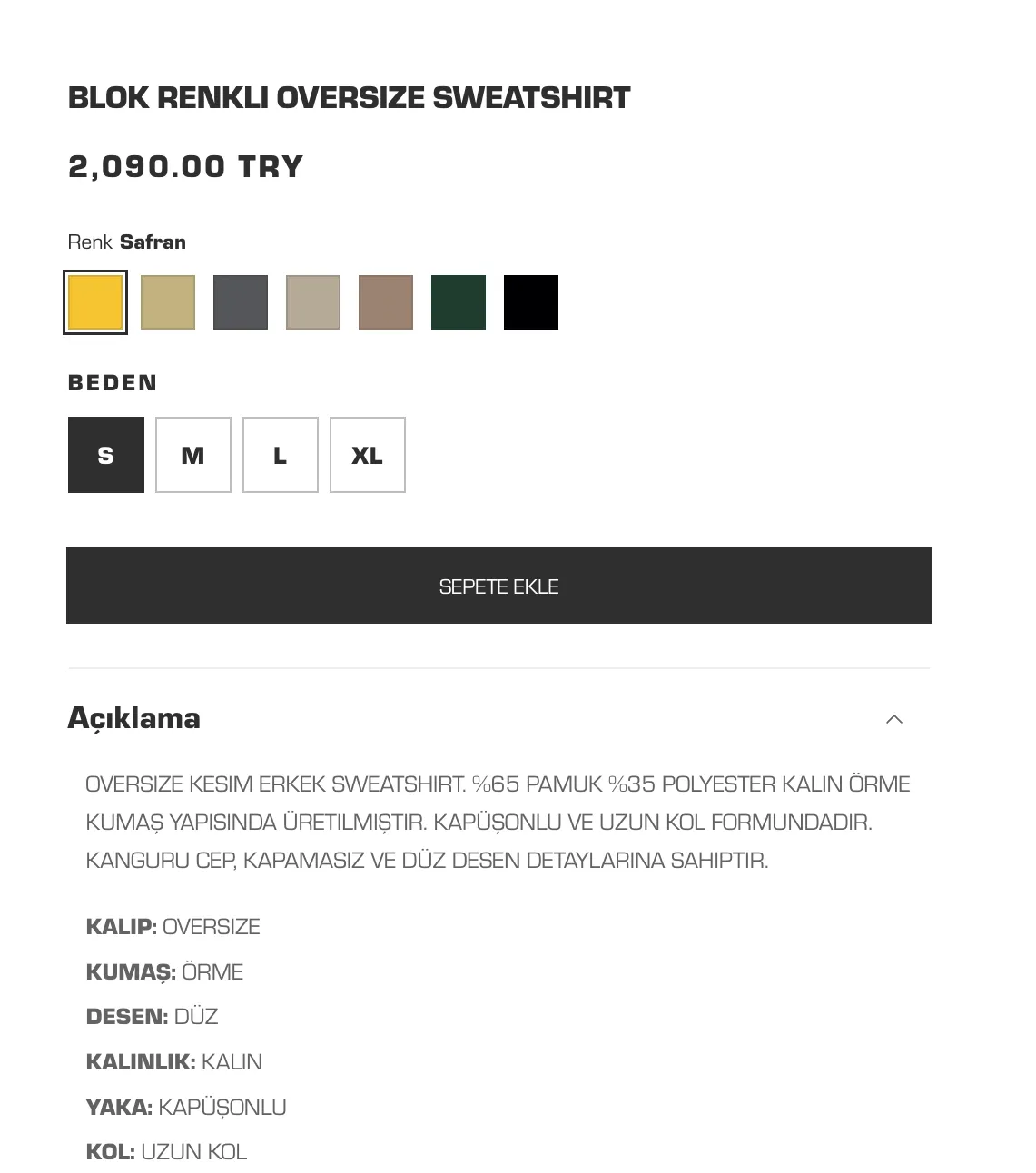
Consistent copy across thousands of products cannot be written in a free-form description box. When size, material and care information is stored in metafields, the theme shows it in the same place on every product, and the description keeps only the sentences specific to that product. The excerpt alongside is from a Vamos product page: fit, fabric, pattern, weight, collar and sleeve information sit on separate lines below the description.

  • Product metafields: material, fit, size, care instructions and origin are stored in separate fields.
  • Collection metafields: bottom copy, FAQ and a featured guide link sit in a separate field per collection; long copy does not push the product grid down.
  • Metaobjects: a size chart, fabric glossary or care guide is written once and linked to hundreds of products.
  • Bulk updates: values are updated via CSV, Shopify's bulk editor or the ERP integration.
  • Filters and schema: the same fields feed Search & Discovery filters and the Product schema; page, filter and schema show the same data.
Excerpt from a Vamos product page: color-block oversize sweatshirt, color and size selection, with fit, fabric, pattern, weight, collar and sleeve lines below the description
Contact
Let's Get Visible with Content

Let's build your content and keyword strategy, and rise permanently on Google.

Book a Meeting
FAQ

Frequently Asked Questions

Why is content SEO important?
Google promotes the content that best answers users' questions to the top. The right content brings lasting traffic without any ad cost.
When will I see results?
Content SEO is a medium-to-long-term investment; meaningful results usually become clear within 3-6 months.
Do you write the blog content?
Yes, we produce content based on keyword research that meets search intent.
Will my existing product copy be rewritten?
When needed, we rework category and product copy for both users and SEO.
How much content will be produced?
Content volume is set according to your goals and budget; we proceed with a sustainable calendar.
How do you select keywords?
We prioritize keywords by evaluating factors such as search volume, competition level and commercial intent (purchase inclination).
Is writing content for Shopify product and category pages effective for SEO?
Absolutely yes. When product and category descriptions are optimized with the right keywords, ranking performance improves.
How often should blog content be published?
At least 1 new piece of content per week is ideal. This helps Google see the site as “active.”
Do you make edits to existing content?
Yes, we make existing copy SEO-friendly. We refresh the title, meta, heading and CTA structure.
Will the content production match the brand's style?
Absolutely. Tone, word choice and heading structure are prepared consistently with the brand's voice.
Does blogging really contribute to sales?
Yes, because trending blog pages guide users to product pages; this strengthens the conversion chain. Thousands of visits coming from a single blog post means the sales potential of the product featured in that post also increases.

JOIN THOSE
WHO CHOOSE US...

We create Shopify solutions for everyone.

Do you want to set up a new Shopify store, improve your existing one, create custom integrations, or solve speed issues? We are expert Shopify partners who handle the technical work for you.

Dossha

#shopify

Les Benjamins

#shopify

Nocturne

#shopify

Fellas

#shopify

Mai

#shopify

Karaca

#shopify

Milagron

#shopify

Kiğılı

#shopifySeo

Şölen

#shopify

Adell

#shopifyB2B

Ohora

#shopify

Rendrea

#shopifyBooking

Babeskin

#shopify

The New Lab

#shopify

DTF Town

#shopify

Eczaclick

#shopifySeo

Thermos World

#shopify

Halı.net

#shopify

Blend-r

#shopify

Oioi

#shopifySeo

Nowshopfun

#shopify

Marie Claire

#shopify

Gaziburma

#shopify

Book in the World

#shopify

WHY WITH US
YOU NEED TO WORK
WE WOULD LIKE TO TELL YOU

We understand Shopify very well; we stand out against every segment in Turkey:)

Gülümseyen, siyah saçlı ve siyah kazak giymiş genç adam portresi.Koyu saçlı, koyu renk kazak giymiş düşünceli genç kadın, koyu renk arka planda.Gri kazak ve koyu gömlek giymiş, kısa saçlı gülümseyen erkek portresi.Kısa kıvırcık saçlı, sakallı genç adam siyah kazakla, koyu geometrik desenli arka planda.
Koyu gri arka plan önünde yeşil kazak giymiş, hafif dalgalı saçlı, gülen genç kadın.Düz siyah saçlı, gri kazak giymiş genç kadın, koyu arka planda kameraya bakıyor.Gözlüklü ve koyu kazak giymiş, karanlık desenli arka plan önünde ciddi ifadeli erkek portresi.

A team of only Shopify speakers

WE COMMUNICATE VERY QUICKLY - THANKS TO OUR TICKETED SYSTEM
Düz siyah saçlı, açık tenli ve nötr ifadeye sahip genç kadın portresi.

Yo!

My banners seem to be broken :(

Can you help me, I'm on the campaign trail.

Hi Elif!

We dissolve in 2 minutes.

Kısa kıvırcık saçlı, sakallı genç adam siyah kazakla, koyu geometrik desenli arka planda.

Transparent
contract model

Get Quote
Get Quote

Start your next project with Nodus Works

Scroll —
Scroll —
Scroll —