Collecting payments on Shopify in Turkey is only possible through CBRT-authorized payment institutions and bank virtual POS terminals; Shopify Payments, Stripe and PayPal are not available to sellers based in Turkey. A bank virtual POS, on the other hand, does not connect to Shopify directly: your own bank agreements come into play through a payment orchestration platform such as Craftgate or Lidio, and we walk through the steps of that connection in our Shopify virtual POS setup guide. Beyond the provider, your payment setup also determines the settlement schedule, cash flow on installment sales, and the currency and exchange rate margin on international sales.
In the Shopify projects we build at Nodus Works, we have seen dozens of stores that set up their payment provider correctly on the technical side but got their cash flow planning wrong. The question of how to collect payments on Shopify is not only a choice between iyzico and PayTR. It determines who pays in which currency, on which settlement schedule and under which legal framework. This guide looks at the payment collection architecture of stores that sell in Turkey and internationally at the same time, at the strategic level. For the technical setup steps, see our separate guide, Adding Shopify Payment Methods.
Collecting Payments on a Shopify Store in Turkey: How the Local Ecosystem Works

Shopify stores in Turkey can only collect payments through authorized payment institutions; this is a regulatory requirement, not a choice. In practice, the restriction has three consequences: Stripe and PayPal cannot serve Turkey, each provider has a different settlement period, and if cash flow for installment sales is not planned before setup, you face unexpected delays.
How CBRT Regulation Affects the Way You Collect Payments
Since 1 January 2020, the licensing and supervision of payment institutions and electronic money institutions in Turkey has been the responsibility of the Central Bank of the Republic of Turkey (CBRT, or TCMB in Turkish); before that date, the authority lay with BDDK, the Banking Regulation and Supervision Agency. Banks remain under BDDK supervision within a separate framework. PayPal suspended its operations in Turkey in 2016 because it could not obtain the required license, and it has not served sellers based in Turkey since then; Stripe has never listed Turkey among its supported countries. Planning to collect payments through either of these providers with a company resident in Turkey is therefore a dead end from the start.
Approved payment infrastructure for a Shopify store in Turkey falls into three categories:
Critical Note: Check every year that your provider appears on the CBRT list of authorized institutions. Continuing to collect payments through a provider that is not authorized, or whose license has been suspended, carries the risk of legal sanctions. The CBRT's current list of authorized payment and electronic money institutions is available at tcmb.gov.tr.
From the Payment Provider to Your Bank Account: Settlement Periods
When a customer pays today, the money does not reach your account on the same day. The settlement period depends on the provider and the terms of your agreement.

Payouts depend on the provider and the payout term you choose: on its standard model, iyzico pays weekly (sales from Monday to Sunday are paid out on the following Wednesday, after the holding period), while with PayTR the payout term depends on the package you choose. Weekend orders and bank holidays extend this period. Some banks also make weekly bulk payouts on their virtual POS; in that case, all transactions from Monday to Sunday are transferred in a single payment on the following Monday.
At Haters Studio, our own cap and streetwear brand, we also plan stock and ad budgets around the settlement date, when the money actually reaches the account, rather than the order date; in weeks when sales pick up, collections always trail a few days behind. Spending on stock and advertising without building the settlement period into your business plan creates liquidity pressure during peak sales periods.
We explain how to connect bank virtual POS terminals to Shopify step by step in our Shopify virtual POS setup guide.
Cash Flow Planning for Installment Sales

With installment sales, too, the full amount is paid out in one go according to the provider's payout schedule; the installments run between the bank and the cardholder. For a 3,000 TL sale in 3 installments, the full 3,000 TL (minus commission) reaches your account on the payout date; the number of installments, however, increases the commission rate.
This structure matters for two reasons. First, stores with a high share of installment sales (especially in categories such as electronics or furniture) have to calculate their gross revenue at the start of the month from an estimated collection schedule, not from sales figures. Second, some providers set the installment commission rate higher than the standard commission, because the bank passes the cost of funding the installments on to the seller. For a store with high installment volume, the real annual commission cost can run well above the single-payment commission rate your provider advertises; calculate it with your provider's installment commission table.
Tip: You can pull a payout (payment schedule) report from the iyzico and PayTR dashboards. Compare this report with your monthly cash flow sheet to make your actual collection schedule visible.
Collecting Payments from Abroad on Your Shopify Store
Shopify stores in Turkey can accept payments from foreign cards; however, the scenario and the architecture you set up have a direct effect on your exchange rate margin, the customer experience and your tax obligations.
Scenario 1: A Foreign Customer Shops on a Turkish-Language Store
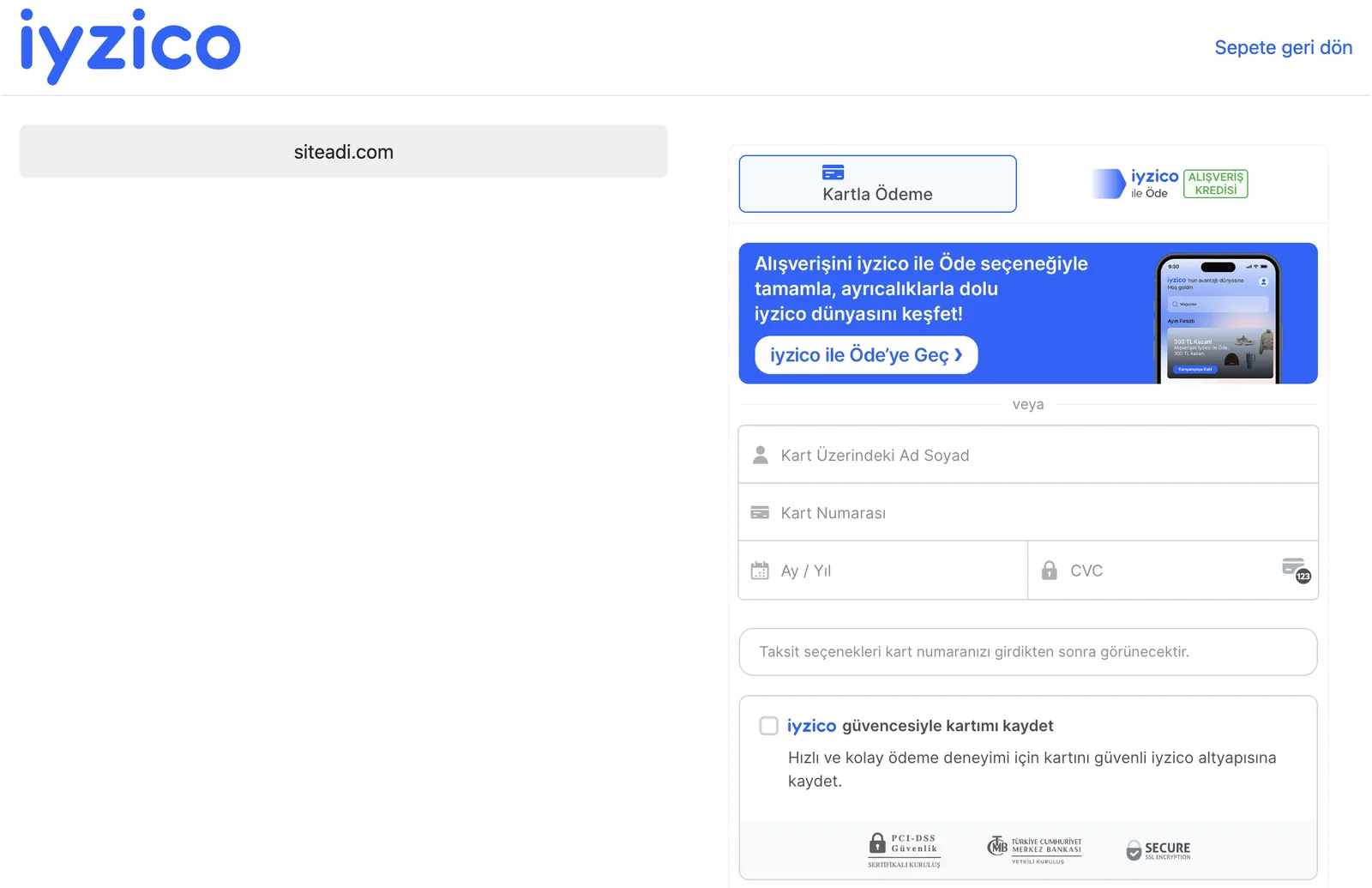
iyzico and PayTR accept foreign cards. A German customer can pay with a Visa card through iyzico. In this case, the provider converts the foreign currency into TL at its own rate and pays TL into the seller's account. The exchange rate margin varies by provider; before you sign, ask your provider in writing which conversion rate it will apply and how far it is from the CBRT rate.
In practice, this model has two limitations. First, if the store is priced in TL, the foreign customer has to work out the equivalent in their own currency while shopping; that friction lowers conversion. Second, when the exchange rate moves during the day, the seller receives different amounts in TL, which makes currency planning harder.
Scenario 2: A Multi-Market Store Structure (Shopify Markets)
Shopify Markets lets you define a separate language, currency and payment method for each market. On the payment side, however, the Turkish store stays in TL: on Shopify, collecting in the local currency is only possible with Shopify Payments or Adyen, and orders placed through other providers are processed in the store's default currency (TL). Collecting in foreign currency at Shopify checkout is only possible with a company established abroad and Shopify Payments; accounts like Wise Business or Payoneer are used outside checkout to hold foreign currency and transfer it to Turkey.
In this setup, the HidePay app filters payment methods dynamically according to the market the customer is in. A customer in Turkey sees iyzico, while for a customer in Germany the methods that only work in Turkey are hidden and a provider suited to that market is shown instead. Check Shopify Markets compatibility with your payment provider before setup; some providers work with limitations in the Markets architecture.
Risk to Avoid: Setting up Shopify Markets only for language and currency and skipping payment method routing means local providers are shown to customers outside Turkey. This undermines trust on the payment page and lowers conversion.
International Collections: Bringing Foreign Currency into Turkey
For stores that sell abroad regularly, how foreign currency revenue is transferred to Turkey is a separate decision point.
Once sales abroad exceed 50 orders a month, opening an account that collects in foreign currency, instead of relying on automatic conversion by iyzico/PayTR, saves on exchange rate margins. Calculate the gain with your own volume: annual international revenue × exchange rate margin. For example, 10,000 EUR a month in international sales adds up to 120,000 EUR a year; assuming an exchange rate margin of 1.5-3% for the sake of example, the difference paid through automatic conversion reaches 1,800-3,600 EUR a year. Subtract the foreign currency account's own fees from that amount to find your real savings.
Risk to Avoid: Collecting directly in foreign currency requires a company established in the target country. A common and costly mistake is to set up a company on paper only so that you can accept payments. Applying for Shopify Payments or a similar service with a company that has no physical address, no real operations and no local ties can lead to your account being closed. The verification process examines the business's real presence in the country where it is registered, and paper companies can get stuck at this stage, with consequences that go as far as frozen balances. If you do not have a real company with a physical address abroad, third-party collection solutions such as Wise Business or Payoneer are the more compliant way to collect in foreign currency without putting your account at risk.
To set up Shopify's payment architecture correctly across several markets, test provider compatibility and plan settlement optimization, our Shopify integration service manages multi-market setups end to end.
Managing Sales in Turkey and Abroad at the Same Time
When the same Shopify store sells both in Turkey and abroad, you cannot manage the two markets with a single provider; each market needs different payment methods, a different currency and meets different customer expectations. The solution is to build a market-based architecture and filter payment methods by market. There are two ways to do this: Shopify Markets, or separate subdomains for each currency.
Market-Based Payment Routing with HidePay

HidePay adds the customer's country, currency or tag as criteria to Shopify's built-in logic for displaying payment methods. When a customer in Turkey reaches the checkout page, they only see iyzico or PayTR; for a customer in Germany, these providers are hidden and an option suited to that market is offered instead.
Stores that sell in several markets without this setup run into two problems. First, showing Turkish providers to foreign customers creates a trust issue: the question "What is iyzico?" kills conversion. Second, showing foreign providers to Turkish customers triggers a regulatory compliance risk. At Haters Studio, our own cap and streetwear brand, we built the payment step for international orders on this logic: separating payment methods by market keeps foreign customers from running into options they don't recognize on the checkout page.
Payment Method Architecture with Shopify Markets
Shopify Markets defines a separate store experience for each market, covering language, currency, tax rate and payment method. When the Turkish market is configured as a separate market, iyzico or PayTR is assigned only to that market, and the other markets have their own independent payment architecture.
The point to watch in the Markets architecture is provider compatibility. Not every payment provider works with Shopify Markets to the same degree. Some providers only process transactions in the store's default currency and return errors on orders placed in an alternative currency through Markets. Review your provider's Markets documentation before setup.
Alternative Architecture: Currency-Based Subdomains
As an alternative to Shopify Markets, another structure we use for stores that want to sell in more than one currency under the same brand is to open a separate subdomain for each currency. This approach cleanly separates the payment provider, the pricing and the tax settings from one another.
The advantage of this architecture is that each market can run with its own payment methods, its own price list and its own tax setup; unlike Shopify Markets, each subdomain technically behaves like an independent store. You can offer Turkish customers TL payments in installments while selling to customers in Europe in their own currency, with the payment methods they are used to.
Critical Note: When you use more than one subdomain, hreflang tags must be set up correctly so that search engines understand which address belongs to which country; otherwise the same content looks duplicated across different addresses and its SEO value is split. We explain this setup in detail, using a real case, in our article how to set up hreflang between two separate Shopify stores.
Which architecture is right depends on your volume: for low to medium volume multi-market sales, Shopify Markets + HidePay brings less operational overhead; for high-volume brands growing independently in each market, the subdomain architecture gives a cleaner separation.
Exchange Rate Risk with Multiple Currencies
When multiple currencies are enabled on Shopify, product prices are converted and shown in the selected currency. This conversion uses Shopify's exchange rate table, and how often it is updated is decided by Shopify; it does not reflect the live market rate second by second.

In periods of strong currency movements, this lag erodes your margin. For example, if the EUR/TRY rate moves 2% in a single day and your store's exchange rate table was updated every 6 hours, the TL value of orders placed in that window may fall below what you expected. In periods of high inflation, updating prices frequently or entering fixed market-specific prices with the "manual pricing" option in Shopify Markets removes this risk.
Tip: When exchange rates are highly volatile, enter manual prices for each market. If you sell in local currencies through a company abroad and Shopify Payments, setting a manual exchange rate instead of the automatic one for markets outside Turkey, or fixing product prices by country, stops currency movements from cutting into your margin.
The Tax and Legal Side of Collecting Payments
Every transaction through which a Shopify store in Turkey collects payment creates different tax obligations depending on the country of origin and the product type. VAT treatment of international sales, mandatory ETBIS registration and the declaration of foreign currency collections are the most important of these obligations.
VAT and International Sales
Sales of goods from Turkey to other countries benefit from a VAT exemption; no VAT is charged on deliveries supported by export documents. However, this exemption only applies to shipments of physical goods. For sales of digital products or services, the tax rules of the buyer's country apply, and the seller may also have a separate tax obligation in that country.
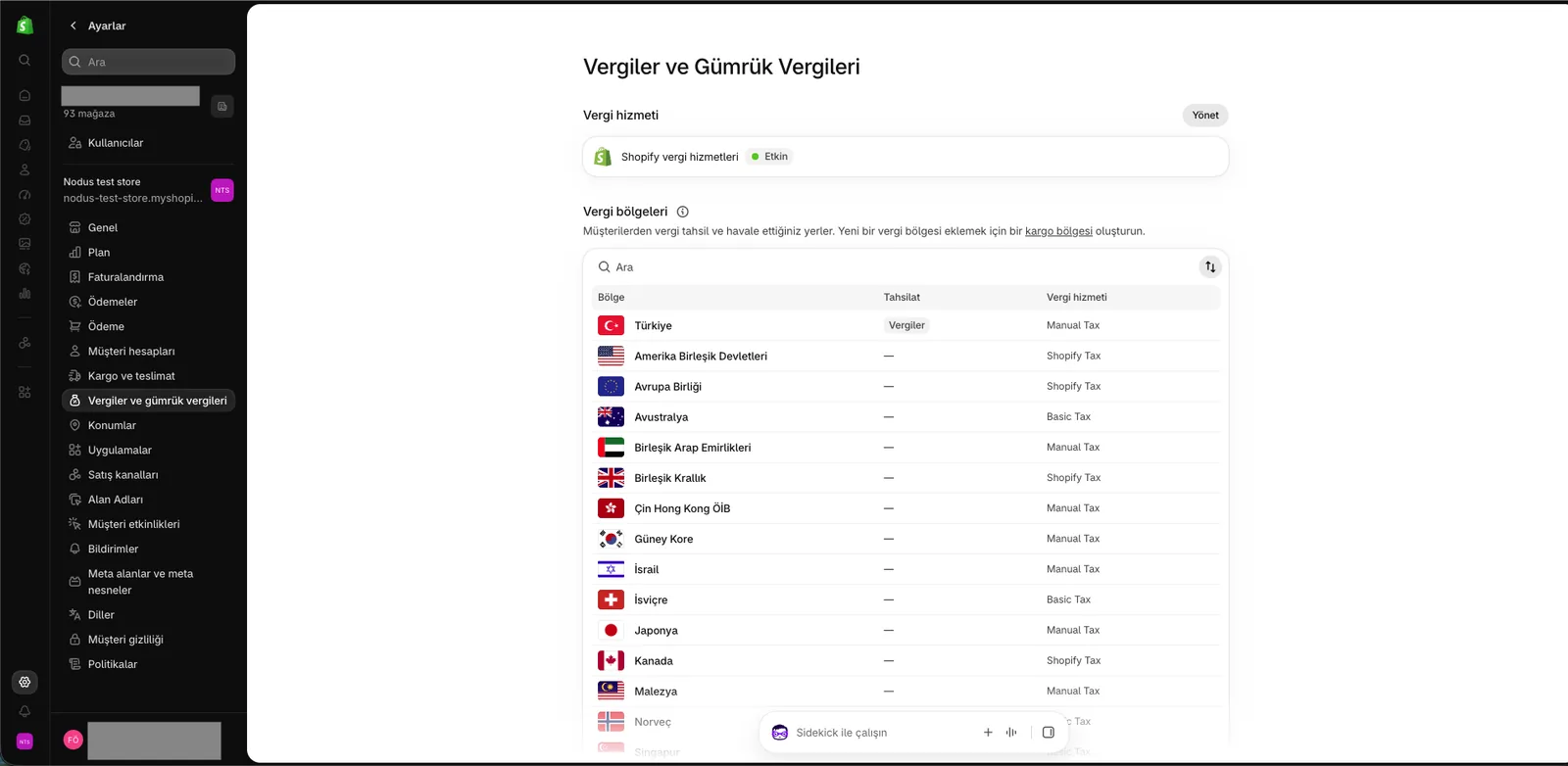
Turkish stores selling digital services or content to the European Union market may fall under the EU's OSS (One Stop Shop) scheme. There is no threshold for non-EU sellers; selling digital services to EU consumers triggers EU VAT from the very first sale, and non-Union OSS registration is the way to report it through a single point (the alternative is a separate VAT registration in each member state). Clarify the process with an independent tax adviser before you start selling.
Risk to Avoid: Leaving Shopify's automatic tax settings the same for all markets means that while VAT is applied to customers in Turkey, VAT is also calculated incorrectly for customers abroad. Configure tax settings separately for each market in the Shopify admin.
ETBIS, KVKK and Payment Data
All ecommerce sites operating in Turkey must register with ETBIS, the e-commerce information system run by the Ministry of Trade. Your ETBIS registration must be complete before you start collecting payments; selling without registration leads to an administrative fine. For every step of the ETBIS registration process, see our guide What Is ETBIS?
Under KVKK (Turkey's data protection law), payment details are personal data. iyzico and PayTR store card data on their own infrastructure in a PCI-DSS compliant way; this data does not pass to Shopify or to the store's database. However, the customer's first name, last name, address and order details do fall under KVKK. The privacy notice must be accessible on the payment page; processing needed for the order and delivery does not require explicit consent, which is only obtained for additional purposes such as marketing.
International Collections and Foreign Currency Declaration
Foreign currency collections from abroad by a company resident in Turkey are regulated under Decree No. 32 on the Protection of the Value of the Turkish Currency. Export proceeds must be brought into Turkey and declared to the CBRT. Whether foreign currency held in foreign fintech accounts such as Wise Business or Payoneer is exempt from this obligation is open to legal interpretation. We do not recommend collecting large volumes from abroad before clarifying this with a foreign exchange specialist or a foreign trade consultant.
Which Payment Collection Strategy Suits Which Store?
The right payment collection architecture depends on the store's market, transaction volume and growth plan. The table below compares four basic store profiles.
The Turkey + active international profile requires the most complex architecture. In this profile, a single misconfiguration can lead to declined payments, tax problems and settlement confusion all at once. That is why you should verify each market's payment, currency and tax settings separately with test orders before taking the configuration live.
To set up Shopify's payment architecture correctly across several markets, test provider compatibility and plan settlement optimization, our Shopify integration service manages multi-market setups end to end.
FAQ: Collecting Payments on Shopify
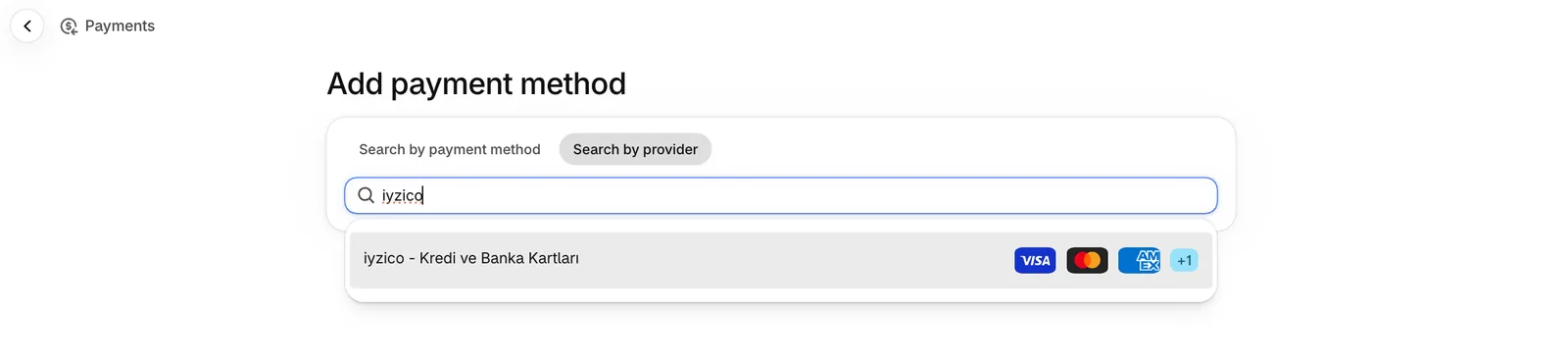
Which payment providers can be connected to Shopify in Turkey? iyzico, PayTR, Sipay (through the Sipay POS app), and Paratika are payment providers you can select under Settings > Payments in Shopify. Craftgate and Lidio, on the other hand, are payment orchestration platforms that bring multiple bank POS accounts and payment institutions together in a single integration; Craftgate has a payment app listed in the Shopify App Store that you activate under Settings > Payments, and Lidio offers a Shopify integration. Shopify Payments cannot be used in Turkey.
Can I connect my bank virtual POS directly to Shopify? No. Banks do not have a payment app set up on the Shopify side, so a bank virtual POS cannot be connected directly. If you want to use your own bank virtual POS agreements, a payment orchestration platform such as Craftgate or Lidio brings those POS accounts together in a single integration and connects them to Shopify; iyzico, PayTR, Sipay, and Paratika are payment and virtual POS providers that connect to Shopify through their own payment apps.
How do you collect payments from abroad with Shopify from Turkey? iyzico and PayTR accept foreign cards; the customer pays in foreign currency, and the provider converts it into TL and transfers it to your account. For regular, high-volume sales abroad, combining Shopify Markets or a subdomain architecture with Wise Business or Payoneer lets you collect in foreign currency with a lower exchange rate margin.
How long is the Shopify settlement period? Payouts depend on the provider and the payout term you choose: on its standard model, iyzico pays weekly (on Wednesdays), while with PayTR the payout term depends on the package you choose. With bank virtual POS terminals, payouts may be made weekly in bulk, depending on the bank's terms. Weekends and public holidays extend this period.
Is it safe to use multiple currencies on Shopify? Shopify's automatic currency conversion does not reflect the live market rate in real time; in periods of high volatility, it erodes your margin. You can manage this risk by entering manual prices for each market.
Do I need a company abroad to collect payments from abroad? Collecting directly in foreign currency requires a company established in the target country. However, setting up a company on paper only to accept payments is risky; structures without a physical address and real operations get stuck in the verification process, which can go as far as account closure. If you do not have a real presence abroad, work with third-party providers such as Wise Business or Payoneer.
Do I have tax obligations when collecting payments from abroad? Exports of physical goods benefit from a VAT exemption. For sales of digital products or services, the tax rules of the buyer's country apply; there is no threshold for non-EU sellers, and selling digital services to EU consumers triggers EU VAT from the very first sale; non-Union OSS registration is the way to report it through a single point (the alternative is a separate VAT registration in each member state). Clarify the process with a tax adviser.
When does the money from installment sales reach my account? With installment sales, too, the full amount is paid out in one go according to the provider's payout schedule; the installments run between the bank and the cardholder. The number of installments increases the commission rate; in categories with a high share of installment sales, this cost has a direct effect on cash flow planning.
Can I collect payments from Turkey with PayPal or Stripe? No. PayPal suspended its operations in Turkey in 2016 because it could not obtain the required license, and Stripe has never listed Turkey among its supported countries. It is not possible to plan collections through these two providers with a company resident in Turkey.
What should I do to sell in different currencies? There are two options: a market-based configuration on a single store with Shopify Markets, or a separate subdomain for each currency (siteadi.com for TL, eu.siteadi.com for euros, int.siteadi.com for dollars). With a subdomain structure, setting up hreflang tags correctly is critical for SEO.
Conclusion
The decision on how to collect payments on Shopify starts with defining your markets, before you choose a provider. If you only sell in Turkey, setting up iyzico or PayTR and learning your settlement schedule is enough. As your sales abroad grow, Shopify Markets or a subdomain architecture, HidePay routing, a foreign currency collection model and your tax obligations come into play one after another.
If you would like technical or strategic support at any layer of this architecture, our Shopify integration services manage multi-market payment configuration end to end. To have the payment architecture of your current store assessed, you can request a free preliminary analysis through our contact page.