.png)
What is Shopify Collection Structure? How to Set Up for SEO?
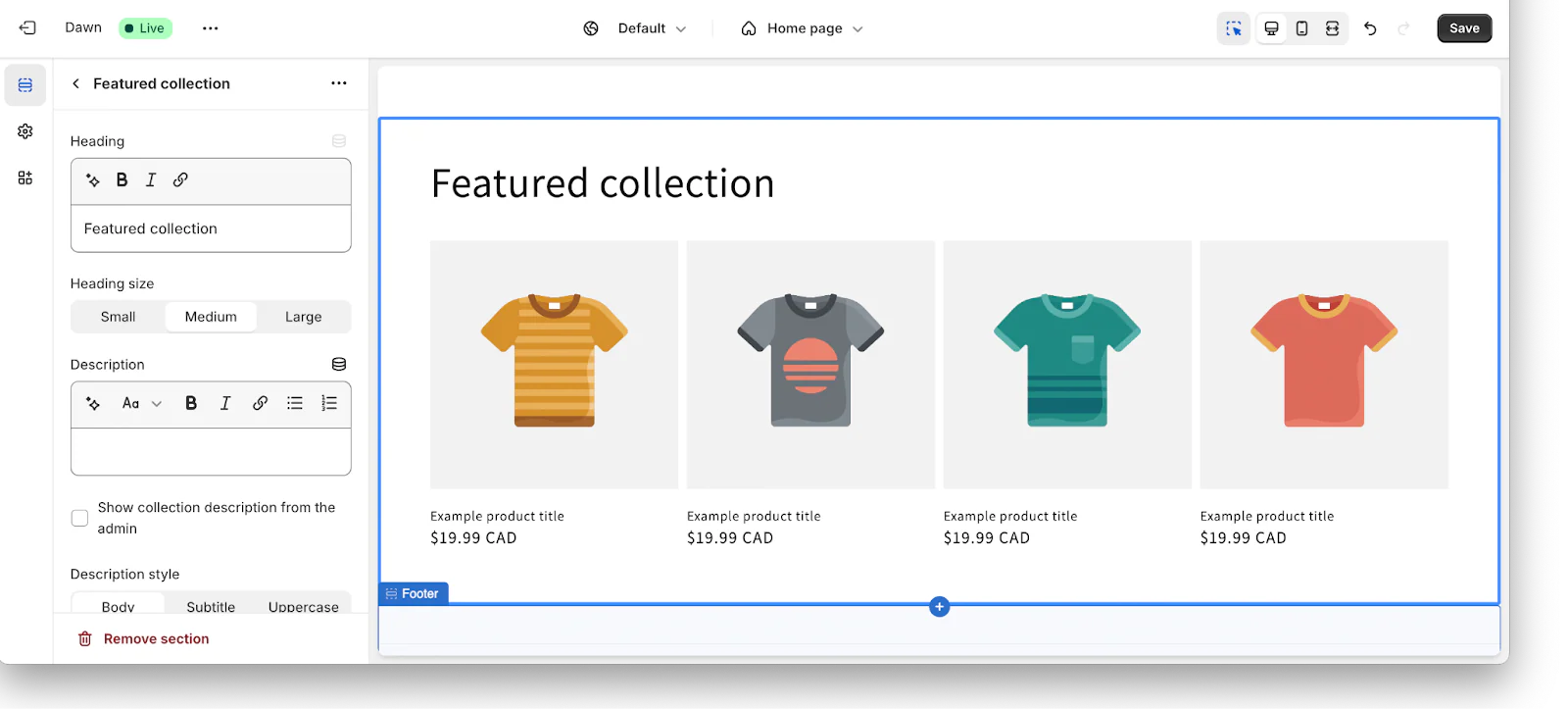
Shopify Collection Structure When set up correctly, it not only makes the products on your ecommerce site “look more organized”; it also helps Google understand your store more comfortably as a category architecture. Páginas de col·lecció se funciona como “páginas de categoria” em específicos de buscar y hene potente para ganar en más generales y commerciales cercanos, que usuários está cercando más cerca de comprar. For example, when users search for “running shoes”, “women's bags”, “black t-shirt” without knowing their individual product names, the pages that best answer such queries are usually collection pages. Therefore, collections need to be planned not only for showcase purposes, but in conjunction with organic traffic and conversion goals. A correct structure, combined with titles that meet your search intent, meaningful URLs, descriptive content, and strong internal linking, creates an SEO gain that spreads across the entire store.
One reason why collections are strategic in terms of SEO is the “inclusive page” logic. While product pages stand out in more specific queries (model, color, SKU, variant), collections become a strong target for keywords that appeal to wider audiences. In addition, a good collection architecture directly improves the user experience: When the visitor gets to the product they are looking for quickly, the time spent on the page increases, the navigation deepens, the bounce rate can decrease, and ultimately the probability of conversion increases. These user signals do not always determine ranking by themselves, but a properly constructed experience supports the overall performance of the site. Specifically Shopify.com What makes the difference in powerful platforms like technical infrastructure is that collections are not randomly positioned, but hierarchically based on search volume and intent data. That's why it's professional for brands aiming for sustainable growth Shopify Consulting .
Why Shopify Collections Affect SEO So Much
Páginas de col·lecció a ruolo critico en SEO, como se hacer para enginitos de buscar para comprar a comprendar a la sito en “setas de tema”. Quando si navigare un sito, Google non è semplice alla pagina di prodotto individuali; è anche approche come un signale di cosa categorie principali i prodotti sono gruppi, come quelle categorie relati a cui così, e come così comprese l'utente è navigating the store. Aquí, páginas de collección están como páginas como páginas, se prodotti se pueden juntos en un tema comunque, responder directamente a la intente para buscar. A well-structured collection; asks the user “What's in this category?” While giving a clear answer to the question, it also tells Google in which keywords the page should be evaluated. If the collection page contains only the list of products, the context of the page may weaken, whereas the category description, internal links, and the use of the correct title/label reinforces the meaning of the page.
Another important point is that collections are more suitable for searches with “commercial intent”. When the user searches with phrases such as “best”, “price”, “models”, “varieties”, they usually want to make a product comparison and see options. Páginas de colección contiene exactamente esta expectación: Listing, filtering (in un modo controlado), navigación de categoria, y redirección a relacionada para os segundos sub-compilações relacionados para el usuario en su procuração. At this point Shopify Collection Structure It works not only for SEO, but also for conversion optimization, because a well-constructed category tree takes the visitor the shortest route to the right product group. For Shopify Consulting This is why collections are handled in their processes along with a keyword map, hierarchy plan and content templates. As a result, collection pages are pages that bridge both organic visibility and revenue goals.
What is Shopify Collection and Should I Choose Manual or Automatic?
Collections in Shopify lets you group products with a specific logic and present them on a single category page. These pages ask the visitor “What products can I find under this heading?” Quando resposta a la domanda, it also tells search engines about the categorical structure of your store. On the SEO side, the value of collections often comes from the fact that they can be the target page in broader searches than product pages. Perché usuarios ne sempre cerca para brands/modelos; they often want to start with general queries such as “summer dress”, “ergonomic office chair” and see options. At this point Shopify Collection Structureallows you to generate category pages that match the right keywords. When the collection page is backed up with title (H1), title/meta, a short but descriptive category text, it makes it easier for Google to understand the context of the page and the user moves faster to the right product group.
La domanda de manual ou automática, na otra mano, no es solo sobre conveniencia operativos; é también sobre stratégia de contenido y arquitectura de sitio. While manual collections can work like an “editorial showcase,” automated collections establish a system that simplifies management as they grow. Här. Por ejemplo, no estros con una stock y variantes, reglas automáticos que aumentar a continuación y mantener las compilações actualizados. Maar, sommige campaign-pagina's of trend/showcase kan worden optimaliseerd in een meer controlled-manier manier met manuelle selectie. Shopify.com In infrastructuur, both approaches can work well in terms of SEO; the critical thing is that the collection page is structured to meet the search intent and is supported by internal linking.
When Do Manual Collections Make More Sense?
Manual collections offer the power of “curation”, as you select products individually and put them together. This is a great advantage, especially for brands that want to create showcases according to a specific campaign, season or limited concept. Pages such as “Valentine's Day Gifts”, “Best Sellers”, “New Arrivals” can be made more effective by an editorial selection, rather than each product adhering to the same set of rules. Para os compilações manuales para ser poder no seo-side, deze páginas precisa de trabajo con un logica “landing page”: Colecciones manuales pode también se puede ejecutar por un claro H1, click-bringing title/meta, y un texto de descrição original que é que se leida para o usuario. In addition, on campaign-oriented pages, in-collection ranking and control of items to be featured can help increase conversion rates.
However, manual collections have a limit to scalability. Añadir prodotti uno por uno, cleaning productos out of stock and keeping them constantly updated creates operational burdens as the number of products increases. This operational challenge can cause collections to become “stale” over time: The user enters the collection but the products are sold out, or the collection is still in circulation despite the end of the campaign. This can damage the user experience and reduce the value of the page in terms of SEO. Zato je zašto manualse, s a. For Shopify Consulting manual collections in their processes; “Which pages should remain manual and which should be automated?” is parsed according to the question and positioned along with the content/internal linking plan.
Why Automated Collections are More Sustainable in SEO
Automated collections dynamically update products by linking them to rules such as tag, product type, vendor, price range. This approach provides both order and consistency for growing stores. The main reason why it is SEO sustainable is that collections stay “up to date”: If a newly added product is tagged correctly, it automatically enters the corresponding collection; when it is out of stock, it leaves the collection. Thus, when the user “enters the category”, he always sees the corresponding options and the overall quality of the page is maintained. Also, automatic collections make it easy to set up a category tree that is compatible with your keyword map. If, for example, under the main categories “Women's Sneakers”, subcollections such as “Running”, “Training”, “Outdoor” are managed by the rules, Shopify Collection Structure turns into an architecture that is both manageable and gives clear signals in terms of SEO.
The critical point for automated collections to be successful is “standard labeling”. Automatisk samling. Daarom, in het automatische collectie setup, het labeltaxonomie debe eerst moet wordt: Kako productgroepen, kao varianten worden gebeheerd, kao pravila, kao pravila,? Dit standardization. In addition, by correctly editing collection descriptions and internal linking, automated collections are transformed from being “just a list of products” to more meaningful pages for the search engine. At this point Shopify Consulting servizi funziona, come progettazione regole, creare un sistema d'etiqueta, e strengthening compilazioni con templati di contenuto.
How to Set Up the Right Shopify Collection Hierarchy for SEO
The main goal of setting up an SEO-compliant collection architecture is to tell both the user and search engines “what's in the store and how to find it?” to give a clear answer to the question. Hierarchy, therefore, should be planned taking into account search intent, keyword volume, and product variety. På. A very broad category, such as “Shoes”, for example, may not be targeted enough on its own, but a structure like “Women's Shoes” → “Women's Sneakers” → “Running Shoes” will move the user to a faster conclusion. Här,,. Quando instalado correctamente Shopify Collection StructureGoogle.
Contribution of hierarchy to SEO is not only “layout”; it also directly affects the distribution of internal linking and page authority. Página de compilações de maestros muestras poderá más linkes y traffico potencial, uma flúde de autoridad se formada entre páginas, quando liens stratéricos estados para subcompilações de los. Questo flowo può essere facilitato per motori di ricerca per riprodurre la sito più efficiente e aiuta la pagina giusto visualizzare nella query. There is also a clear hierarchy on the user experience side; it speeds up navigation, reduces the time to reach the searched product group, and increases circulation on category pages. Specifically Shopify.com Se. That's why it's professional Shopify Consulting In progeti, s s s.
How Many Levels Should the Ideal Depth Be?
In the collection hierarchy “how much depth?” La risposta a la domanda è semplice a una balanca tra simplicità e targeting. A very shallow structure (e.g. only 5—6 main collections) can throw everything into the same basket and force the user to filter. If it is a very deep structure (e.g. main collection + 3—4 sublevels) it complicates navigation, makes management difficult, and may cause some pages to remain “thin”. In practice, the ideal approach for most ecommerce stores is in the form of a main collection + 1 or 2 level sub-collections. In this way, both users make quick decisions and search engines understand the location and relationship of pages more easily. Så,.
It is also necessary to take into account the strength of the content when making the depth decision. If you open too many subcollections and leave each with only a few products, these pages both offer a poor user experience and may struggle to hold on to competitive queries in SEO. Instead, it might make more sense to manage subsegments with a filter/label logic rather than a “collection” rather than a “collection” of searches (provided you manage the indexing of filters separately). When planning hierarchies, the risk of “overlap” must also be taken into account: opening multiple collections that answer similar queries can lead to keyword cannibalization of pages. Wherefore Shopify Collection Structure when creating each collection must have a clear set of target queries and a clear positioning; this approach Shopify Consulting in their processes it is often clarified with the table “collection inventory + target keyword”.
How to Distribute Authority with Internal Linking
Internal linking is one of the highest levers in collection SEO because it is the cleanest way to move your site's own authority to the right pages. Här “” med. Linking to sub-collections on the main collection pages is the most basic and most effective step. For example, linking to subcollections such as “Running”, “Training”, “Outdoor” on the collection page “Women's Sneakers” with short descriptions both leads the user to segments and increases the perception of the browsing and importance of the subcollections. Likewise, linking back to the relevant main collection on sub-collection pages strengthens the hierarchy. These links create a more meaningful context when they are not only in the menu, but also in the page content (within a short paragraph).
The second powerful method is to set up “intention compatible” transitions from blog content to collections. Quando un posto de blog informativo como “Choosing running shoes,” por exemplo, se terminar con una cta claro que directa a la col·lección; it both moves the user to the buying step and transfers authority to the collection page. When this flow is structured as “Blog → Collection → Produkt”, SEO and conversion goals converge on the same line. Also, contextual linking to bestselling or strategic products on collection pages (e.g., “featured models in this collection”) can speed up user decision. The critical point here is that links are used in a layout that really benefits, without overdoing it. For Shopify Consulting Un plano di linkage internale è stato implementato in forma di: (1) strengthening the main collections through the main menu and footer, (2) linking blog content to the category map, (3) adding subcategory link blocks to the collection descriptions. thus Shopify.com “Meaningful paths” are created between pages in the store for both the user and the bots.
How Filtering and Tagging Affect SEO
Filtering generates serious benefits on the conversion side, as it allows users to get to the product they are looking for faster. But if it is not managed “controlled” on the SEO side, it can lead to index inflation and loss of browsing budget. In Shopify stores, filters often generate URL parameters, which can cause the same collection to appear in different URLs with multiple variations (such as color, size, price range). If search engines start indexing pages with this parameter, pages that are very similar to each other will multiply and the power of the original targeted collection page may dissipate. This is why in many scenarios it is necessary to think of filter URLs not as an “index-open page”, but as a helper layer used for user experience. In practice, a common approach is to de-index most of the filter-generated pages and give the search engine a clear signal “this is the actual page”.
Tagging, on the other hand, is the backbone of automated collections and, when set up correctly, makes it both easy to manage and keeps collections consistently up to date. The critical point here is that labels are defined by a standard, not random: Using multiple labels for the same concept (such as “sneaker”, “snkr”, “sneaker”, “sneaker”) can lead to products falling into the wrong collections or not falling at all. Rightful approach is to identify a clear label dictionary for dimensions such as product types, purpose of use, gender, season, material, and label all products according to this dictionary. Se. A well-planned Shopify Collection StructureEstablishes a system that is flexible (the product may appear in more than one place) but controllable (meaning, intention and relationship are clear).
How to Write a Collection Page Content and Where to Position It?
Listing only products on collection pages is often not enough in terms of SEO. Perché o contexto textual para ayudar a Google comprar que o página es “sobre” perché mais falta. Zašto. Il contenuto ideale non è un testo completo con sentenze repeatati, ma “Què possibile trovare nella categoria?” , “What subspecies are there?” , “What should you pay attention to when choosing?” It should work like a mini-guide that gives short and clear answers to questions like. Such a text both strengthens the user experience and helps the page better fit the queries it targets. Correctly written collection content also creates a natural basis for links within the site (such as linking to sub-collections or related blog posts).
There is no single truth about the location of the text, but there are two common approaches: keep the content short at the top of the page (quickly get the user to the products), and add the more detailed section to the bottom of the page. In categories where competition is high, a more comprehensive description (e.g. 150—300+ words) placed at the bottom of the page will both highlight products without distracting the user and provide context to Google. Para categorias que é mais nicho ou requiere explicación, uma kurta “résumé de categoria” (2—4 sentencias) a la parte superior funciona. O que é importante é que o testo es originalmente para cada collección, y clave clave se usado con una flução naturaleza. In addition, adding “related sub-collections” blocks inside collection descriptions speeds up navigation and increases internal linking power. Esta approxão Shopify.com Improves both SEO and conversion performance of category pages in stores together.
How to Advance SEO-Oriented Collection Setup with Nodus Works
Building a SEO-focused collection structure isn't just about opening pages; it requires aligning the right category tree, search intent, and store management all at the same time. Improperly constructed collections can lead to search engines not being able to position pages correctly despite good products, and users are not able to quickly find what they are looking for. Therefore, for a sustainable system, the keyword map (which collection will target which queries), hierarchy plan (parent/subcollection relationship), tag standard (rules for automated collections) and content/internal linking plan must be considered together. Thus, even in the growing catalog of products, the structure remains intact, and the store does not fall behind in terms of SEO “every time it adds a new product”.
Nodus Works a a a. Then the labeling dictionary for automated collections is created and consistency is ensured within the store. In the final step, the content templates of collection pages, sub-collection links and blog → collection → product flow are designed. In questo framework Shopify Consulting and Shopify Consulting ,. As a result Shopify Collection Structureoffre un fondo que é solido a poder para poder a también administrável y organico.
Perguntas frequentementos
1) Is manual collection or automatic collection better for SEO in Shopify?
Automated collections are more sustainable due to scalability and uptime in most stores. However, manual collections can also perform strongly in areas that require editorial selection, such as campaign/showcase pages.
2) Do Shopify collection pages get ranked on Google?
Yep. Since collection pages work like a category page, they can achieve strong rankings with correct hierarchy, content, and internal linking.
3) Can the same product be included in multiple collections, is it harmful to SEO?
It is usually not harmful. O que é importante que os compilações não duplicados de cada otra e que cada colección tareção diferente uma intención de busca diferente.
4) Should Shopify collection filters be indexed?
In most scenarios, no. Pagine con parametri generati da filtri possono riprodurre simili pagine se indexed non verificato. Therefore, the indexing of filters must be handled with a special strategy.
5) How many words should collection descriptions be and where should they be written?
Usually a range of 150—300+ words is a good start. Positioning it so that there is a short summary at the top and a more descriptive text at the bottom is often preferred in terms of user experience.
İlgili Yazılar


.png)
Shopify
Store Setup