Available in Shopify's theme store best premium themes We have studied it in depth for you. This list includes 16 popular themes, each of which is paid (premium) and stands out for their design and features. The price of each theme in our reviews, what types of stores it is suitable for, pros and cons (based on real user reviews and expert reviews), as well Points out of 5 You will find metrics like. Especially for entrepreneurs and corporate brands thinking about opening a store on Shopify, choosing the right theme is a critical step. In our comprehensive guide below, themes to suit different needs, from luxury boutiques to wholesalers with large product catalogs transparent and clear We evaluate it in a way.
Note: The prices quoted in the reviews are the current prices in the theme store and provide a lifetime license with a one-time payment. Let us remind you that themes have a free trial, you only need to purchase them before publishing. If you are ready, Top Shopify Themes Let's take a closer look. Prices may vary.
Changing E-Commerce Trends
The year 2026 stands out as a period in which user expectations continue to completely transform in the e-commerce ecosystem. Now consumers expect not only fast-running stores, but also a personalized, trusting and intuitive shopping experience. specifically AI-powered Product recommendations, dynamic content blocks, and customisable design elements have become the key differentiating features of premium themes.
of consumers Shopping with social media The need for a more seamless transition between Shopify themes necessitates social commerce integrations. In 2026, premium themes will standardize TikTok Shop, Instagram Checkout, and YouTube Shopping compatibility, supporting brands' multichannel growth goals. In short, changing e-commerce trends are forcing themes to be smarter and faster, both visually and technically.
Mobile Performance and Core Web Vitals Impact
By 2026, more than 80% of e-commerce traffic is coming from mobile devices, and Google is putting mobile performance at the forefront of its ranking algorithm more than ever. Hence the success of premium Shopify themes Core Web Vitals (LCP, FID, CLS) Metrics play a critical role.
Themes that don't open quickly, experience layout slippage, or have interaction delays affect not only the user experience, but also organic visibility. Premium themes offer better Core Web Vitals scores thanks to optimized visual loading, lazy load, code minimization, and lightweight CSS/JS structure.
specifically mobile shopping Increasing page load time from 1 second to 3 seconds can lead to a reduction in conversion rates by close to 30%. Therefore, when choosing a theme in 2026, it is necessary to pay attention not only to design, but to speed reports, mobile test results and performance updates from the theme developer.
Design — Conversion Rate Relationship
Design is no longer just an element that “looks beautiful” in 2026; e-commerce conversion rate a strategic factor that directly determines. Modern premium themes feature sales-driven design components optimized based on user behavior data: clear product hierarchy, powerful CTA (call-to-action) buttons, more visible payment options, and streamlined checkout flow.
One of the factors that increase the conversion rate is psychological design stands out as. Color blocks, trust elements (badge, warranty, return policy), social proof areas (reviews, user photos) and F-pattern based placements are included in the standard structure of premium themes.
In addition, “modular design” structures based on storytelling lead the user to make decisions faster by putting the brands' own identity at the forefront. In short, a properly designed premium Shopify theme has the potential to increase the brand's conversion rates by 15-40%.
Prestige Shopify Theme
The Prestige theme offers a stylish and attractive showcase for luxury fashion brands.
Price: $400 USD (Shopify Theme Store).
Developer: Maestrooo.
Style: Luxury and high quality design. It has three different styles (presets): Prestige, Couture, Vogue. It is highly popular, with an average customer satisfaction of 91% (in 801 reviews).
Uses: Prestige in particular luxury fashion, beauty and high quality product A theme designed for brands that offer. Highlighting product photos and brand identity “elite” It offers an aesthetic. It is usually recommended to boutiques that want to make an attentive presentation of each product, with a small number of products or a limited collection. For example, jewelry, designer clothing, boutique cosmetics brands in their online stores with this theme a premium look can catch it.
Featured Features: Prestige, More than 30 drag-and-drop sections and comes with various customization options. Optimized for site performance and at the speed of light There is a claim to load the page. It includes support for multiple languages (English, French, etc.) internally, mega menu, advanced filtering, product tags, video and lookbook Supports rich content elements such as. also sticky header and Quick Buy There are features that make shopping easier.
Pros:
- Luxury Design: Prestige maximizes your brand image, providing an “expensive” and high-quality look. Especially with large images, videos and elegant typography, it presents products almost like a magazine page.
- Rich Content and Sections: Thanks to the many built-in sections such as lookbook (collection story), press release area, countdown timer, product badges, you can create a rich site without the need for extra applications.
- Performance and SEO: Developer Maestrooo states that it has coded the theme performance-oriented, with improvements in page loading speed and mobile compatibility available. This is also SEO and advantage for conversions.
- Customer Support: According to user reviews, the theme team is fast and helpful with support. One user stated that they found a solution to their problem on the same day.
- Updates: It's a constantly updated theme (as of v10.10.1) and is being made compatible with new Shopify features. This means that in the long run the theme will remain current.
Cons:
- High Price: It's one of the most expensive Shopify themes at $400; it can be a deterrent for new businesses on a budget. It should be seen as a price for the premium feature.
- Limited Language Option (Administration): A user complains that the theme settings are only in English or French. So the theme admin panel is not in Turkish (but you can create the showcase content in Turkish). Although this situation is not a technical obstacle, it can be challenging for some users.
- More Suitable for Small Catalogs: Prestige in stores with a very large product catalog (thousands of products) Inadequate navigation structure can stay. Since it focuses on luxury presentation rather than large menus, the shopping experience on sites with a large number of products can become a bit difficult.
- Customizations That May Require Code: Although the line of the theme is very high quality, code intervention may be necessary when you want to make radical changes to the design (for example, a different layout). So suppleness up to a point; you may need a developer support for advanced changes.
- Slow Updates: Some users may have noted that the updates are more focused on Shopify compatibility, but heavy on adding new features. But overall satisfaction is still high.
Prestige Theme Ratings (out of 5):
- Design & Aesthetics: (5/5), Luxury and very stunning in terms of visual
- Feature Wealth: (4/5), There are many built-in features, but some advanced features are limited
- Flexibility and Customization: (4/5), Drag-and-drop partitions are powerful; you may still need code for full freedom
- Performance: (4/5), Well optimized, but speed may drop if heavy visuals are used
- Price/Value: ☆ (3/5), Expensive, but may pay off investment if your target audience is luxury customers
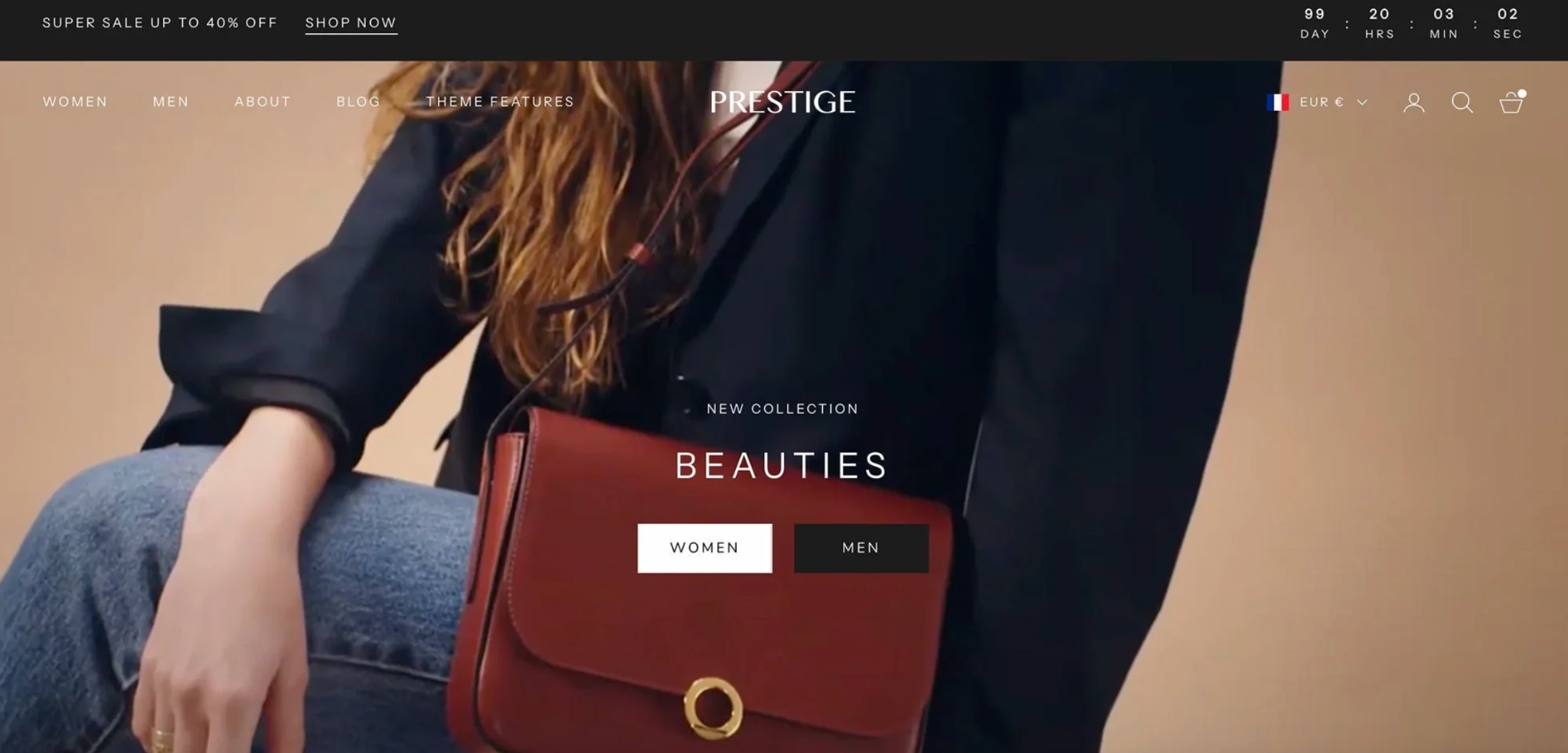
To whom we recommend: Prestige, Wanting to position the brand image as luxuryrecommended to businesses in industries such as fashion, jewelry, beauty, boutique accessories. Ideal for those who want to present a small number of products with high-quality content and images. For example, entrepreneurs who have their own designer handbag brand or sell a niche cosmetic product can display their products like a showcase with this theme. On the corporate side, companies that want to draw a prestigious brand image will be satisfied with this theme.
Symmetry Shopify Theme
Symmetry theme offers flexible layouts for fashion boutiques and stores with large catalog.
Price: $400 USD.
Developer: Clean Canvas.
Style & Structure: It is defined as a Versatile theme; there are 4 ready-made style packs: Symmetry, Salt Yard, Beatnik, Duke. It has a very high approval rating of 95% by store owners (373 reviews).
Overview: Symmetria, flexibility, fashion-oriented design and professional appearance stands out for its motto. Reflecting 11+ years of theme development experience, the Clean Canvas team has created a high-quality theme to suit all types of vendors. Like its name, it provides a clean and modern showcase that emphasizes order and symmetry.
Uses: Large product inventory It is noted that it is especially suitable for clothing stores, for example, in multi-category fashion boutiques or lifestyle stores, facilitating the regular display of products. Yet with its flexible structure, it can be used for any type of store that wants a professional web presence, not just fashion. Home small home with large catalogs Businesses can benefit from Symmetry: Thanks to its powerful and advanced filters, the navigation structure can also perform well on 1000+ products.
Featured Features: The strongest part of Symmetry a large number of customizable sections presentation (30+ chapters) and powerful filtering/search They are tools. On the theme advanced product filters (with color swatches) and mega menu Support is available, which makes it easy for customers to find what they are looking for among the numerous products. also Quick BuyAll conversion boosting tools like campaign banners with counter, product badges, stock counter sound out of the box. To increase conversion on mobile Thumb-friendly design and a strong campaign/product highlighting He has the ability.
Pros:
- Flexibility and Customization: Streamlines store design by offering lots of sections and options in the drag-and-drop editor. Without knowing the code, you can easily create different layouts. Even the theme is one of Clean Canvas's best-selling themes “Unlimited customization” It is introduced by the motto.
- Wide Catalog Support: With breadcrumb (wayfinding) on category pages, advanced filtering/sorting, and extensive mega menus, navigation even in stores with large inventories is smooth. High volume recommended for stores.
- Fashion and Visual Focus: A very appreciated theme, especially in the fashion, clothing, accessories sectors. They have perspective-rich layouts that make product visuals stand out. With features like Lookbook (style galleries) and large visual slides your brand story you can tell.
- Customer Support Quality: User comments emphasize that the support of the Clean Canvas team is fast and solution-oriented. One customer noted “great theme, easy to use, excellent customer service”. Support requests are usually responded to within 1 business day.
- Continuous Updates: Symmetry, which has been on the market for years, is regularly updated (latest v8.1.0, October 2025). These updates both support new Shopify features and include improvements with user feedback, such as the planned addition of a mobile quick buy button.
Cons:
- Price: High-end theme price range with $400. While there are more affordable themes that can offer similar functionality, cost can be a disadvantage for those with a tight budget. But let's also note that it is a one-time investment and can be used for life.
- Mobile Some Feature Cons: In user feedback mobile quick shopping button mentioned the lack of some features, such as (Clean Canvas has communicated that they are about to add this feature). So there are small areas of improvement in mobile UX.
- Product List View Restriction: A customer noted that there was no flexibility to display variants or size options directly in product listing blocks, but only a choice between an image or card view. This can be limiting for stores that list multi-color/size items as separate items.
- Advanced Customization: Although basic customizations are easy, you may not find options in the theme panel for very specific design requests (such as showing elements side by side in the mobile menu). In this case, it may be necessary to play with the liquid code. So if you have the expectation of “everything is solved by clicking from the panel”, then some points can be disappointing.
Symmetry Theme Ratings:
- Design: (5/5), Fashion, trend and professional look excellent in terms of
- Features: (4/5), Many features built in, extensive except for a few minor omissions
- Ease of Use: (5/5), An intuitive theme for both beginners and experienced users
- Performance: (4/5), Code quality is good; may slow down a bit with excessive content but overall fast
- Price/Value: (4/5), Expensive but high value, especially for large stores
To whom we recommend: Symmetria, growing fashion brands, boutiques, home-decor stores like visual presentation is important and the number of products is medium or high recommended to businesses. Large collections professional and albenili Those who want to present it in some way will be satisfied with this theme. For example, a clothing brand that publishes a seasonal collection can display its collection lookbook with Symmetry and present products in filterable form. At the same time, the technical knowledge is limited and suitable for entrepreneurs who want a powerful site, as the theme provides convenience in the “do it yourself” mode.
Impulse Shopify Theme
The Impulse theme is one-to-one to drive sales with its promotional and campaign-oriented structure.
Price: $350 USD (in theme store).
Developer: Archetype Themes (the team behind popular themes such as Motion and Expanse from experienced developers of the Shopify ecosystem).
Styles: It comes in 3 different styles, as well as the default Impulse style, there are presets like Modern and Bold. Customer satisfaction is high, usually around 95% (Impulse is one of the recommended themes for a long time).
Overview: Impulse, as its name suggests “impulsive shopping” A theme focused on capturing moments. That is, it contains elements that will attract the attention of the customer entering the site and quickly lead him to shopping. This theme, especially campaigns and discount focused stores Customized for: Equipped with marketing elements such as large banners, campaign highlights, dynamic product badges. Sleek in design but also has a lively vibe, although not as animated as the Motion theme, there are transitions and attention grabbing on the page that give a sense of vibrancy. Its interface is professional and clean, reflecting the quality of Archetype.
Uses: Clothing retailers, sporting goods, fashion outlets, electronics stores It is very suitable for stores with a large catalog such as frequent promotions. Especially with discounts on multiple collections, campaign management sites can offer this great with Impulse, for example, it is easy to display multiple campaign banners on the homepage sliding or in a mosaic layout. At the same time high traffic also resistant to stores (optimized with Archetype experience). It removes the number of products from medium to large (50 items, 1000 products); there is a mega menu and filter structure. It can also be used for stores with less products that can be considered boutiques, but its full potential is revealed in the crowded stores with campaigns. also retail + wholesale Brands selling together can also benefit from Impulse's campaign features.
Featured Features: Impulse, advanced promotion sections He is known for. For example, collection pages may display custom campaign banners above the listing (like 20% off the X collection), a feature that Shopify doesn't offer by default, Impulse does this internally. Great again on the homepage campaign banners with slides, rich product showcases, video and image combinations presents. On the navigation side multi-level mega menu supports, which is a must for large stores. Product labels, badges (New, On Sale, etc.), Recommended products, adhesive basket There are also conversion tools. Like other themes of Archetype in performance Core Web Vitals friendly. Perhaps the most beloved feature of Impulse, multiple promotion area Being able to offer, you can forward multiple campaign messages on a single page (this means the flexibility to do the end-of-season discount and free shipping announcement at the same time). In addition, the design is highly modularization, with OS 2.0 you can also enrich the inner pages, since you can use sections on each page.
Pros:
- Unique For Campaign & Promotion: Impulse is incredibly successful in highlighting discounts and promotions. One user said: “I stayed between Impulse and Prestige, I chose Impulse for campaign highlights, I am very satisfied.” With promotional banners, product badges, countdown, etc., on collection pages The impulse to sell triggers.
- Easy Navigation: Handling large catalogs is easy with Impulse. Thanks to advanced mega menus, sidebar filters, categorized menu structure, visitors can find what they are looking for. This, Similar to Amazon can be thought of as a navigation experience (especially Empire and Impulse are good at this).
- Visual Attractiveness: The theme is also visually satisfying; it shows the product photos big and clear, the page designs are professional. Moderne while the preset is more minimal Ball the preset appeals to different tastes by using more striking colors. In general, it appeals to the eye, the amateur does not stop.
- Reliability and Community: Archetype products are widely used, so there are thousands of stores that use Impulse. This means that help can be found in community forums and blogs if needed. In addition, as support for Archetype is also known, good, regular updates are also offered.
- Value Price Ratio: $350 price, according to the capabilities it offers by many users worth is located. Especially if you do not bother with separate applications etc. for each campaign and can handle it through the theme, it is profitable in the long run.
Cons:
- Price: Yet $350 may not be attainable for everyone. Start-up mini-businesses in particular can perhaps turn to alternative cheaper themes. But Impulse's audience is usually growth-oriented brands that can afford that cost.
- Intermediate Code May Be Required: Although Impulse offers most things, it is sometimes necessary to add code for small requests (such as a different button behavior on mobile, etc.). While this applies to all themes, for some users who don't want to wait, “why isn't it on the panel” can be disappointing.
- Heavy Visual Usage: The promotion orientation of the theme usually brings with it the use of lots of images and banners. If these images are not optimized well, the site speed may decrease. So it's not the theme's fault, but users can sometimes blame the theme if they experience slowdowns on the site, while the solution is to optimize the visuals.
- Surplus Features: Conversely, if you're a non-promotional store (e.g. selling a fixed-price luxury item), some of Impulse's features may be unnecessary for you. In this case, a more story-oriented theme (such as Prestige) would perhaps be more appropriate. So not to everyone It should be borne in mind that it is suitable for the specific audience.
- Mobile UX: Although mobile optimization is good, sometimes showing multiple promotions on mobile can be a mess. When using Impulse, you need to pay extra attention to the mobile design (the user should not get overwhelmed if you put too many banners on top of each other on the mobile). This is a point of attention.
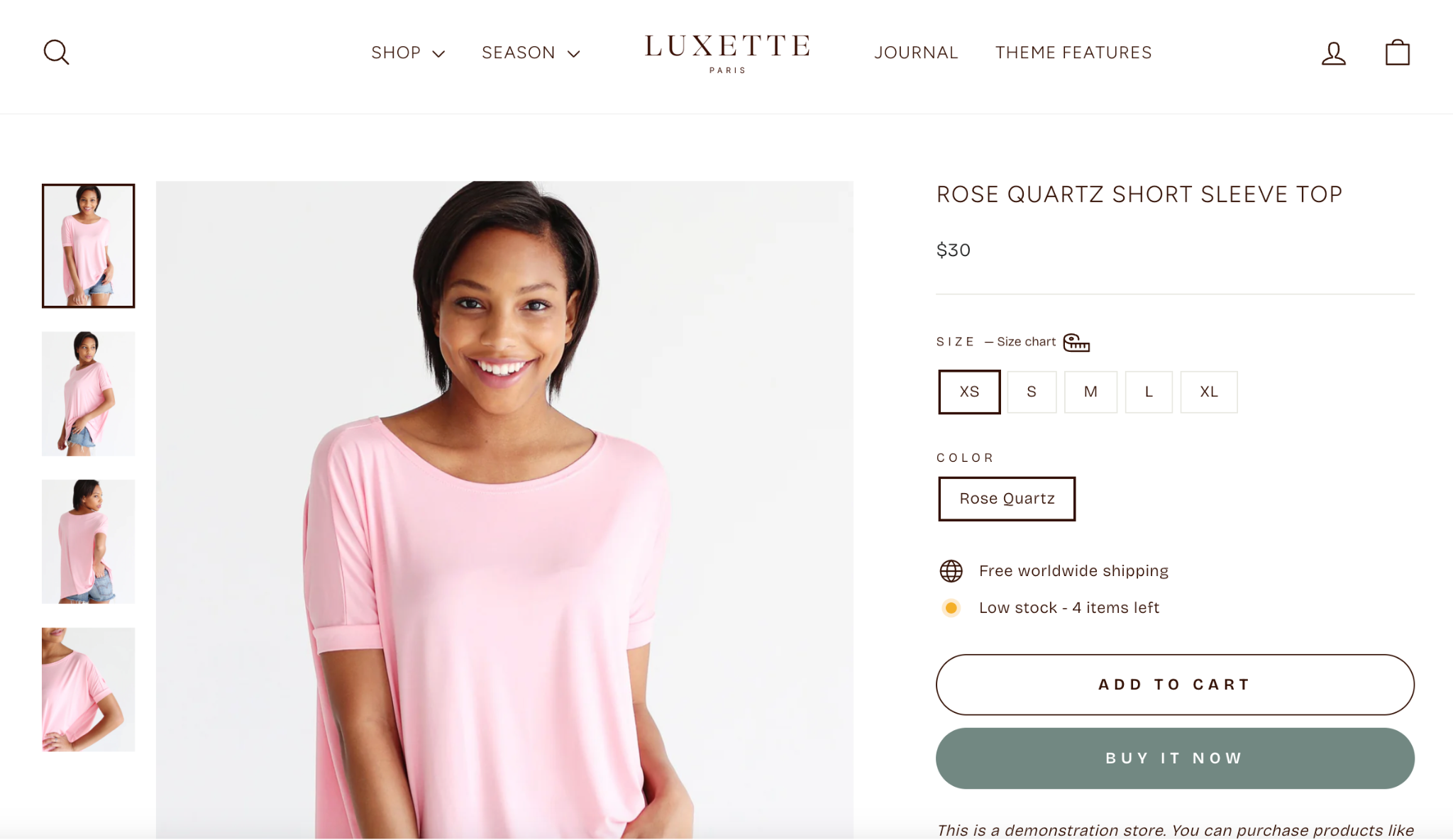
Impulse Theme Points:
- Conversion & Campaign: (5/5), One of the best promotion-oriented themesStrong in increasing sales
- Design: (4.5/5), Very stylish and professional; not only incredibly original, but in trend line
- Features: (5/5), Mega menu, filters, promotions, badges... there are most things needed
- Performance: (4/5), Depends on customization and visuals; generally good, but need to pay attention to speed
- Ease of Use: (4/5), The panel is understandable, but since the feature is so many, it may take time to learn
To whom we recommend: Impulse, Frequent promotions, offering seasonal discounts, coupons, deals sheared kaftan for shops. For example, if a fashion retail chain offers a collection discount every month, with Impulse it will be very easy to reflect this on the site (banner, badge, etc.). Sporting goods, shoe stores, outlet stores They find this theme successful. also Black Friday/Cyber Monday During periods of high discounts, such as Impulse's flexible structure, allows you to integrate various announcements into the site. On the corporate side, let's say an electronic products company campaigns at certain intervals (such as “Weekend Deals”), Impulse offers the ideal tools to highlight these campaigns in the site showcase. As a result, “Campaign management is critical for me. We recommend Impulse with peace of mind to all ecommerce professionals who say.
Wonder Shopify Theme
The Wonder theme appeals to modern brands with its video and storytelling features.
Price: $390 USD.
Developer: Nethype (a studio based in Poland, from the next generation of Shopify theme developers).
Styles: offers 4 ready-made styles, Wonder, Root, Velor, Nook called designs. Customer satisfaction is very high with 100% (about 100 reviews), users especially praised the support team.
Overview: Wonder, Achieve more sales by improving user experience (UX) a theme focused on. Nethype has put simplicity and efficiency at the forefront in this theme. Video and “reels” It aims to increase the interaction of stores with customers by supporting modern content formats such as. It is also in the flexibility that can adapt to different aesthetic visions, as can be seen from the preset names (names such as Velour, Nook refer to different design languages). Wonder has a multifaceted and quality-oriented theme image, presented with a motto such as “the theme trusted by successful global brands”.
Uses: Fashion, luxury accessory, niche lifestyle brands will adopt Wonder a lot. specifically video content The brands that use it (e.g. collection promotional videos, product use videos) can evaluate the “reels & storytelling” sections of this theme. Wonder can also be ambitious in the beauty/cosmetics industry; it has fast and clean interface, product-oriented structure. It does not matter whether the catalog is large or small: the navigation and filters are sufficiently advanced (there is a mega menu, product filters). Kaftan tailored to businesses that care about storytelling, want to sell a lifestyle with their products (e.g. sustainable fashion, handmade product brands, etc.) Audience of customers showing interest in visual and video Brands with audiences (Millennial, Gen-Z) can capture that dynamic feeling with Wonder.

Featured Features: One of Wonder's slogans.”Reels & Storytelling that Sell” that is, storytelling that makes it sell. This means that the theme offers a variety of sections on how to add video content, such as vertical videos that flow in a row (reels style) or interactive media sections. Design philosophy mobile-first and ease of use Based on (UX): There is an emphasis on “simplicity and efficiency, excellent appearance on every device”. Some of its internal features are: Quick add & quick shop (Quick Add to Cart) module, powerful filtering & search (Wonder focused on rapid product discovery), 8+ different video sections (i.e. options to place the video in different layouts), High performance & SEO compatible coding. In addition to Wonder, multiple languages supported and suitable for global stores (Nethype probably dominates the details for the European market as it is based in Poland). Also in the reviews of the theme elegance of design and ease of use Often praised, says one review, “the design is sophisticated and user-friendly, has all the necessary features”.
Pros:
- Video and Storytelling: With Wonder, your store can be almost as impressive as a social media stream. Auto-playing videos, storytelling sections, large visuals, all integrated. This, brand story A terrific advantage to transfer and connect the customer.
- Excellent User Experience (UX): The theme is very well thought out on enabling customers to browse and shop the site easily. For example, shopping with add-and-take cart logic, clear feedback (confirmation banner when the product is added to the cart, etc.) smoother moving forward. In the reviews there are phrases like “very easy to use, pleasant to navigate as a customer.”
- High Performance: Code structure optimized, Wonder uses state-of-the-art Shopify features. There are examples of sites that score 98-100 (if content is optimized, of course). In this way, both SEO advantage It also brings better conversion rates.
- Customer Support (Nethype): In user reviews, the speed and quality of the support team stand out, many noted that they received quick and professional answers to their questions, even their special requests were resolved. This allows him to gain confidence for a new developer. The fact that their address is Poland (EU) is also an element of trust for some users.
- Global Ready: Multi-language support meets requirements for global sales such as RTL (right-to-left) compliance. This means the solution without the need for plugins on a multilingual site. They also tried to comply with the ADA (accessibility) and other standards (the tip of this is that no one complains about accessibility in reviews; usually complaints come if it is bad).
Cons:
- Price: At the top end of the premium scale with $390. While 100% satisfaction justifies it, for some small businesses the investment threshold may sound high. But this is less of an issue if you're a luxury or fast-growing brand.
- Video Weight: The theme's trademark is videos; but using too much video can make the site heavier. Users may experience performance issues if they do not optimize videos or place them in large numbers. When using this theme, it is necessary to pay attention to the size and number of videos, otherwise the advantage may turn into a disadvantage (slowness).
- New Developer Risks: Although Nethype is off to a very good start, it does not have as many references on the market as the old ones. Some conservative users may prefer more proven developers. But first impressions negate this anxiety; let's take note anyway.
- Over-Simplicity Warning: Since the philosophy of design is simplicity, Wonder a little if you are after very complex layouts or mind-boggling creative designs smooth can stay. So the theme is “it does what it needs to do perfectly but does not show any extra ingenuity”. This is a design opinion, according to whom plus to whom, minus.
- Customization Limits: As with any theme, Wonder has its limits. For example, if you want to add a custom interaction, you might need to code it. Or you may need to contact support for a style change that is not in the theme panel (which seems to be helping the team). This is for very specific situations.
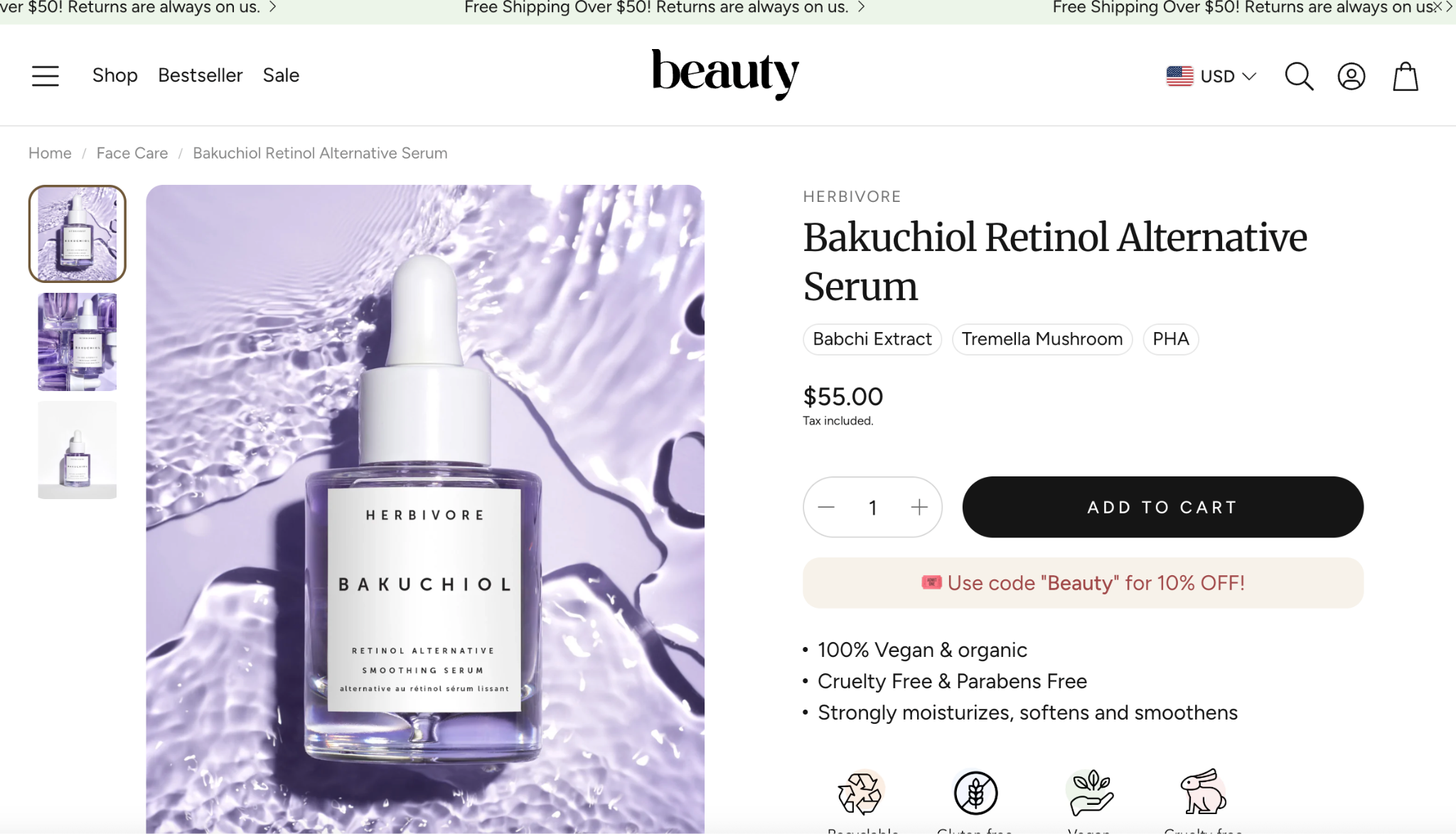
Wonder Theme Points:
- Visual Storytelling: (5/5), Video & visual oriented Great for brands, at the top in storytelling
- User Experience: (5/5), Simple and effective navigation, the shopping process is smooth
- Performance: (5/5), Well optimized; as fast as possible even with intensive media use
- Features: (4.5/5), There is everything necessary; especially meets special needs such as video, multi-language
- Price/Value: (4/5), High price but premium experience; it pays for its money, especially for modern brands
To whom we recommend: Wonder, Aiming for a young and dynamic brand image that wants to keep up with the trends of the era ideal for businesses. Fashion brands, designer boutiques, yoga/pilates clothing brands, organic cosmetics brands Think of areas like, they all like to tell stories on Instagram, YouTube. Wonder cut out the caftan to move these stories to e-commerce sites. For example, a brand with handmade cosmetics can put short videos of the manufacturing process with Wonder on its site and give the customer an experience, which creates trust and bond. On the corporate side, maybe a tech startup's merchandise store or accessories store of a luxury car brand With Wonder, you can set up a contemporary showcase, attract customer attention with video introductions. As a result, Wonder “I want to offer the customer not only the product, but also the experience” It is a theme that everyone who says should consider.
Expanse Shopify Theme
Expanse theme offers a customized showcase for stores with large product catalog.
Price: $400 USD.
Developer: Archetype Themes (previously developed by Pixel Union and ported to Archetype, specializing in extensive catalog themes).
Styles: 3 ready-made styles available, Expanse, Revive, Spritz. Customer satisfaction is quite good with 94% (300+ reviews), especially appreciated by store owners with large catalogs.
Overview: Expansion, Stores with large inventory a targeted theme. Shopify's official introduction calls it “the perfect theme for a high-performance, large catalog of products.” It includes powerful navigation, filters and promotional tools that will make it easy for customers to find what they are looking for in large catalogs like Amazon. At the same time, its design is modern and clean; it offers an experience where categories are put at the forefront and product discovery is effortless. Pixel Union/Archetype is a solid theme, both in terms of visual quality and technical infrastructure, as it is the product of the collaboration.
Uses: 100 or 1000's of products The target audience of Expanse, multi-category e-commerce sites. eg electronics, hardware, furniture, major clothing retailers Ideal in areas such as. One of its highlights is in the side menu multi-level category filters To offer, this is vital for stores with a large number of subcategories. It also has a structure that can manage multiple campaigns at the same time (e.g. different promotional blocks on the homepage, banners on collection pages), which increases the marketing flexibility of large stores. In short, “Store like a warehouse” suitable for so-called large-scale e-commerce sites. Small catalogs can also be used, but the full potential of Expanse is revealed in large catalogs.
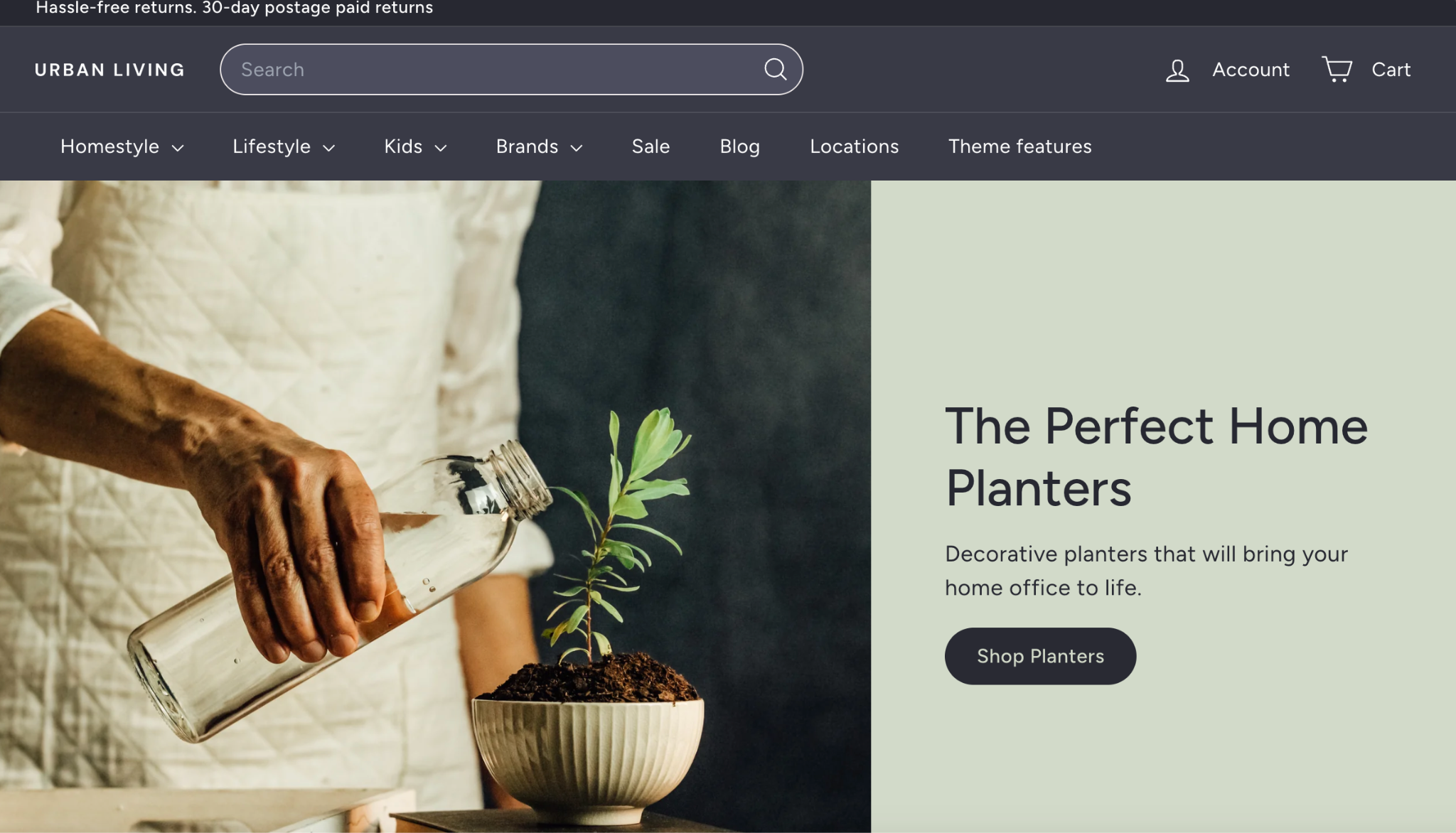
Featured Features: Expansion, powerful filtering and navigation stands out for its characteristics. On the left side there are large site navigation elements such as category-based multi-filter bars, mega menus in the top menu, back up buttons within the page, etc. Multi-column menus, yanbar (sidebar) filters, infinite scroll Features like (infinite scroll) make it easy to navigate through thousands of products. On the marketing side customizable promotional areas There are: great promo banners on the homepage, you can place announcement bands within the product listings on the collection pages. Upsell in cart (cart upsell) and Cross-selling Features such as are also available, thus offering the possibility of increasing the basket average. Also in recent versions like Expanse 8.0 of Shopify combined inventory lists, high variant support Added support for Plus features such as, that means it displays products with large variants (such as 200 color options on a product) smoothly. They also optimized Archetype in terms of performance, aiming for the best possible speed for a site of this size (but they still have theme-independent slowdowns when there is a lot of content on sites of this size, they have tried to minimize this).
Pros:
- Special Design for Large Catalogs: Expanse has everything to beautifully categorize and deliver thousands of products. Powerful multi-level filter (filtering by product specifications), Collection navigation within the collection With etc., customers can find products without getting lost. This is a very critical advantage for the conversion rate.
- Promotion and Upsell Tools: Large stores usually run multiple campaigns together. With Expanse, you can add multiple promotional modules on the homepage, suggest similar products on the product pages, say “add this too” in the cart. So equipped to raise revenue per basket.
- Performance Optimized: The code infrastructure is optimized for large databases. For example, normally a collection page with 1000 items can be opened slowly, Expanse says pagination or lazy load keeps it flowing with (there is an infinite scroll option). Customer reviews mention that the theme is fast even in large catalogs.
- Customer Support & Experience: Expanse has been on the market for a long time and is supported by Archetype (derived from Pixel Union). This means that it is a mature theme; perfected by feedback from large businesses. The support team is also experienced, they help when problems arise. Also in forums, blogs there is plenty of content about this theme, it is easy to solve the problem.
- Campaign Banner Flexibility: In particular, it should be noted that the expansion customizable promotional banners Wonderful. For example, you can display a ribbon, such as “Free Shipping, Valid 24 Hours”, just above the filters on the product listing page. This is a tremendous tool to remind the customer about the campaign on each page.
Cons:
- Relative Mediocrity of Design: Expanse is a function-oriented theme. Its design is beautiful but not too innovative or unusual; the Pixel Union line is classic e-commerce design. That's why some design “It could have been more exciting.” He might think. However, it was deliberately kept in this line to suit the general public.
- Price: At the top slice with $400. Although this is not a problem for large stores, a medium-sized seller can perhaps look for a cheaper alternative. Still, there aren't many themes that make it similar in place of Expanse (Warehouse and Empire exist but Expanse is generally considered more modern).
- For Customization, the Developer May Need: The default states of the theme are largely sufficient. But let's say you want a different listing style or you're going to add a custom tab, you should probably edit the code. This is present in every theme but maybe a little more evident in Expanse because giant stores are usually developer-run, the theme is designed to be developer friendly.
- It can be overkill for very small stores: If you have a small number of products (e.g. 10-20 products), Expanse is for you Overkill Maybe; a lot of free space remains on the site, filters are not needed, etc. In this case, it makes sense to choose a simpler theme. We can say that there must be at least a few hundred products to use Expanse rightfully.
- Content Density Management: Big catalog + Expanse = means lots of pages and content. This can make site maintenance a bit complex. It's about site management rather than a theme, but in Expanse, you have to keep each category, subcategory, etc. organized, or the customer might get overwhelmed. This is not a minus, but it takes labor to fill the spaces that its theme offers.
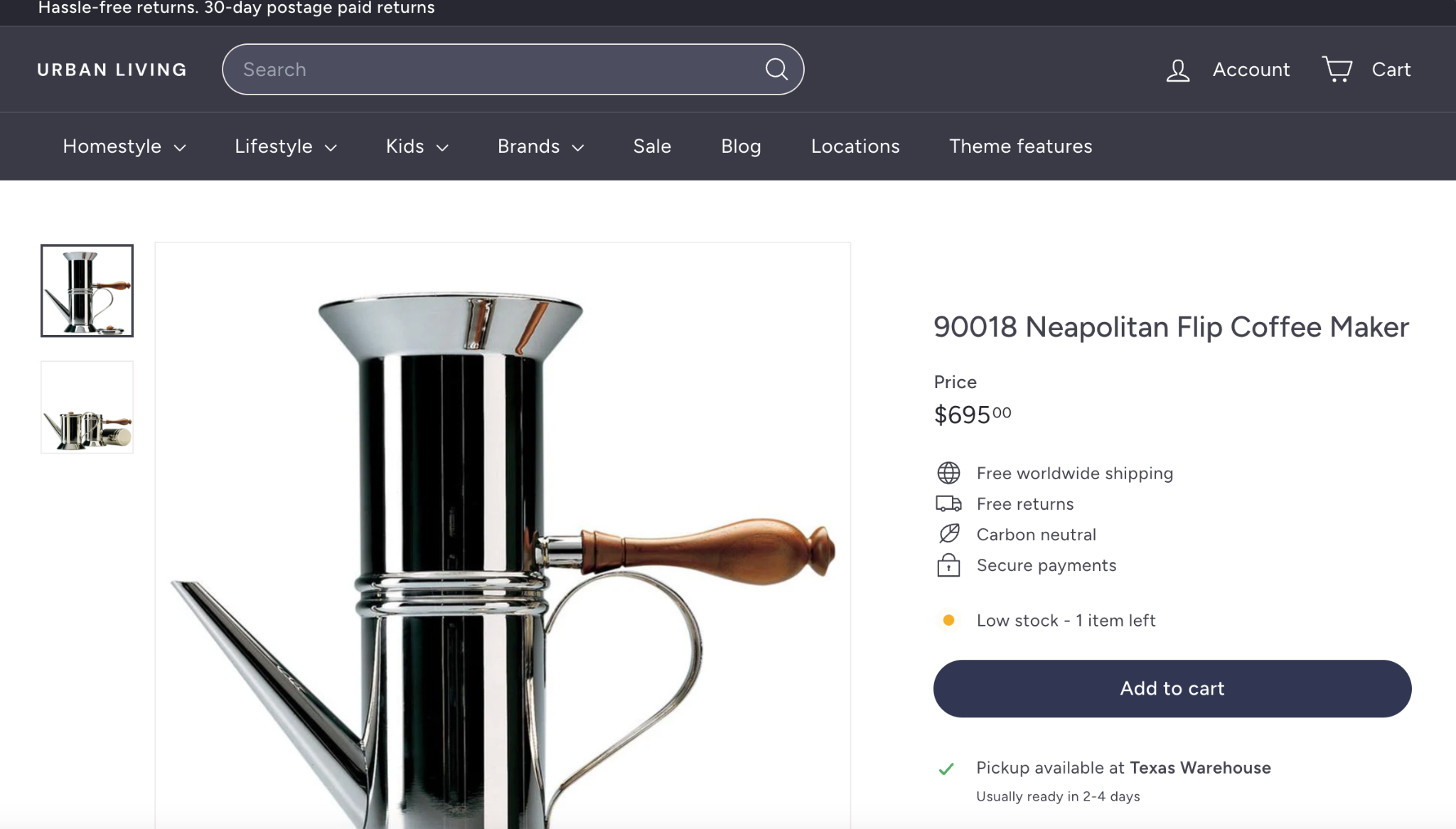
Expanse Theme Ratings:
- Catalog Management: (5/5), One of the best for department stores, navigation and filtering are close to perfect
- Feature Wealth: (5/5), Promotion, upsell, mega menu, etc. Whatever you need; great site needs considered
- Design: (4/5), Clean and modern, but not creative; functionality is at the forefront
- Performance: (4/5), Code optimized, yet a very good server may be needed on giant sites; the theme does its best
- Price/Value: (4/5) multiplies what it spends for department stores; not worth it for the little ones
To whom we recommend: Expansion, large-scale e-commerce operations It is strongly recommended to the companies that carry it out. For example, retail chains offering a wide range of products, online supermarkets, electronic marketplaces It can offer a seamless experience with Expanse. One customer review said “We have more than 10,000 products, Expanse met our expectations”, just made for such stores. On the corporate side, companies that want to have a physical store and expand their online catalog (e.g. construction market, hobby market) are comfortable with Expanse's infrastructure. Likewise B2B wholesale portals can also beautifully present large product lists to buyers with this theme. As a result, the Expanse “I have a lot of product, my customer should be able to choose” It should rank high in the preferences of everyone who says it.
Empire Shopify Theme
The Empire theme is designed to deliver large catalogs in Amazon style edit.
Price: $340 USD.
Developer: Pixel Union (a well-established studio on Shopify themes).
Styles: Comes with 4 different styles, Empire, Depot, Supply (Circuit), Form Preset names such as are available. While customer satisfaction seems a bit low compared to other premium themes with 79% (450+ reviews), this is partly a reflection of complaints from older versions; Pixel Union has been trying to increase satisfaction with updates for a while now.
Overview: Empire, as the name implies to dominate huge inventories an improved theme. It was the most popular broad catalog theme of an era on Shopify. Adeta Similar to Amazon It is aimed to offer a shopping experience: It has a structure that includes extensive mega menus, advanced search, listings that give the feeling of product comparison, promotional tiles, etc. In addition, Empire was often preferred by B2B/wholesale stores (because the functionality is high, the appearance is simple). Pixel Union has put functionality at the forefront in this theme and adopted industrial minimalism in the design.
Uses: Multi-category and product stores (especially 500+ items) Empire's natural habitat. eg online shopping malls, department stores, electronics & spare parts dealers It was widely used in areas such as. Content-intensive Empire also manages products well (the product description is long, the technical detail is very); the product detail pages in the design are simple and information focused. Dropshipping Those who have listed a lot of products with have also expressed their love for this theme because it provides fast category navigation. Additionally transnational Vendors can benefit from Empire's language and currency support. Pixel Union, an era of Empire B2B It also launched for, as it includes some features suitable for the wholesale module (quick order list, etc.). So both B2C large retail both B2B Wholesale portals can benefit from Empire.
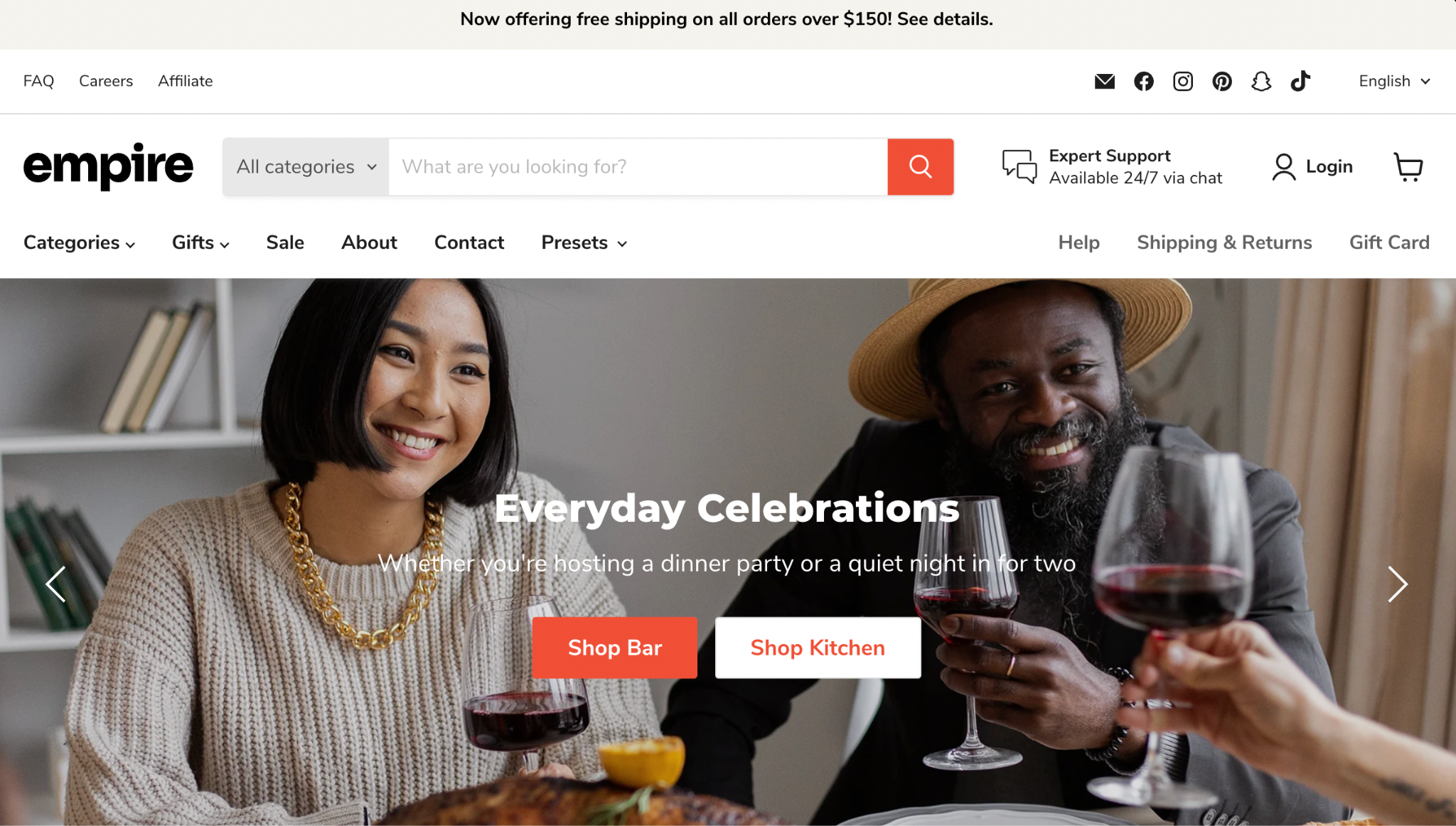
Featured Features: Perhaps the most important feature of Empire, “shoppable image” and promotional tiles It was to enrich the homepage or category pages. For example, you can add visual blocks on your homepage to draw attention to specific collections or promotions. Advanced filtering and searching It has capabilities; Empire was one of the first themes to introduce an “Amazon-style” search recommendation system (recommend products by typing in the search bar). Quick shopping (quick buy), product quick list It also contains conversion boosting items such as (quick order list). Availability indicator, countdown timer, trust badge Marketing elements, such as etc., have been added with recent updates to Pixel Union. Another plus of Empire, multiple top information bars (announcement bars) and Divisible header With fields such as, it is possible to inform the visitor (e.g. free shipping announcement + campaign code at the same time). Pixel Union again with Empire 12 high variant support and better mobile UX made improvements like, because older versions had some UX complaints.
Pros:
- Big Store Functionality: Empiria, An Amazon-like experience providing the customer with efficient navigation within the site. With multiple top bars, multi-column mega menus, side filters on category pages, “add to cart” button in the product list, very knowledgeable product cards with a “compare” feel, etc., comes a huge catalog string.
- High Conversion Tools: The product has many conversion boosting features such as upsell, cross-sell, stock indicator, countdown, etc. For example, you can add stock alerts such as “%X left” or make campaign reminders with the progress bar at the top after “add to cart”. These tiny touches can trigger sales.
- Eligibility for Wholesale: Empire was also preferred by those who used Shopify's wholesale channel. Its simple and information-oriented design provides the clarity that wholesale buyers are looking for. Pixel Union also added a B2B friendly feature to Empire, such as Quick Order, so that a customer can enter quantity in a product list and add more than one product to the cart in bulk.
- Updates and Improvements: Although Empire received some critical acclaim when it first came out, it has come a long way over the years. In recent updates, Pixel Union seems to have heeded customer feedback. For example, it was criticized that the header took up too much space in mobile, now the mobile header is more organized. The filters have also been improved. So the developer continued to develop the theme.
- The price is relatively affordable to others: $340 is slightly lower than themes like Expanse ($400) and Motion ($400). The $50-60 in between is perhaps not decisive, but still not the most expensive. Especially if you catch the discount periods, Pixel Union sometimes also offers 20% off promotions. This can also be considered a plus.
Cons:
- Low Satisfaction Rate: It has a 79% positive, 16% negative ratio, which is a bit grinning compared to other premium themes. Although some of the negative reviews are due to shortcomings of older versions (e.g. outdated mobile experience, limited customization), this perception somewhat affects the reputation of the theme. New buyers may hesitate “why low score”.
- Boring of Design: Empire is very functional, but for some soulless may appear. There are those who find the design too corporate or simple. It's a matter of preference; if you're a luxury or creative brand, Empire may seem too simple to you. Already more grocery store style sites love this theme.
- Performance Topics: With the combination of large catalog + Empire, it can be difficult to keep the site speed up. Some users complained that Empire was slow in older versions (possibly due to filters, etc.). Pixel Union says it's improved this but still a giant site might find the blame in the theme. It is necessary to optimize consciously.
- Limits of Customization: Some parts of the theme are fixed in design; for example, the layout of the product page does not change too radically. One of the negative comments was like “customization is limited, I had to code everything manually”. Pixel Union maintains the basic design line, we can say that it does not give many options. This is a minus for some.
- Header Density (Mobile): The Theme Hub review highlighted that the mobile header can sometimes be overloaded. Really, announcement bar + menu + search + cart etc. can take up some space when overlapping on mobile. This can be solved with the settings (turning off unnecessary bars, etc.), but an aspect that affects mobile UX if not noticed.
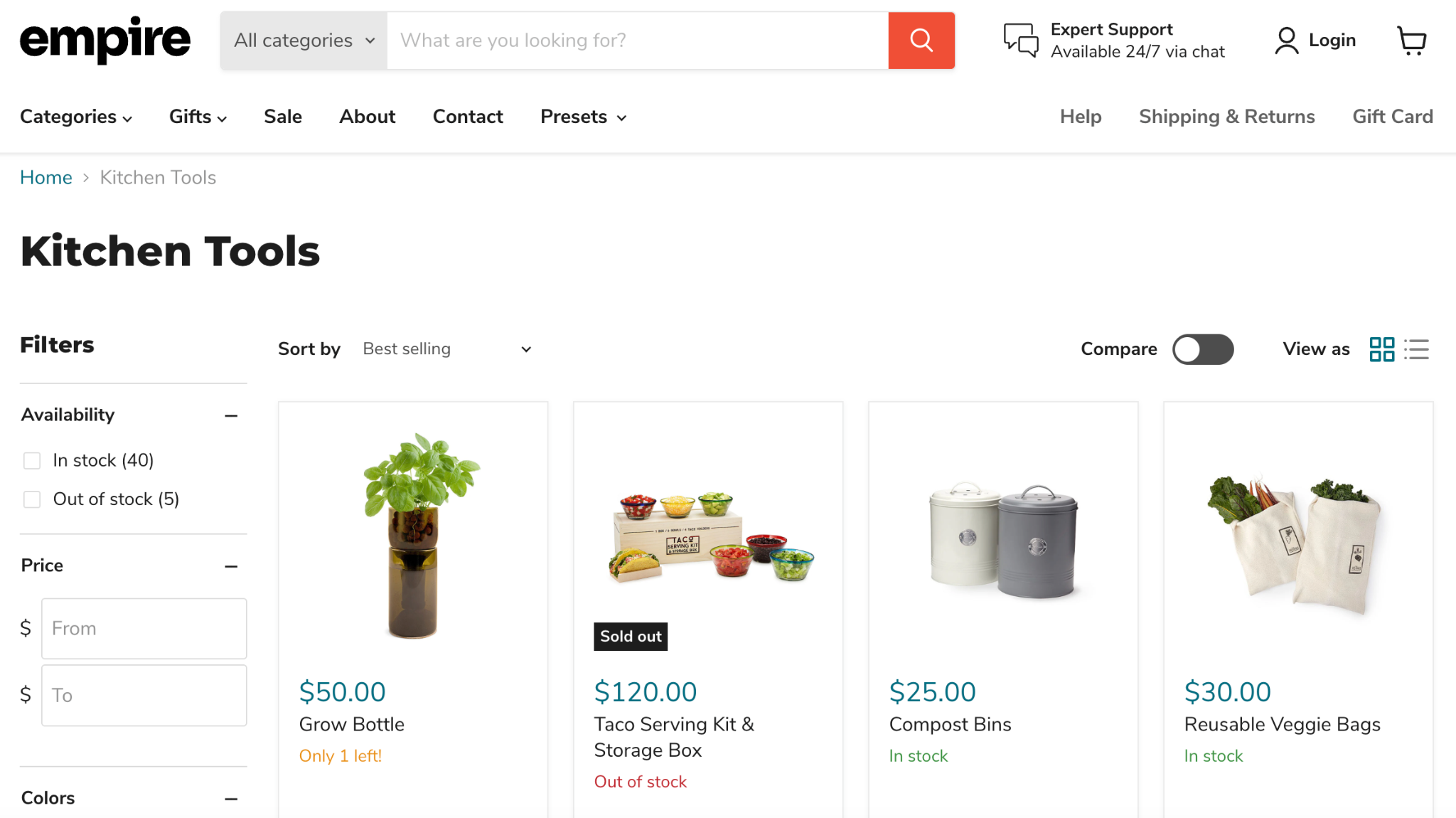
Empire Theme Points:
- Catalog Management: (5/5), Large catalog friendly, Amazon vari navigation, the filter is very powerful
- Features: (4/5), Plenty of marketing and B2B tools; not only some luxury/story features (poor editorial direction)
- Design: ☆ (3/5), Functional but a bit boring, aesthetically ordinary; but looks professional
- Performance: (4/5), Optimized for large sites; still need attention proportional to the volume of content
- Price/Value: (4/5), Valuable for large stores; although the satisfaction score suggests, it's worth the money with the feature set
To whom we recommend: Empiria, “e-commerce giants” Shaved for caftan. If you manage a store with thousands of products online and fast, simple, reliable If you want an interface, Empire will do the job. In the category of electronic grocery stores, major fashion retailers, supermarkets e-commerce sites that operate should seriously consider Empirenextsky.com. also corporate B2B Platforms (reseller ordering systems, wholesale catalogs) can become user-friendly with Empire, as wholesale customers usually look for functionality, and Empire provides it. An automotive parts distributor, for example, can display tens of thousands of its parts clearly with the Empire theme, allowing customers to filter. As a result, Empire “The Big Players” theme, if you need to keep a giant structure standing, Empire won't let you down.
Warehouse Shopify Theme
The Warehouse theme, as the name implies, is a high-performance solution for multi-product stores.
Price: $320 USD.
Developer: Maestrooo (Reputable French studio behind themes such as Prestige, Focal).
Styles: Comes with 3 ready-made styles, Warehouse, Wood, Mesh There are presets called. Customer satisfaction is around 84% (315 reviews), with praise for support and speed, while some customization limitations have received criticism.
Overview: Warehouse, will be able to carry large catalogs comfortably Designed as a theme. With a minimalist interface product-oriented It offers an experience. Its difference from other large catalog themes is that it avoids unnecessary embellishments while trying to keep performance at the top. This theme was also popular in the pre-Online Store 2.0 era of Shopify, where it was updated with OS 2.0 and added a number of new features (such as gift packs, countdown, etc.). Maestrooo's code quality and support make Warehouse a reliable option.
Uses: Electronics, hobby products, automotive parts, industrial products Warehouse manifests itself in industries where product knowledge and large inventory are perhaps more important than visuals. Even the name of the theme is warehouse, i.e. in stock, multi-product It means structure. Usually in the online shop More than 100 products Every business can use it easily. Large stores that pay particular attention to issues such as SEO and speed prefer Warehouse; its minimalist structure is an advantage in these areas. And also dropshipping sites with large catalogs that do the job (there are products from every category, supplier stock, etc.) love the speed and simplicity of Warehouse because they don't have to manage complex sites. In summary, large inventory+high speed+easy operation Ideal for those looking for trifecta.
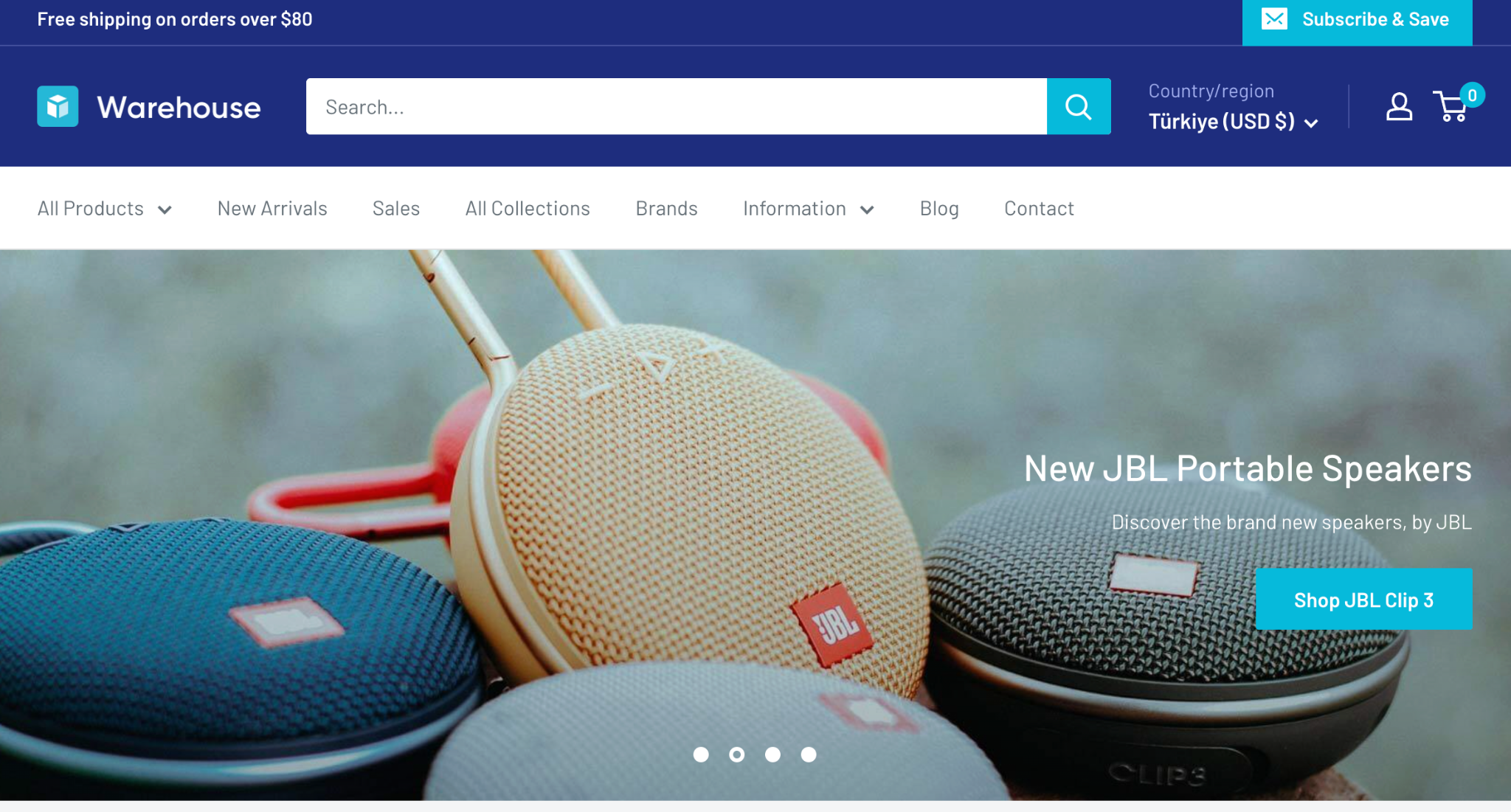
Featured Features: Warehouse, high performance Known for, Maestrooo themes are usually lean (light) coded, as we know from Prestige. Internally stock indicator, promotion pop-up/banner'lar, product labels (badges), counter offers marketing tools such as. For example, a badge such as “Last 3 items in stock” can automatically display. also store locator there are even (if you want to list physical stores). The filtering aspect is strong; on the collection pages, the customer can filter products according to various criteria (color, price, brand, etc.). Quick view and adhesive basket It also makes the conversion easier. Another plus feature is Warehouse's “Combined listing” support, the ability to list multiple product variants from Shopify Plus features, etc. (we've also seen this in Prestige, Maestrooo integrates themes plus features). Customer reviews are usually speed, flexibility and support Stated on: “Our site is fast even on 10k products, the support team is super fast and helpful.”
Pros:
- Superior Speed & Performance: Warehouse works as fast as if it had received doping. Users find the site very fluid on mobile as well as on desktop. This is also a big plus for SEO and user satisfaction. One comment was “Warehouse theme is fast, flexible, and professional, even on large inventories, 10/10 advice.”
- Easy Customizability: Maestrooo did not complicate the theme. The settings panel is understandable, the necessary edits can be made without writing code. Especially the homepage layout and collection page sections offer quite a bit of control. Users say “easy to customize, I set it as I want.”
- Robust Support & Updates: Young teams like RoarTheme etc are also good at support but Maestrooo experience is another. The French team is known for their quick responses and solution-oriented approach on the forums. Reviews also praised the speed and ability of the support (especially the supporter named Thomas). Also, the theme is being improved with regular updates (6.7.0 was last released in October 2025).
- Minimal and Functional Design: The design is simple, but this is an advantage; because the products shine. Especially if you sell niche/technical products (e.g. musical instruments, electronic components), the uncomplicated theme allows the customer to focus on information. One user said, “The Warehouse theme is fast, flexible and doesn't have too many features, which is exactly what I need.”
- Stability and Reliability: Maestrooo is famous for its code quality. Warehouse also has a solid reputation for bugs/glitches (satisfaction is already quite high). If you want a seamless platform in the long run, it gives confidence. Those who have been using it for several years have “gotten even better with the updates, we are very pleased,” he wrote.
Cons:
- Restricted Built-in Customization: Some users may not have found as much flexibility in the theme's panel as they would like. For example, one review criticized “built-in customization is limited, code is required for customization, updates are only for Shopify compliance, no development.” So maybe the theme added some simple features later (eg: adding mobile quick buy etc.), but you still don't have a wish list etc., you need the app for that. This type of spots may be missing.
- Design Simple, Maybe Too Simple: Minimalism is not everyone's choice. Some store owners like themes that look a little more “luxurious”, such as Prestige. Warehouse is very minimal, perhaps it may seem “simple” to some. This in a way can be a minus for brands that want to create a perception of prestige.
- Overall Satisfaction Rate Medium: 84% positive is not bad, but there are 16% negative (36 negative reviews). Negatives are usually due to privatization or failure to meet a specific expectation. Still, Perfect is not the score. (Note: Maybe old problems are included in this ratio).
- Additional Application Need: Warehouse offers everything basic, but for example, the blog sections, storytelling, etc., are weak. If you need something additional in these areas, you may need an app. Similarly, if you want advanced search (because default search may be insufficient, Whoosh etc. integration may be required).
- Panel Management with High Product: Although the theme is fast on a multi-product site, it can be a hassle to add promotional tiles for each collection on the panel, assign images, etc. Perhaps this is not a minus, but it takes effort to use them all efficiently on giant sites.
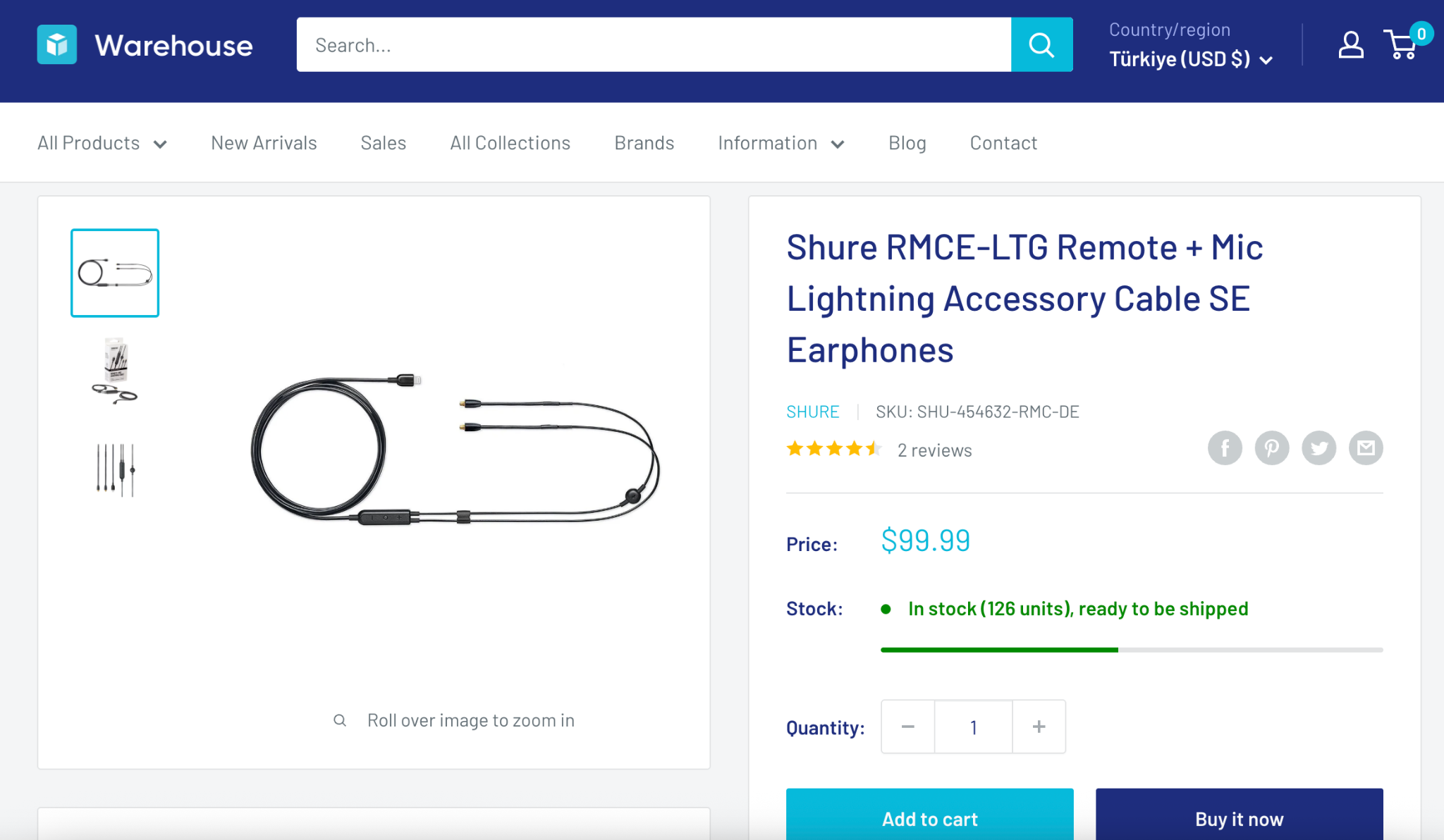
Warehouse Theme Ratings:
- Speed & Performance: (5/5), Speed Monsterdelivers large inventories as quickly as possible
- Ease of Use: (4/5), Panel is simple, support is very helpful; but advanced customization may still require code
- Features: (4/5), It has all the necessary ecommerce elements, but no fancy features that exceed itself (kept simple)
- Design: (4/5), Minimal and tidy, not very attractive but very convenient; offers a professional look
- Price/Value: (5/5), $320 cheaper than its counterparts and with Maestrooo quality it more than pays off in the long run
To whom we recommend: Warehouse, “speed and use are my priority, no need for much fanfare” It fits perfectly in stores with large catalogs that say. For example, computer part, electronic equipment An e-commerce site that sells thousands of products can conveniently offer with Warehouse; customers will not get tired of reviewing products thanks to the fast site. Hardware and DIY (do it yourself) material vendors, musical instrument stores, books or collectibles Sites with a large portfolio that sell will also be pleased with both the speed and layout of the Warehouse. Institutionally, maybe spare parts distributors, logistics product vendors areas such as (sometimes there may even be internal site use) appreciate the minimalism of the Warehouse. As a result, the warehouse “a lot of product + a lot of speed = happy customer” a theme that everyone who wants to bring their equation to life should consider.
Baseline Shopify Theme
Price: $360 USD.
Developer: Switch Themes (a design-oriented studio formerly known for its “Editorial” theme).
Styles: It comes with 4 ready-made design styles, most likely artistic presets such as Modern, Bold, Editorial, Art. Customer satisfaction is 99% (almost flawless) and has received very positive reviews, especially in terms of design flexibility, typography and support.
Overview: Baseline, Switch Themes artistic and original A theme that reflects your vision. Bold typography, unusual layouts, editorial feel It's in the character of this theme. As the name implies, “Baseline” evokes the concept of line lines in typography, possibly with a clear, grid-based layout and strong fonts. This theme, brand story and aims to sell products by keeping their content in the forefront. Hence, content marketing It can be an ideal bridge for brands that want to combine e-commerce with. Switch Themes has taken the old “Editorial” theme to the next level with Baseline.
Uses: Brands that care about photography, art, story He'll love Baseline. eg boutique fashion designers, luxury clothing brands, gallery stores, publication (books, magazines) sellers vs. Baseline, with its own header style and page layouts, makes your store a digital magazine. In this aspect, perhaps it is suitable for brands whose product number is less than moderate, but with a story to tell for each product. However, it is noted that Baseline is designed with a pixel-perfect grid system and has a modular structure, which indicates its adaptability to different sectors. In summary, Who does not want to be ordinary, who wants to make a difference with store design everyone should get Baseline on their radar. If we look specifically at Switch's portfolio, we can say that it targets fashion or lifestyle brands that want to look “cool” with Baseline.
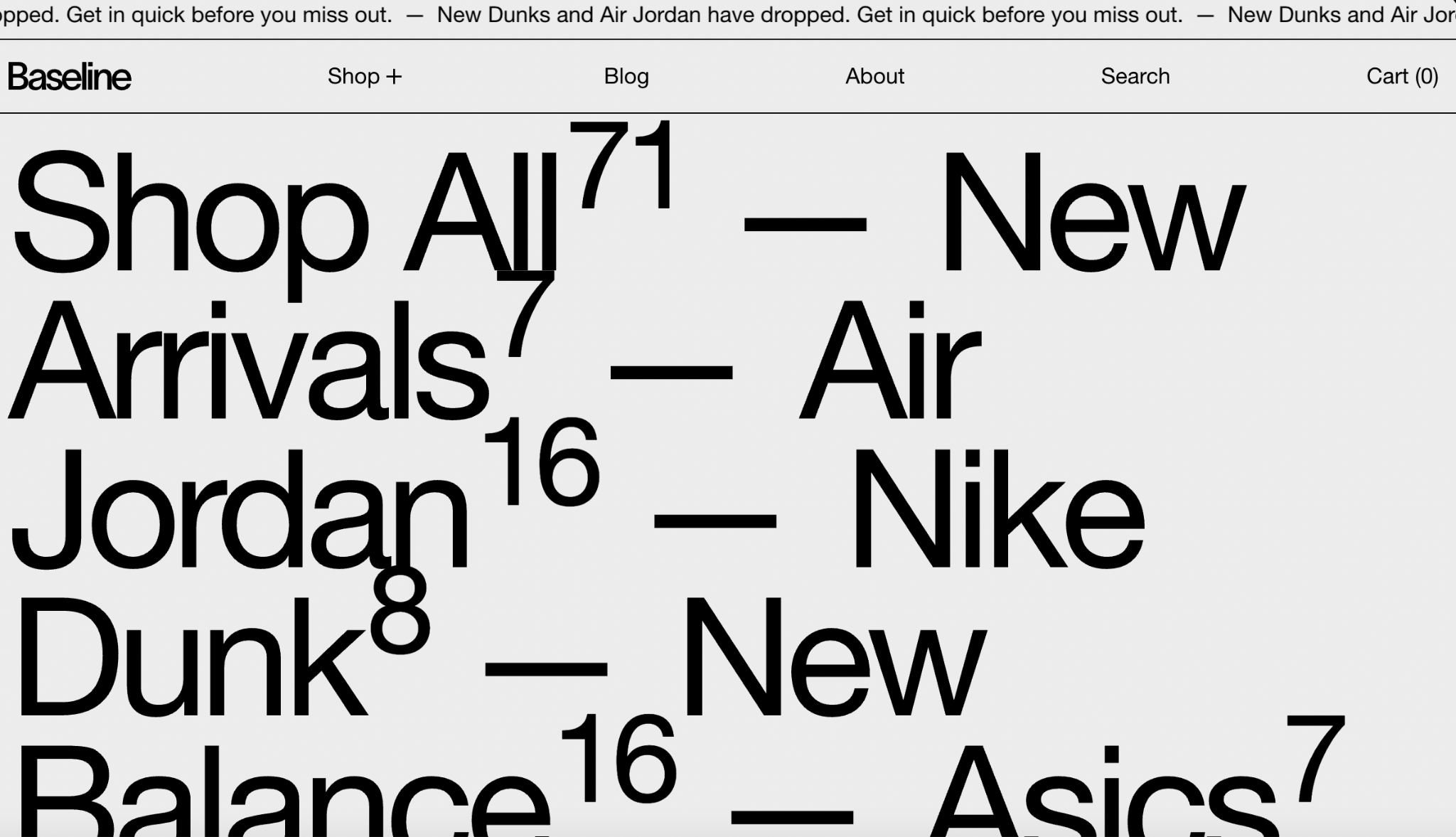
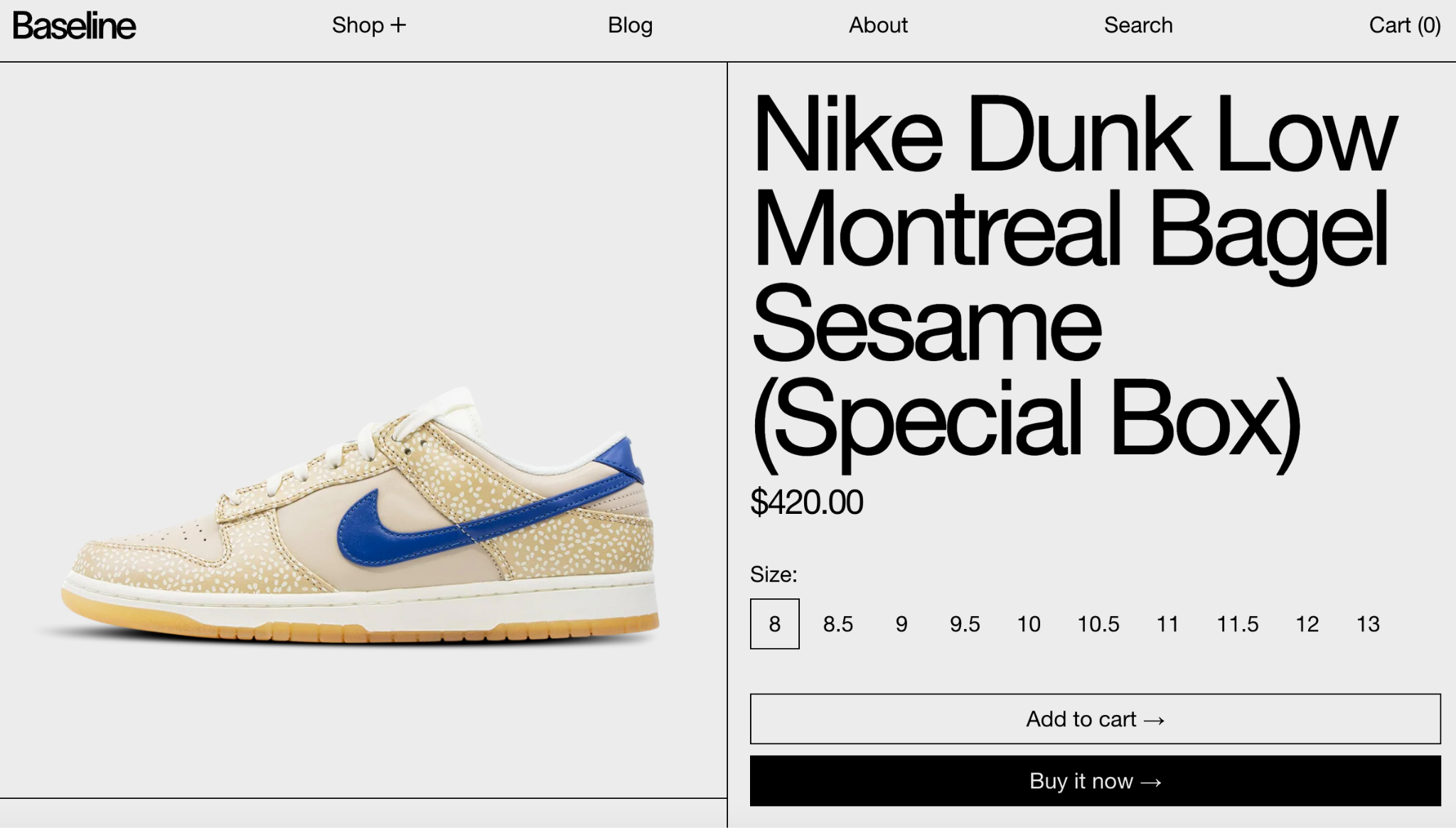
Featured Features: Baseline, bold headers, large image placements, flexible grid system stands out with. For example, a block with half visual and half text on the homepage, product lists with varying number of columns underneath, full-width manifesto lettering in the middle of the page, etc. magazine page has components that give sensation. TypographySpecial attention is paid to it; it offers the possibility of creating an unusual aesthetic using different font characters and layout variations (typography has always been strong on Switch Themes). Also Baseline, as e-commerce functions unattendedBaseline, for example, according to the Switch Themes blog 75+ content sections, 35+ advanced settings includes; supports stock counter, trust badge, Instagram feed integration, videos, lookbook, etc. They tried to get a full score on accessibility (a11y), and that the theme performanceIt is also stated that it is optimal, meaning it is not an artistic but slow theme, on the contrary, Switch had claimed in a blog post that Baseline is “Lightning fast”. Customer reviews also include praise such as “thanks to flexible sections and blocks, we have brought our store exactly the look we wanted, without sacrificing performance”.
Pros:
- Unique Design & Typography: With Baseline, your store will look like it's out of the hands of an art director. This can provide a competitive advantage in the market; as the customer navigates the site your brand identity It will feel right up to your knees. The standard “template site” perception is absolutely absent, Baseline differs from other themes at a glance.
- Content + Product Integration: Thanks to the editorial structure of the theme, blog content, lookbooks and products can be presented together. This in turn contributes to SEO and brand story. For example, a style blog post and the products mentioned in that post are available for purchase is easy on Baseline. This synergy is worth gold for brands that do inbound marketing.
- Flexibility & Customization: According to customer reviews Baseline is incredibly flexible, “Highly flexible partitions and blocks, everything can be easily edited” There are style emoticons. With more than 75 sections, many style settings, you can build the site almost like lego. Moreover, Switch seems to have raised the bar with this theme, although perhaps not as experienced as Clean Canvas (the giants of Symmetry).
- Support & Community: Switch Themes was low for a while, it shone with Baseline. There are users who indicate that at the moment they return quickly to support requests, or even give tips for customization. In addition, Baseline is a new “hip” theme, it has caught a bit of a trend on social media, etc., that is, a community is formed, people share their site and give tips. This is to inspire and help users.
- Performance & Technical Excellence: According to reports, Baseline considers scores of 90+ comfortable on Lighthouse tests. So it is not only beautiful, but also fast and SEO friendly. This combination is rare; themes that usually escape a lot of design can be slow, Baseline has not fallen into this trap (Switch claims this direction, users have not mentioned slowness either).
Cons:
- Original Design, Learning Curve: Someone who is used to standard Shopify themes may spend some time getting used to the different structure of Baseline. Sections, grid structure may perhaps sound different from other themes in the first place. So it may be necessary to approach it with a bit of a design head, not with a “straight Shopify” logic. That's a little bit of a curve for non-professionals.
- Price: In the premium class with $360. But for a theme that has almost a 5/5 rating, maybe this is not a complete minus; there are still strong competitors such as Impulse, Motion for the same money. When deciding whether to give priority to design or function, this question arises. Baseline design is a heavy theme, others are function heavy. If you want these pluses at this price, Baseline is excellent; if you don't, it can come expensive.
- Not for Very Large Catalogs: Baseline plays a wide range, but in my opinion the most ideal is the number of low-medium products (1-200). In very huge stores, maybe Expanse, Empire might be more useful; Baseline also removes it, but the design focus, maybe filter, etc fields don't fit into those giant stores, the client can get overwhelmed.
- New Wave of Switch: Switch Themes has been quiet for a while, making a breakthrough with Baseline. In terms of version maturity, etc., maybe a few minor bugs, etc. may have been omitted (although it seems like none). There is some risk of “possible childhood diseases of a new theme”, but at the moment users have not indicated problems.
- Code Editing May Be Required (Rare): Baseline's great flexibility has left out maybe maybe a few customizations. For example, if you want a very specific header layout or a custom animation, maybe you should code it. This is a possibility for brands with high design precision, but Switch may have solved those demands by setting parameters as well. Still, as with any theme, radical requests require code.
Baseline Theme Points:
- Design & Aesthetics: (5/5), Artistic, modern, bold , a rare gem within ecommerce themes
- Customizability: (5/5), Flexible grid and high customization possibility with plenty of settings; you can realize your design dreams
- Content Integration: (5/5), Blends seamlessly with blog, lookbook, video, etc., brand story reflects 10/10
- Performance: (5/5), Very fast despite heavy appearance, code quality; design=0 compromise
- Price/Value: (5/5), If that's what you're looking for, it's worth every penny; it sets your brand apart from the competition
To whom we recommend: Baseline, “I don't want an ordinary online store, let my digital storefront look like a work of art” recommended to brands that say. specifically high fashion brands, designer product vendors, art galleries, luxury cosmetics brands, fashion magazine identity e-commerce blogs With Baseline, you can present a visual feast and sell. For example, a luxury watch brand can provide customers with a unique experience by presenting editorial content and product catalog that emphasize the brand's history and craftsmanship together with Baseline. Kezah sustainable fashion Brands with a mission like Baseline can use title fields like Baseline's manifesto and sell their products while communicating their values. Maybe on the corporate side. design furniture companies or lifestyle stores of premium car brands can also create a prestigious e-commerce channel with Baseline. In short, Baseline “Let my store be like a brand magazine” A perfect solution for anyone who says.
Taiga Shopify Theme
Price: $490 USD (from the highest priced themes in the theme store).
Developer: Woolman (a Finnish-based Shopify agency that stood out for its online store 2.0 era themes).
Styles: It is stated that there are up to 5 styles, e.g. Meadow, Rejuvenate, etc., some style names appear in the search results. Customer satisfaction 100% (yet limited but with very positive reviews). specifically natural, organic theme with vibe, video sections and versatile structure being highlighted.
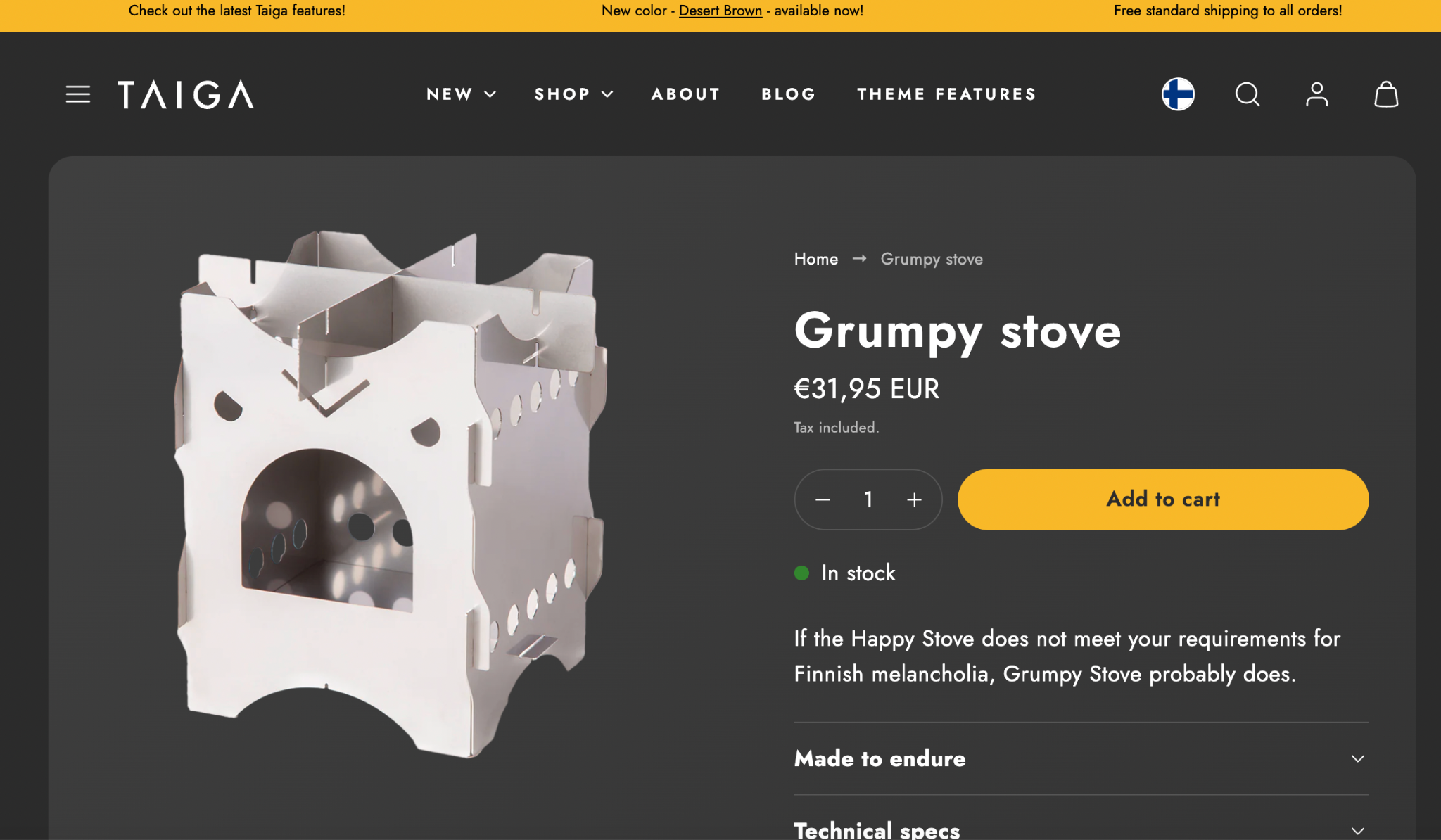
Overview: Taiga gets its name from the famous forests of Siberia, natural, organic and fresh It aims to provide an experience. It is also included in the lists of “best SEO themes of the year” etc., which means it is also technically very strong. Woolman, this theme health, wellness, organic products seems to be optimized for brands in industries like. Home very extensive features has a design (one of the most expensive themes on the list), as well as a design that creates an emotional connection to the user. It is mentioned that it supports light/dark mode and a number of modern features (Goldenweb blog praised this theme). In short, Taiga can be called “does everything, as well as with a natural feeling”, The premium of the premium a theme.
Uses: specifically brands selling natural product, wellness, organic food/cosmetics, outdoor clothing etc come to mind. Apart from that, Taiga is a multi-purpose theme; as it is one of the most expensive themes on the list, it does not sell as much if it only caters to the niche. So to each sector fits, but shines most on brands with natural vibes. The number of products does not matter; it can also tell the story of a brand with 10 products, it can also carry a catalog of 1000 products (detection: Redwood motto, maybe Redwood preset, like Redwood forests, maybe a preset). And at this price level, Shopify Plus customers are usually considered, so high volume, global Businesses are also targeted. As a result, obsessed with quality and low price precision any brand (especially lovers of minimalism in the northern European style) will be pleased with Taiga.
Featured Features: Taiga offers almost everything: +10 video sections, dark/light mode, multi-language (10 languages), RTL support, mega menu, advanced search... So you have whatever you're looking for. Detailed table: when comparing Omnithemes, Stiletto vs. Eurus, a blog mentioned Taiga: It said “taiga mobile-first design with dark mode” or something. Now note: Repoton data is noted as: developer: Woolman, features: bags, sports, so sports/outdoor brands are also considered. Ok, tech, I'm sure the theme store page has an emphasis on speed, performance (you get 490, not slow). Qikify may not have Taiga in the list of best wholesale themes but goldenweb has Taiga in the SEO list, so cw vitals top. Also, maybe there are plus features: combined listing, etc. Farn key features: Woolman maybe offers SEO audit etc support service like eurus? We don't know, but maybe. Conclusion: Taiga offers every feature expected from a premium theme and more.
Pros:
- Spectacular Visual Experience: Taiga, with its organic and spacious design, immediately evokes a sense of confidence and peace in the customer entering the site. The color palettes, the typography is attentive; the “natural vibe” is the perfect hit. Especially if you like minimalism, the theme offers a pure and clean look (blogs say “natural vibe”).
- Fully Equipped Feature Set: $490 is not wasted; Taiga is perhaps one of the richest themes on the list. Countless features that we have enumerated above, all integrated. Video sections, promotional tools, global sales features, maybe store locator (I don't know), gift wrapping, subscribe, etc., everything. This reduces the need for plugins to a minimum; it gives the feeling that you can install whatever you want on the site.
- Performance & SEO: If goldenweb has tested the blog, it probably found cw vitals vs. high (takes it on the list for it). So despite such an abundance of features, the speed of the theme is optimized. This is a big plus; it usually happens to be a bell curve, either speed or feature, as if the Taiga retains both.
- Support & Trust: Woolman is a Shopify Plus partner; that is, works with enterprise companies. This means that they do enterprise-level QA on their themes and their support is also professional. The fact that 100% customer satisfaction also proves this, the seriousness that is expected of a Finnish company. That is, they never leave it halfway; perhaps they even provide additional services if there is a special request.
- Dark Mode vs. Modern Touches: I'll repeat, but dark mode is rarely offered natively on an ecommerce site; Taiga offers (called goldenweb). This adds modernity to the site design, and maybe makes the user experience cool with a toggler as well. This level of detail suggests that the Taiga is rightfully entitled to the money.
Cons:
- Very High Price: $490 is not a figure that every company will spend. A small-scale store might opt for a theme + promotional app, etc., instead of that figure of maybe $250. So it really appeals to the premium audience. This may not be considered a minus, but “expensive” after all.
- Extreme Feature -> Learning Curve: As we mentioned in Eurus, such Swiss-Army-knife themes can get messy on the panel. With everywhere settings, everywhere sections, a Shopify newbie can have a hard time figuring out what's what. It would be more arduous than a simple theme to set up. This is at least an option: maybe you start right away with the simple preset, but if you want to delve into the subtleties, it may be necessary to study the documentation.
- General Thematic Focus: We said Taiga fits any industry, but its feel is “natural” oriented. This means that maybe a hardcore tech gadget store, a gothic fashion brand, etc., might not find itself in this theme. So there is a certain spaciousness in style, not every brand may want it. On the other hand, it is played with flexible maybe color/dark mode etc., but the interior texture is spacious designed.
- Risk of Making It Slow: Again, using that much feature means putting tons of media on the site. Maybe the theme itself is optimized but, if the site owner fills in 4K videos, giant banners, whatever the theme does, it slows down. This is a possible risk, we also said for eurus, etc. So if you don't take an ultra-premium theme and optimize it to be “fast anyway”, you're actually putting a bullet in your step. (This is perhaps not a minus, but it is necessary to remind).
- A New Theme (Potential Risks): Taiga is still very new, and the most expensive. That is, there are not many users perhaps (not everyone gets it). Less feedback means less community. This is perhaps a minus, there is no content in the forums, no how-to, etc. blogs. Everything will be learned as you try it or ask for support. This is also a minus point for newbies.
Taiga Theme Points:
- Feature Scope: (5/5), All-in-One: every function you can think of, beyond premium hardware
- Design & Aesthetics: (5/5), Natural, modern, spacious; visual feast especially for organic brands
- User Experience: (5/5), Designed great experience for end user with mobile priority, dark mode, etc.
- Performance: (5/5), Surprisingly fast for a theme of this level, SEO friendly
- Price/Value: (4/5), Expensive but if you compare this scale with what you can't do without a contact, it deserves every penny
To whom we recommend: Taiga, Who wants the best of the best for brands. specifically sustainable fashion brands, organic cosmetics brands, outdoor/nature sports equipment manufacturers Companies such as those that emphasize nature and aim to grow in the global market should not ignore Taiga. For example, organic supermarket chain Taiga can perfectly offer both naturalness and a huge catalog if you are opening an online store. Again a fitness-wellness products With its brand (yoga accessories, etc.), Taiga can bring community feeling, blog content, products together and offer an inspiring platform to its customers. On the corporate side, maybe a eco-friendly subsidiary of premium car brand or a lifestyle store of a luxury real estate company Even extreme examples like (this was a bit of a fantasy but) can create an ambitious experience with this theme. In the final analysis, Taiga “My brand is global, my vision is great and my site infrastructure must be flawless” It appeals to every business that says.
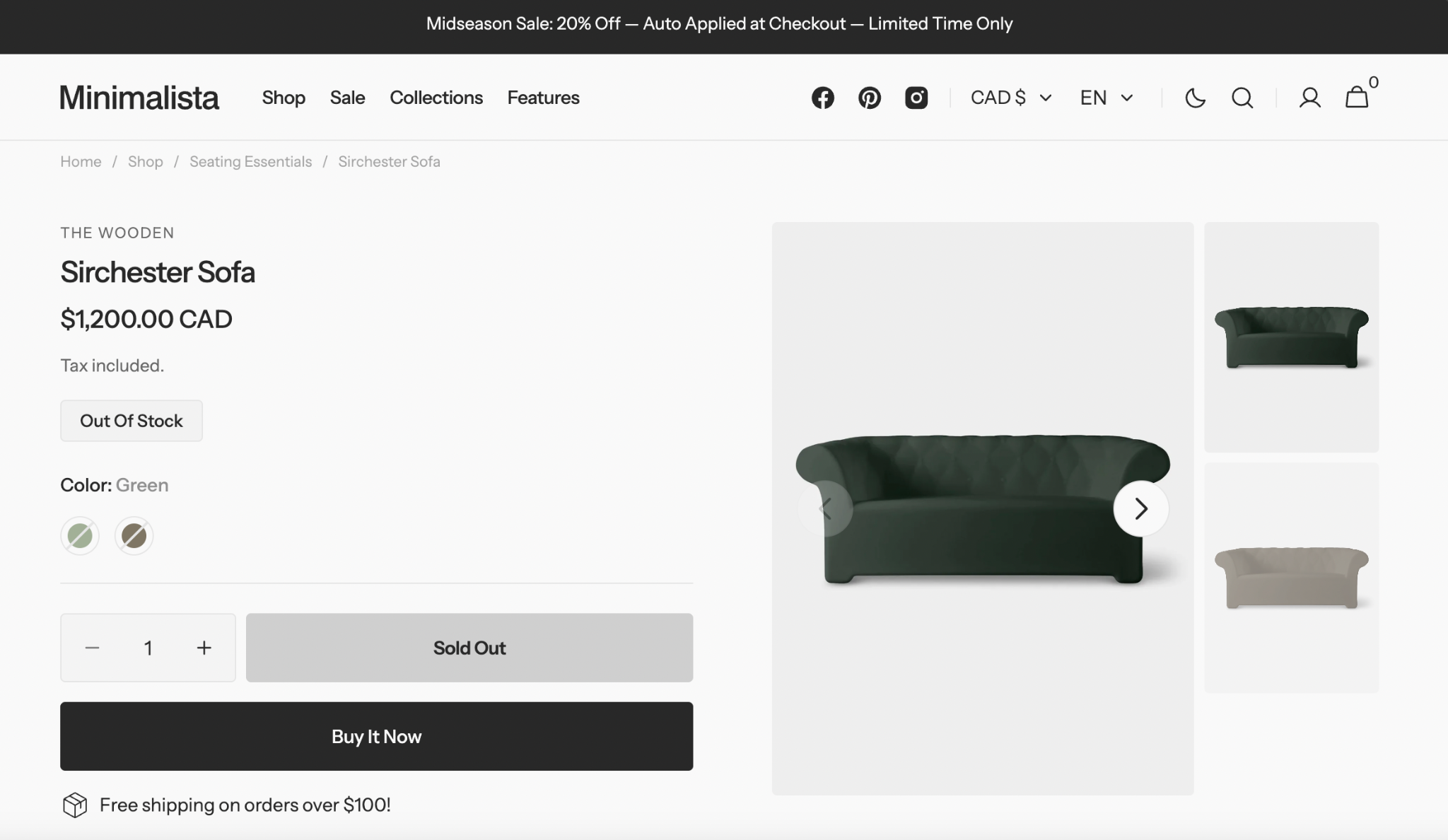
Minimalista Shopify Theme
Price: $380 USD.
Developer: Segment (a new but ambitious name in Shopify themes; it stands out for its minimal and modular designs).
Styles: 3-4 ready-made styles (probably there are presets such as Portfolio, Rejuvenate, Boutique, it appears in search snippets). It has 100% customer satisfaction, reviews like “clean, convenient, support is great” and it has received 5.0/5 stars according to Reputon.
Overview: Minimalist, as is clear from the name, The Art of Simplicity theme. The segment is aimed at lovers of minimalist design with this theme. The design is extremely stylish, modern, spacious and minimal; like a canvas that will bring products and images to the fore. At the same time, it has not neglected functionality; it is said to balance the triad of “style, usability and performance”. This theme can be visually thought of as the luxury sibling of Dawn (Shopify free theme): Simple yet sophisticated. Especially ideal for industries that want fashion, design products, high aesthetics.
Uses: Boutique clothing brands, designer goods sellers, luxury accessories brands He will find Minimalista very attractive. Minimalist themes generally fit into every industry, because the design pulls itself back and makes the product stand out. Hence, photo quality is high Any brand (clothing, cosmetics, furniture, even technology, think Apple style) can build a site with this theme. Brands with a low or medium number of products (1-100) are the best target, as minimal design is usually best for polishing a few hero products. At the same time, lifestyle-oriented boutiques that offer blog content and products love Minimalista (her blog listed this theme among her 9 favorite themes and called it “sleek minimalist appearance, brilliant”).
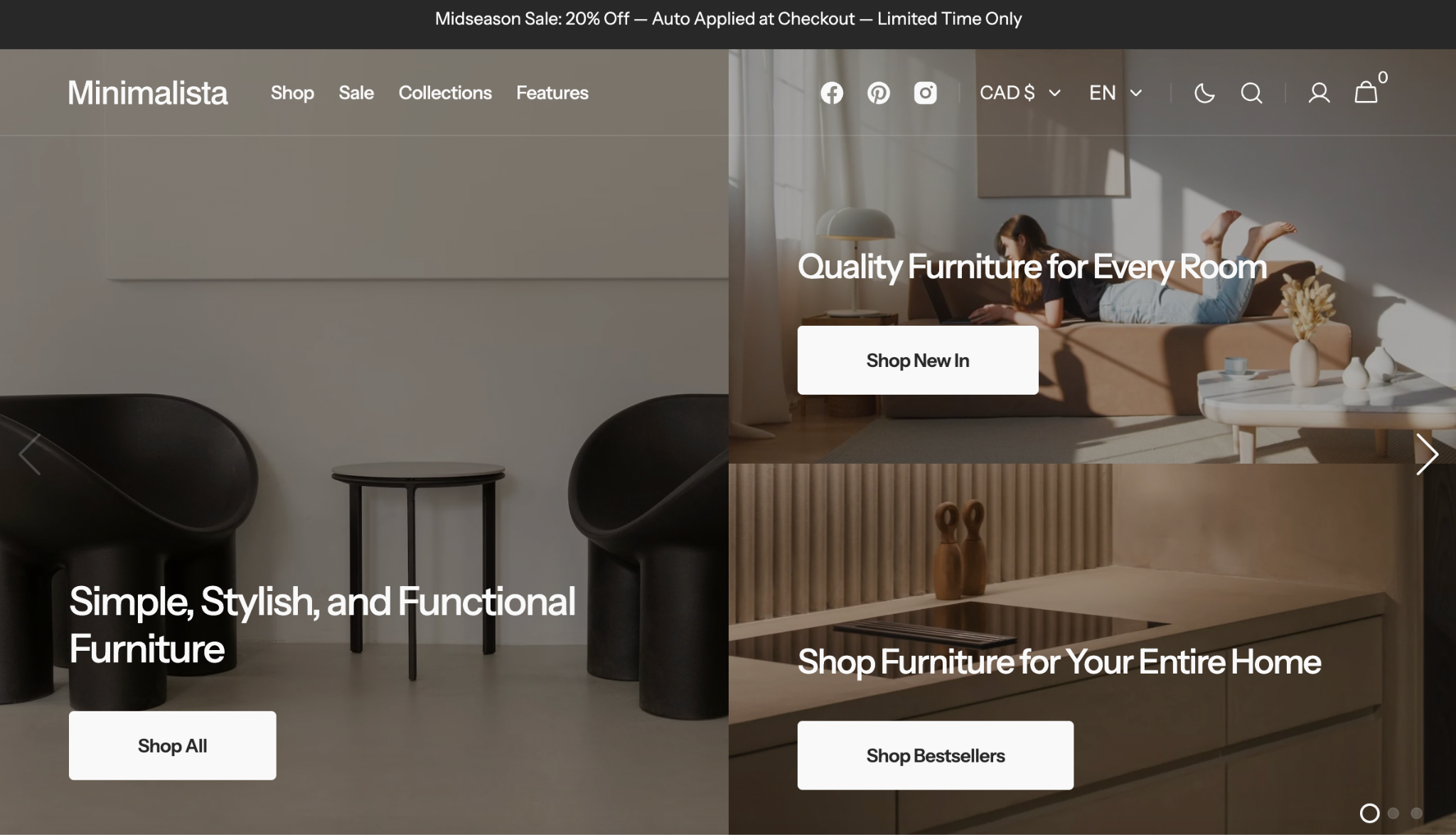
Featured Features: Minimalist, High resolution visual support, video integration, regular typography stands out with. Reputon says: “the design is very clean, highlights the products, the customization is easy, the support is spectacular”. Highlight: style. As a function, I also think: stock counter, promo banner, pop-up, variant product support, maybe lookbook infrastructure, etc. (saleshunterthemes said: minimalista optimized, basic solid, style, usability, performance priority; support is great). presumably multi-media there is support (video, 3d model, etc.), Modular section Plenty, this is expected in the 2025 theme. If we look at the ecomposer blog cons of Minimalista: maybe customization limit says snippet: priced higher, drawback for budget, it says maybe a minus (price). Besides, his blog says “sleek minimalist appearance, brilliant in simplicity.” So plus: simplicity; minus: maybe editoary content vs. limited, but maybe there is, the theme store snippet says “portfolio part of Minimalista, minimal immersive for visual storytelling”. That's exactly what it means: maybe Minimalista's substyle Portfolio has the tagline “impactful visual storytelling.” So there is also an editorial/story feature. So maybe lookbook/story section vs. integrated. Conclusion: Minimalista may not be as radical editorial as Baseline, but images+text storytelling can also do.
Pros:
- Simplicity and Elegance: Minimalista offers a spacious experience to the user; the design elements are minimal but very well chosen. This creates an environment in which the products sell themselves. For example, he said, “sleek minimalist appearance... brilliant”, that is, praised the design. Customers feel a premium quality while browsing the site, without much noise.
- Easy Operation & Customization: According to user reviews, no deep code knowledge is required to customize minimalista; its panel is intuitive, even minimal. This means quick installation. I have Reputon snippet like “I customized it easily, no coding required”. Even a beginner boutique owner can make beautiful site with Minimalista.
- Performance: One advantage of minimalist themes is that they are usually fast, with little extra script, etc. Minimalista also offers an optimized foundation. Saleshunterthemes blog says “very well optimized, style usability performance prioritized”. This is a sign that site speed, PageSpeed scores will be good.
- Support Quality: Although the segment team is new, it seems to do well in support. Reputon snippet: there is an implication that “the support of the theme is great, helped quickly when there was a problem”. This is reassuring. Customer satisfaction 5.0 already.
- Visual Storytelling: “Minimal and immersive, made for impactful visual storytelling” snippet bu. So even though it's minimal, it offers full-screen visuals on the page, maybe portfolio-style grids, etc. This allows you to visually tell the story of your brand, product uses, etc. (maybe not as editorial as Baseline, but a minimalist/story hybird way).
Cons:
- Limited for Large Catalogs: From the name of Minimalista, from its design, perhaps to a supermarket site with 1000 products, this theme does not fit. There are filters, etc., but maybe Expanse isn't as robust as Empire. So in the giant inventory, maybe navigation will not be optimal. This is a minus: the theme is actually the optimal audience of fashion/lifestyle boutiques.
- Price: $380, the same band as eurus, broadcast, motion. Not for everyone (there are cheaper minimal themes, but maybe there is no such quality in them). Still, those who are not willing to give money to something good can settle for free theme + CSS, but Minim. accordingly.
- Feature Scope Medium: While Baseline, Taiga, etc., Minimalista probably said, “I'll do exactly what's necessary, don't put in too much.” This means that if you want a ton of things like countdown timer, advanced upsell funnel, etc., maybe you need a plugin. Still, maybe Minimalista is there as needed, there is no hundred. This is a minus for whom, and for whom it does not degrade, plus.
- New Developer & Less Resource: The segment appeared on the market, perhaps, in 2025. This means that you may not find many tips/tricks on Minimalista in the forums and online community. If there is a problem, you are doomed to support, by God the support is good. But for those who like to hang out on their own, resources may be limited.
- Brand Distinction: Minimalista is so minimal that maybe it can be similar when different brands make the site. The trap of minimalism: everyone can feel the same. Therefore, if you are a unique brand, you can stand differently with editorial themes, while in a minimalist theme you will be presented in a general style. This is a possible minus, but perhaps it coexists with zoning.
Minimalista Theme Ratings:
- Design & Aesthetics: (5/5), Perfection in simplicityoffers truly eye-catching minimalism
- Ease of Use: (5/5), Panel interface is simple, site setup is fast, support is very helpful; beginner-friendly
- Performance: (5/5), Optimized code, fast loading; doped thanks to minimal structure
- Features: (4/5), It has all the necessary e-commerce functions, but not at the level of “does everything” (more focused)
- Price/Value: (4/5), Top segment price, but definitely worth it for those looking for a premium minimal experience; smooth in the long run
To whom we recommend: Minimalist, “a little is a lot” will suit all brands that carry out their marketing with philosophy. High fashion brands, designers with products such as works of art, modern furniture brands, cosmetic brands with high aesthetic value with this theme, they get a stylish and user-friendly showcase. For example, Scandinavian style minimal furniture a selling company can set up a site that matches the full brand identity with Minimalista, free spaces, clean lines support the design language of their furniture. Again an independent fashion designercan present its 20-piece collection with Minimalista in the feel of a luxury boutique; the looks are on the product, the site works almost like an art gallery fund. Maybe less from an enterprise point of view (because corporates usually want a mixed site), but maybe a premium consumer electronics brand (for example, a company that manufactures minimalist design speakers, etc.) can capture an Apple-like presentation with Minimalista. As a result, Minimalista “Let the design speak, let the site get out of the way” meeting point for everyone who says.
Conclusion: The 16 premium themes we reviewed above offer different strengths for your Shopify store. When choosing, do not forget to take into account your budget, product catalog, brand identity and the characteristics you need. The pros and cons that we indicate for each theme will help you decide. Don't forget, site design is the first impression you leave on the customer , so it's crucial to choose a theme that suits your target audience and industry, but also supports your growth plans. Good luck and good sales!